.svg&w=384&q=75 "Naijagoal logo")

Japan's Resilient Campaign Ahead of Sweden Clash
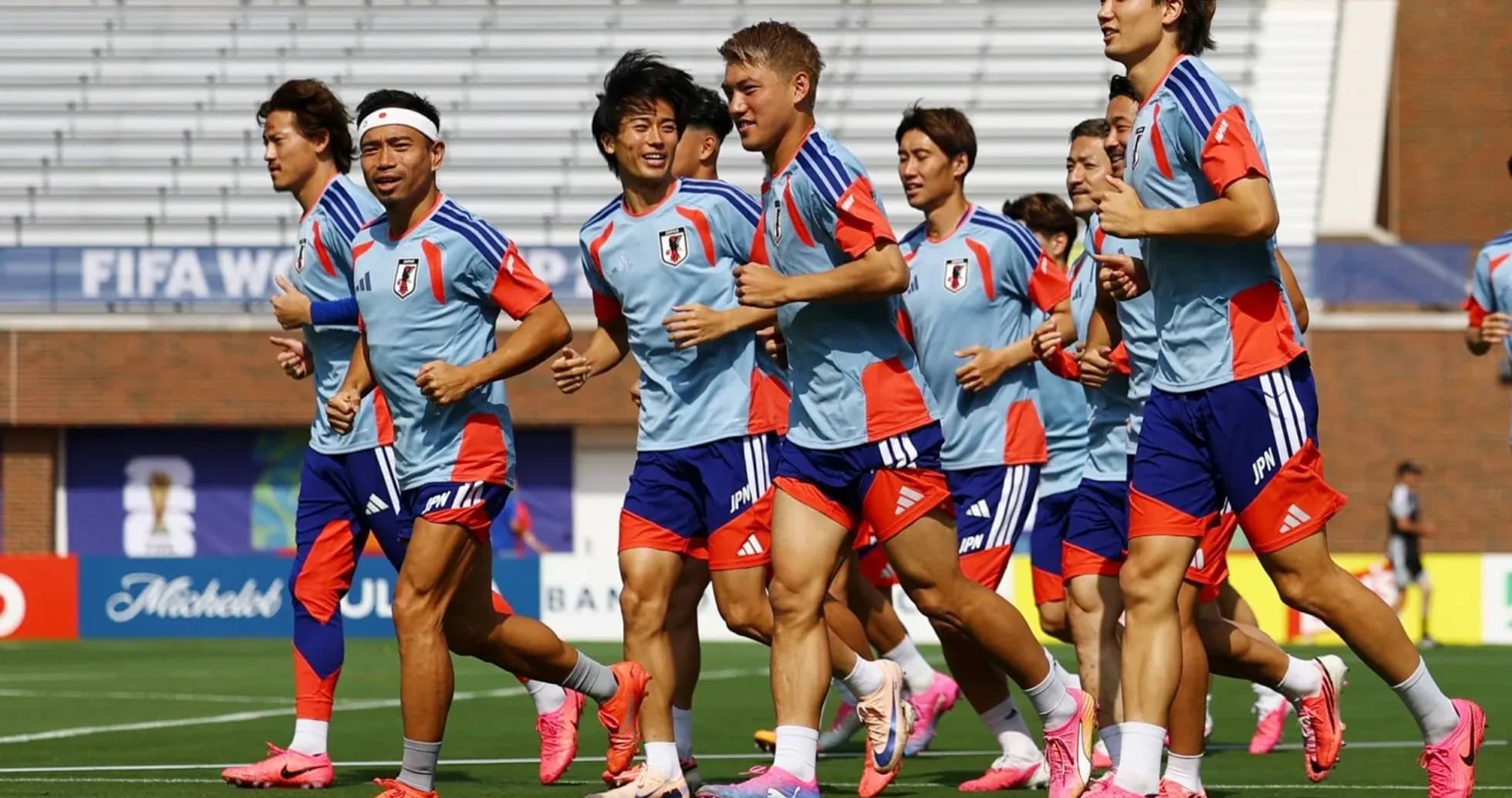
Japan’s injury-hit campaign has become a study in resilience, and Hajime Moriyasu knows it.
On the brink of the World Cup knockout stage, missing a spine of established stars and still carrying the bruises of a brutal injury list, his side sits a win away from topping Group F and already with one foot in the last 32.
Patchwork squad, clear identity
Japan arrive at Thursday’s decisive meeting with Sweden on four points, shaped by two very different performances that told the same story about this team’s character.
They traded punches with the Netherlands, twice coming from behind to salvage a 2-2 draw against one of the tournament’s heavyweights. Then they dismantled Tunisia 4-0, a ruthless, controlled display that suggested a group growing into the competition rather than clinging on.
All of it has come without several of Moriyasu’s most trusted players.
Takefusa Kubo, who took a knock to his knee against the Dutch, is expected to miss the Sweden clash. Former captain Wataru Endo never made it to the tournament. Kaoru Mitoma and Takumi Minamino, two of Japan’s most inventive attacking outlets, are also sidelined.
On paper, that should have ripped the heart out of Japan’s campaign. On the pitch, it has done the opposite.
“Anyone can play with anyone else, that’s the readiness we wanted to ensure,” Moriyasu said, underlining the philosophy that has underpinned Japan’s response to adversity. He acknowledged how rarely that ideal becomes reality at this level: “When there’s a change over in the team, it’s not that simple or easy to play with different players and achieve good results or be successful.”
Yet his squad has done exactly that.
Moriyasu pointed to the work done beyond the spotlight as the foundation for this flexibility. “I’m very grateful that the other coaches and the players have been developing themselves towards such a great achievement,” he said, noting that across the last two matches “the team has functioned tactically and with the teamwork they are developing and increasing their readiness.”
Top spot in sight, but no gamble
With four points already banked, Japan are in a strong position. Even defeat against Sweden might not stop their progress to the last 32. That safety net has not dulled Moriyasu’s ambition.
“We are basically thinking of winning, that’s what’s in our mind,” he said. The target is clear: top the group, and do it on their own terms. “If possible we would like to advance on top of the group by scoring as many goals,” he added, before drawing a firm line. Chasing that goal difference will not come at any cost. “Distorting the balance of the team is more of a risk. We will see.”
That balance has been Japan’s quiet weapon. Organised without being rigid, aggressive without losing shape, they have looked like a side that knows exactly what it is, even while key names sit in the stands.
Moriyasu is not wasting energy trying to guess who might lie in wait in the next round. “We don’t know what kind of team we will come up against in the next round,” he said. The priority is internal. “What’s important is that we are solid and that we play against a team that we are able to deal with no matter what appears.”
The message to his players is simple: take care of the present. “First we want to think about ourselves and how we play tomorrow. In terms of our target we would like to win and qualify for the knockout stage on top of the table.”
Sweden’s wild swings, and a test up front
Sweden arrive as one of the tournament’s great unknowns. Their first two games have swung violently from one extreme to the other: a 5-1 demolition of Tunisia, then a 5-1 hammering by the Netherlands.
That inconsistency makes them dangerous. It also makes them fascinating.
What is not in doubt is the quality at the sharp end. Alexander Isak and Viktor Gyokeres bring power, movement and a constant threat in behind, exactly the kind of forwards who can expose any lapse in concentration.
Moriyasu does not want his defenders to shrink from that challenge. Quite the opposite. “They’re world class, wonderful strikers so I would like us to enjoy facing these players,” he said. “It’s going to be a good opportunity for our players to develop themselves further.”
Enjoyment is not a word usually associated with a group-stage decider, but it fits this Japan side. They have lost stars, shuffled line-ups and still imposed their ideas on the tournament.
Now comes Sweden, a team that can score five or concede five, led by a fearsome front two. For Moriyasu’s adaptable, united squad, it is one more chance to prove that this campaign will be defined not by who is missing, but by how far this group can push themselves when the stakes rise.