.svg&w=384&q=75 "Naijagoal logo")

Iran's World Cup Controversy Ignited by Mohebi's Celebration
In a World Cup already crackling with political tension around Iran, it took just one swing of Saman Mohebi’s right boot – and a few seconds of celebration – to ignite the next flashpoint.
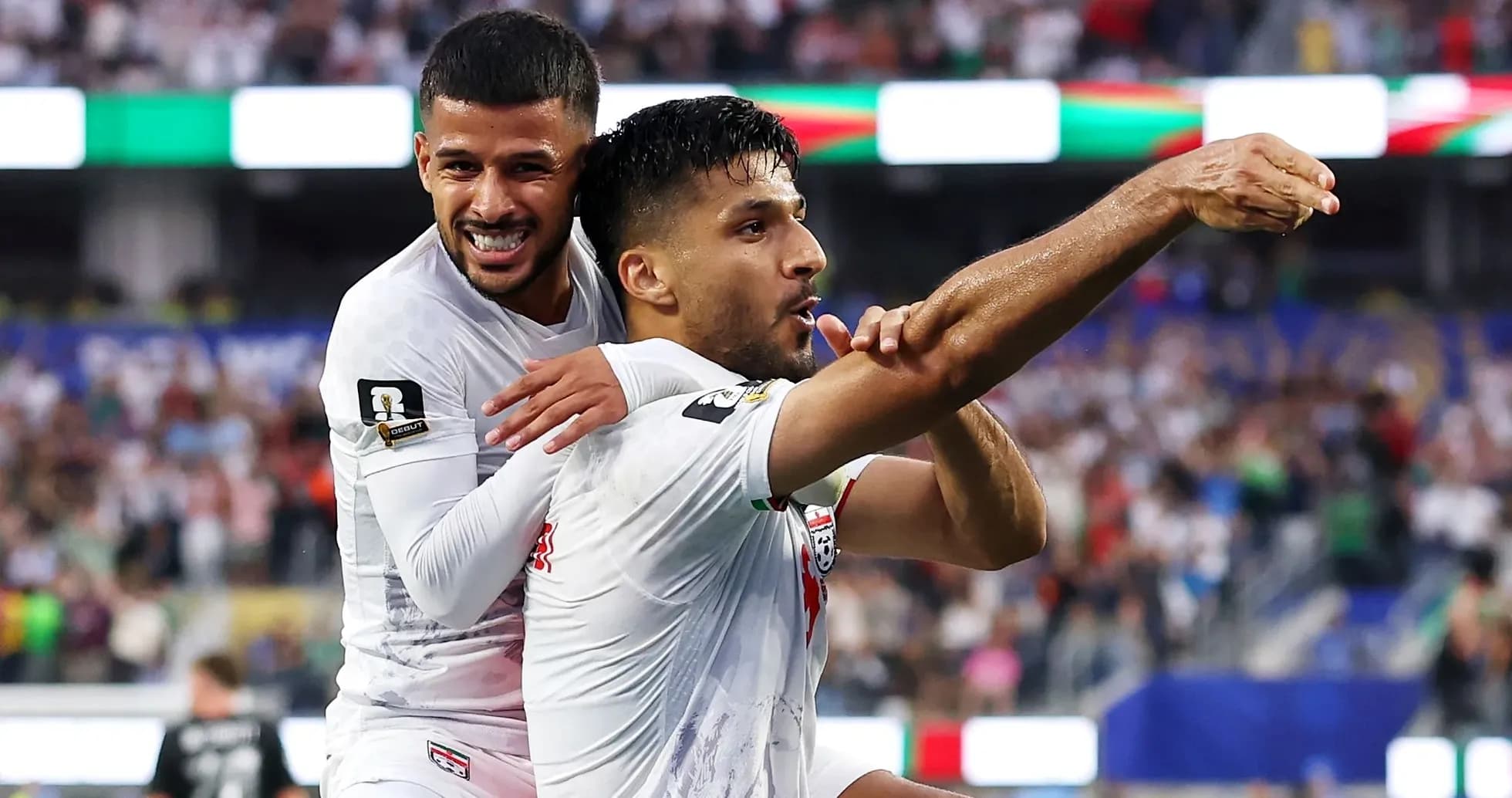
His 64th-minute equaliser against New Zealand in Los Angeles should have been the story. A crisp finish, a vital goal, and a 2-2 draw salvaged in Iran’s opening Group G match. Instead, what followed dragged the midfielder out of the tactical conversation and straight into a storm.
Mohebi wheeled away, raised two fingers to his arm, then extended two fingers on his right hand and sliced them through the air. The sequence bounced around social media within minutes. To many watching, it looked unmistakably like a “gun” gesture.
The reaction was immediate and fierce. Clips of the celebration spread across platforms, with supporters, pundits and political commentators all weighing in. Some demanded that FIFA step in, arguing that the gesture crossed a line in a tournament already overshadowed by debates about Iran’s internal politics and its global image.
Mohebi, 27, pushed back firmly when asked to explain what he meant.
“I wanted to say thank you to all Iranians who live in Los Angeles, they make a great atmosphere,” he said. “The celebration came to mind, and I do this [gestures] for all of the fans, just a celebration, you know.”
He framed it as nothing more than an impulsive tribute, a spontaneous nod to a diaspora crowd that had turned the stadium into a pocket of Tehran on the U.S. west coast. For him, it was noise, colour, emotion. For others, it was a symbol.
If there was any chance the issue might fade, it vanished the moment Ramin Rezaeian stepped in front of the microphones.
The defender had produced his own headline moment after scoring, pulling his shirt over his face as he sprinted towards the supporters. The image, stark and loaded, immediately drew questions. When reporters pressed him on what it meant, Rezaeian did not pretend it was neutral.
“It's something political (his goal celebration), I don't want to talk about that,” he said.
With that, he cracked the door open, then quickly tried to slam it shut.
“We are here to answer football questions. If there is a problem between us (the Iranian people), it is between us,” he added, attempting to drag the conversation back to the pitch.
But the damage was done. One player insisting his gesture was purely celebratory, another openly acknowledging a political layer to his own. The match in Los Angeles had turned into a canvas for something far bigger than a group-stage draw.
Attention has now shifted towards FIFA. The governing body has been approached for comment on Mohebi’s celebration and faces a familiar dilemma: where to draw the line between personal expression and political messaging on the sport’s biggest stage. An investigation remains a live possibility and, with it, the risk of disciplinary fallout for Iran just as their campaign begins to take shape.
Inside the camp, the message is different. Players talk about football, about tactics, about the next opponent. Outwardly, they push the idea that whatever divides or debates exist among Iranians should stay there, “between us,” as Rezaeian put it. The reality is that every gesture, every word, is now being dissected far beyond the dressing room.
On the pitch, the 2-2 draw with New Zealand leaves Group G finely balanced. Iran showed character to fight back, quality in key moments, and enough vulnerability to keep their path to the knockouts uncertain. Off the pitch, the noise around them only grows louder.
Next up is Belgium on June 21, again in Los Angeles. A powerhouse opponent, a high-stakes second matchday, and an Iranian team already under the microscope for reasons that have little to do with pressing lines or set-piece routines.
The goals in that game will matter. So will what happens in the seconds after the ball hits the net.