.svg&w=384&q=75 "Naijagoal logo")

Harry Kane: Bayern Munich's Best Transfer Ever
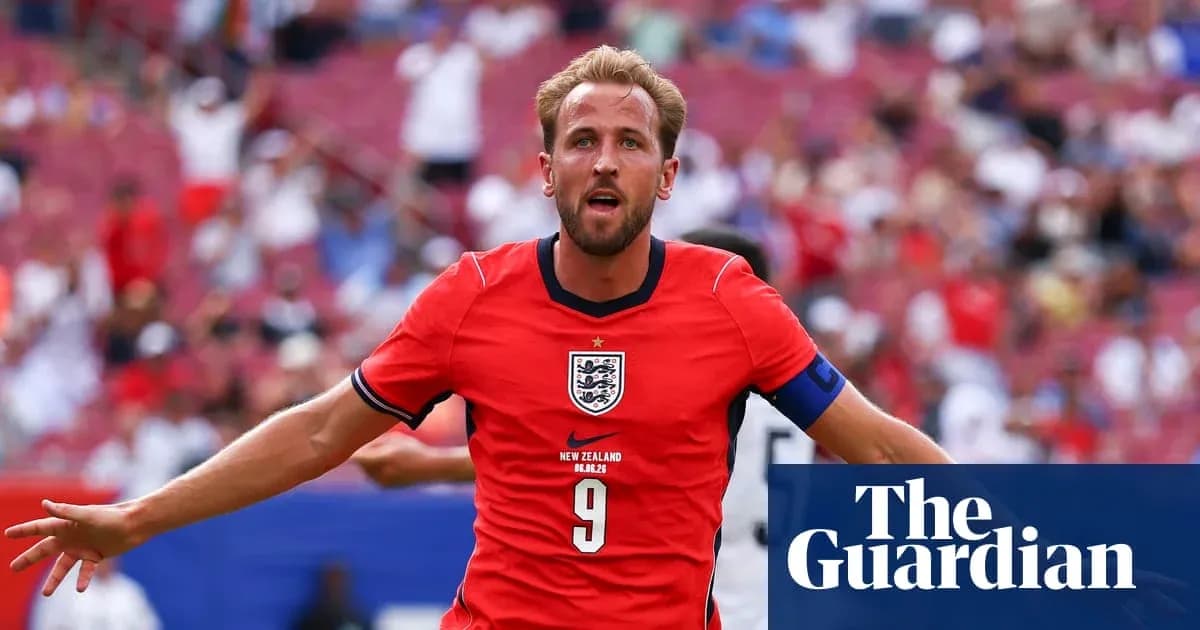
Uli Hoeness has never been shy with a superlative. The Bayern Munich president has spent a lifetime dealing in big statements and bigger personalities, so when he called Harry Kane “the best transfer the club has ever made” after the DFB-Pokal final, it sounded like another flourish from a man who enjoys the echo of his own conviction.
A month later, with the champagne flat and the noise dialled down, nobody at Bayern is laughing it off. Inside the club, the verdict is the same: he absolutely is.
From nearly man to standard-bearer
Kane’s transformation in the public imagination has been as stark as his numbers. Not long ago, his story was framed around absence rather than achievement. Euro 2024 ended with him still empty-handed at club level, a captain whose legs, some insisted, were beginning to go. His Golden Boot at Russia 2018 came with an asterisk in parts of Europe – “top goalscorer despite not having scored from the quarter-finals on,” sniffed Le Journal du Dimanche – as if his most prolific years had been an exercise in noble futility.
Now he stands, quite literally, among the game’s chosen faces. When Time assembled its World Cup icons – Lionel Messi, Cristiano Ronaldo, Neymar, Kylian Mbappé, Lamine Yamal, Jude Bellingham – Kane was there too, finally occupying a chair at football’s top table rather than peering in through the glass.
Hoeness knows why. “When we bought him for more than €100m, that was new territory for us and a crazy risk,” he said. “But he’s paid back every single euro. Not just because he scores so many goals, but because he is a role model in the dressing room.”
The quiet conqueror of Munich
Kane has not won Bayern over with slogans or theatrics. He has done it with something far more disarming: normality. No fuss, no entourage circus, no sense of a Premier League star slumming it abroad. Just a centre-forward who turns up, trains, scores, and treats people properly.
Hoeness tells stories of Kane pulling younger players aside, offering a word, a correction, an arm around the shoulder. The language barrier has not proved much of a barrier at all. Kane’s contract obliges him to learn German and he is taking lessons, but Bayern’s dressing room is already steeped in English, with several near-native speakers and Vincent Kompany running team meetings in it.
Hoeness, a World Cup winner who understands the darker arts of defending, has been struck by something else: how much punishment Kane takes and how little he complains. “I think you’d have to cut off his head or his arm to stop him playing,” he said. It is the kind of line that sounds exaggerated until you watch Kane ride another clumsy tackle, get up, and go again.
Inside the dressing room, staff talk about his influence in the same breath as Manuel Neuer and Thomas Müller in their later years. That is rare air. Neuer is the captain who redefined his position; Müller is Bayern, born and bred. Kane has been in Munich barely long enough to find his favourite coffee spot, yet he already sits in that company.
Settling into Bavaria, pint glasses and all
When the Kane family initially delayed a full move to Germany, the old stereotype surfaced. The British star abroad, counting the days until he can go home. Ian Rush never did say that living in Turin was “like living in a foreign country”, but the line stuck to a generation.
Kane has shredded that cliché. He and his wife, Kate, have settled into a rural home once owned by Lucas Hernández, tucked near the affluent suburb of Grünwald. Talk to him about life off the pitch and the details are telling. Kate and the children – Ivy, Vivienne, Louis and Henry – have thrown themselves into Bavarian habits, including skiing in winter. Kane is barred by contract from hurtling down any mountain, but he happily joins Alpine trips to Garmisch, content to watch rather than carve.
The connection runs deeper than a comfortable postcode. At a fan day in Kirchweidach, a village of 2,000 people near the Austrian border, Kane found himself stirring soup as Bavarian wedding couples do, a symbolic gesture that he was now “married” to the region. He then took part in a version of skittles using litre beer steins as bowling balls. He called it “a bit crazy” with classic English understatement, but he threw himself into it. No eye-rolling, no distance. Just a superstar prepared to play along.
A striker reborn – and then some
Bayern knew they were buying a world-class centre-forward. They did not expect this level of dominance or this breadth of contribution.
Since finally ending his trophy drought with the 2025 Bundesliga title, Kane has not simply added medals – another league crown, another DFB-Pokal – he has reshaped his own profile. At 32, he looks leaner, sharper, and more ruthless than at any stage of his career.
The goals tell one story. The manner of them tells another.
His strike against Atalanta in the Champions League stands out: a drag-back and swivel that lost two defenders in a phone box, followed by a trademark low, clean finish. It was the kind of goal that compresses technique, awareness and calm into a single movement.
Yet the moment that best captures his evolution might be his second in the DFB-Pokal final, the one that effectively killed the contest on 80 minutes. A vicious, curling effort from outside the box crashed off the bar. Most strikers would still be admiring the shot. Kane was already alive to the rebound, cushioning the ball, executing another drag-back and turn in a crowded area, then finishing with the same icy precision. Not a poacher’s scramble. A complete forward’s sequence.
With 61 goals for Bayern, he is the only player in Europe’s major leagues matching the absurd output that Messi and Ronaldo normalised. Only Erling Haaland, who stood alongside him on that Time photoshoot, is close. Ronaldo once hit 66 in a season without a major tournament. Messi reached 73. After England’s game against New Zealand in Tampa, Kane sits on 67.
And he is not just waiting in the box. At Bayern he often drops into a No 6 pocket when the team are out of possession, collecting the ball deep, spraying passes as if he had spent a decade in midfield. His assist for Luis Díaz in the Champions League semi-final first leg against Paris Saint-Germain – a pass of vision and weight – underlined that his passing range is almost as dangerous as his finishing. Thomas Tuchel seems certain to carry that template into the World Cup.
From afterthought to Ballon d’Or contender
At Tottenham, Kane was rarely more than a footnote in the Ballon d’Or conversation. His numbers merited more, but the absence of trophies and late-stage Champions League appearances kept him on the margins. He was the elite striker without the elite stage.
That has changed. Now he is a regular presence in the sharp end of Europe’s biggest competition, a serial champion in Germany, and his name sits firmly among the Ballon d’Or contenders. The caveat is obvious: this World Cup will weigh heavily. It always does.
Look a little wider, though, and the arc of his career feels almost literary. The slow starter who outlasts the hares, the player who grinds, adjusts, and then, in his thirties, suddenly finds the view from the summit. Kane has always been more tortoise than hare in football’s race for immortality. The tortoise, right now, is setting the pace.
The making of a relentless finisher
Those who knew him as a teenager at Spurs still sound faintly bemused by what he has become. By the brutal standards of elite academies, Kane was unremarkable. Slightly overweight, not especially quick, not the most naturally gifted technician.
“You would never have thought that he would be what he is now,” one youth coach said. The turning point came around 14, when a growth spurt coincided with steady technical improvement. His striking of the ball began to stand out. So did his capacity to absorb information. Any instruction – gym work, finishing drills, positional detail – needed saying once. It stuck.
The early loans were brutal. At Norwich, his Premier League debut was scarred by a glaring miss against West Ham. His final outing for the club ended with him hauled off at half-time in an FA Cup defeat to non-league Luton. Between those low points, he was dropped to the under-21s. They would not even let him take penalties. He was not considered good enough.
Leicester was little kinder. During their 2013 Championship playoff semi-final against Watford, he started both legs on the bench, alongside Jamie Vardy. The future England captain and the future Premier League record-breaker, reduced to watching.
Even when he returned to Spurs, the doubts lingered. Maurico Pochettino did not immediately see a cornerstone of his project. Kane remembers the moment clearly. “We had our body fat test done and I was the highest in the team, something like 18%,” he recalled. He went to see Pochettino, who told him bluntly that his body fat was too high, that he was not working as hard as he could. Then came the twist. “He told me: ‘You can be the best striker in the world.’”
At the time, it sounded like motivational excess. Much like Hoeness calling him Bayern’s greatest ever signing did this spring. Yet both lines, once filed under hyperbole, now read less like exaggeration and more like prophecy.
The risk for Bayern, and for everyone who doubted Kane, is that he has not finished proving them right.