.svg&w=384&q=75 "Naijagoal logo")

Graham Potter's Journey from Chelsea to World Cup Glory with Sweden
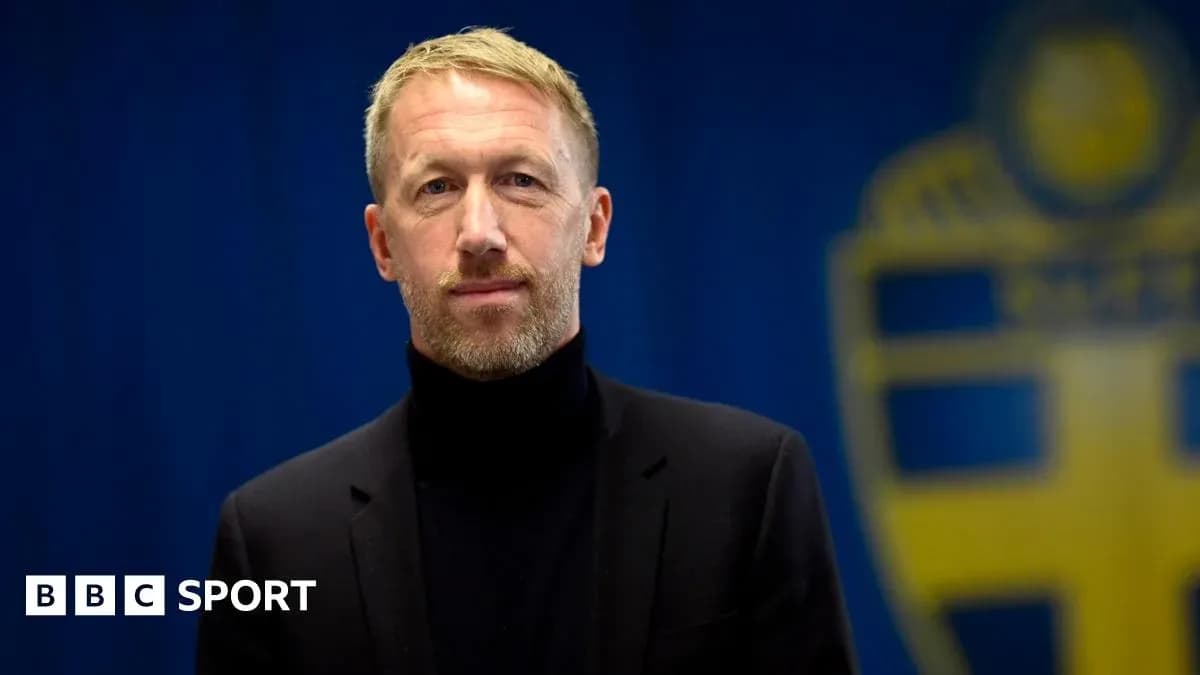
Graham Potter stood on the touchline in Stockholm, the noise folding over him in waves, and let the words rip out.
"We are going to the World Cup, baby."
An 88th-minute winner from Viktor Gyokeres had just detonated inside Strawberry Arena, sealing a wild 3-2 play-off victory over Poland and dragging Sweden back to the World Cup for the first time since 2018. Fifty thousand people roared. Substitutes sprinted on. Order disappeared.
For Potter, 51, it was more than qualification. It was a reclamation.
From Chelsea scars to Stockholm ecstasy
Only a year earlier, he had been the man chewed up by Chelsea and then discarded by West Ham, two Premier League jobs that ended in under 16 months combined and left him branded, in some quarters, as damaged goods.
"It hurt. They are painful experiences," he admitted. "I have lived failure. I've had quite a bit of success too. That's what life is."
He talks about perspective, about listening only to those who matter, about trying to be grateful even when the noise around you is hostile. It sounds measured now. It did not feel that way in the middle of it.
"When you're going through it, it isn't easy. You have to deal with the failure, but you become a better person for it, that's for sure."
That is why that night against Poland hit so hard. Arsenal striker Gyokeres, fresh from a hat-trick in the previous game against Ukraine, darted through and finished. Chaos.
"Viktor scores and it's like an out of body experience," Potter said. "All our subs are running on the pitch. There's 15 players on the pitch and I'm thinking, 'That's yellow cards, that's problems'. But of course it's a World Cup, so all the rules are out the door."
The final whistle only cranked the emotion higher. The Englishman, who had not felt much joy in football for a while, suddenly found himself at the centre of it.
"The feeling in the stadium was just incredible," he said. "It's so nice to have to experience positivity through football, because obviously recently I haven't had too much of that, so it's quite nice, of course, on a human level."
How did he celebrate?
"What do you think I did?" he replied, allowing himself a grin and a few drinks before the coach in him took back control.
"I don't think you should necessarily get carried away. You're never quite as good as you say when you're there [high], and you're never quite as bad as they say when you're there [low]. So, you've got to find some way of keeping some perspective."
The Englishman who feels “very Swedish”
If Potter sounds unusually rooted in this job, it is because Sweden is not a foreign posting to him. It is where his coaching life truly began.
At Ostersunds FK he started in the fourth tier and climbed all the way to the Allsvenskan, winning the domestic cup and taking a club with no European pedigree into continental competition. Seven years of graft, culture and immersion.
"I feel very Swedish when I'm working," he said. He even sings the national anthem before matches. "I even look a bit Swedish. Two of my children were born in Sweden. I had seven unforgettable years at Ostersunds, with memories that will stay with me for life."
He remembers the long drives, the tiny grounds, the slow climb. "I came from the fourth tier of Swedish football, which is quite low, and worked my way up through the system to the Allsvenskan. You almost become Swedish in a coaching sense because of the experiences you have."
Now he wears the crest of the Swedish FA, head coach of the national team, and says simply: "I feel very Swedish."
His knowledge of the country runs deep enough that he can still hum the 1994 World Cup anthem, "När vi gräver guld i USA", a song that sits in Swedish football folklore alongside England's "World in Motion" and "Three Lions". That tournament, that bronze medal, is the benchmark for every generation that has followed.
So when the call came in November, after Jon Dahl Tomasson’s departure, it was not a leap into the unknown. It was a calculated return. He agreed a short-term deal, then, before the March international break and before qualification was even secured, extended it to 2030.
The message was clear: this was not a stopgap. This was a project. If Sweden reach them, he will lead the country at this World Cup, Euro 2028 and the 2030 World Cup.
"Maybe in England we have taken it for granted because we usually qualify," he said. "But the reality is that many countries do not, so it is special when they do. It is also very important for the finances of the football structure."
Isak, Gyokeres and a forward line built for June
Potter’s reward for guiding Sweden through the play-offs is a group that offers both opportunity and danger: Tunisia, the Netherlands and Japan in Group F. The path out of it will run through his two Premier League centrepieces.
Liverpool’s Alexander Isak and Arsenal’s Viktor Gyokeres arrive as headline acts, even if their stories could not be more different.
"I think they are different in their styles, which is good for us because you can hopefully use them effectively," Potter said. "The honest truth is that we haven't played them together yet in my time, so that will be exciting to develop. If we can get them enjoying their football and firing, they are top players."
Isak, signed by Liverpool from Newcastle for a record £125m last summer, has endured an injury-hit season and is still waiting for his first start under Potter.
"It can take a bit of time," the coach said. "At the biggest clubs there is pressure and expectation, and when expectation and reality begin to diverge, it can create problems.
"His injuries have been disappointing, but I know him well. He is a top professional who wants to play and help his team."
Potter’s relationship with Isak stretches back to the teenager’s early days. He still remembers the 16-year-old scoring on his professional debut for AIK – against Potter’s Ostersunds.
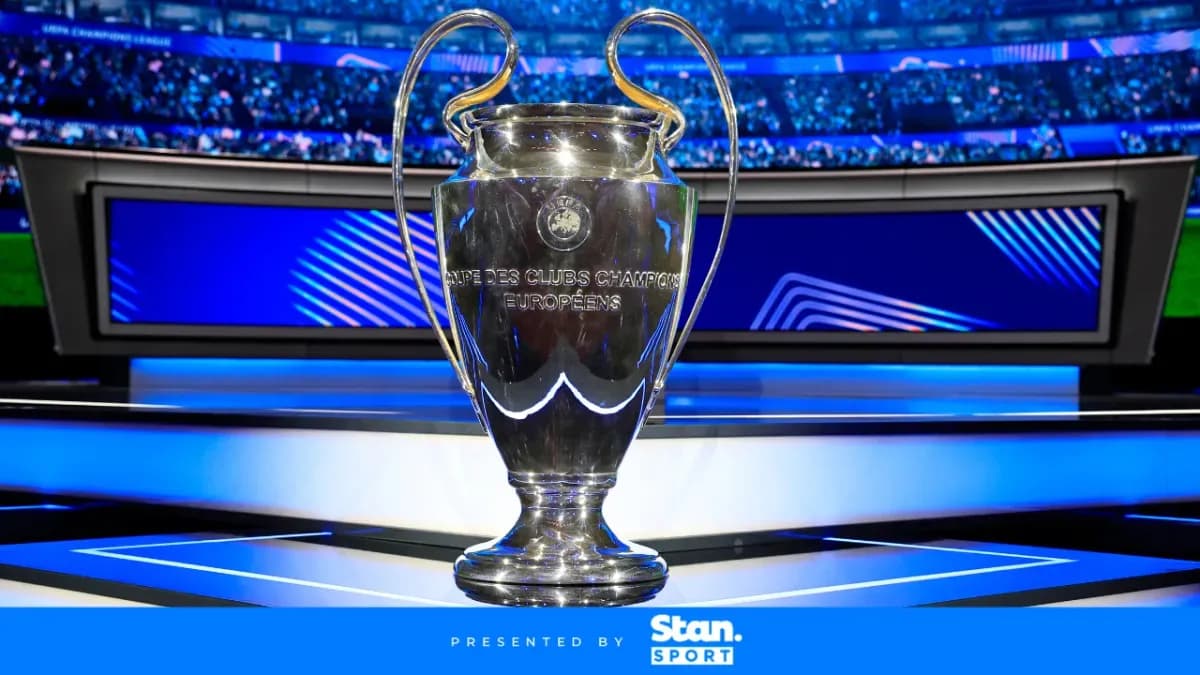
Gyokeres, by contrast, has ridden a wave. Twenty-one goals in his first season at Arsenal, a Premier League title, a run to the Champions League final, and then the man who dragged Sweden over the line with four goals in two play-off matches.
Yet even he has not escaped criticism.
"It is a good example of the modern game," Potter said. "From our perspective, he has scored four goals in two matches and helped take us to the World Cup, so his impact has been significant."
The plan now is to harness both. One a lithe, gliding forward who can knit play and finish. The other a relentless runner who attacks space and punishes tired legs. Two different weapons, one shared burden.
No frills, no complaints, just work
Sweden qualified late, which meant they picked from what was left in terms of training bases. While some of the tournament’s heavyweights will settle into luxury compounds, Potter’s side will work out of SDJA, a high school facility in San Diego.
There is no grumbling.
He has spoken positively about the set-up and the chance to drill details, particularly set-pieces, in the heat. Margins matter when you are not one of the favourites.
The harder part, he admits, has been trimming the squad. The conversations, he says, have been "the toughest as a father and human being", a reminder that behind every tactical plan sits a row of disappointed faces.
Sweden’s preparation will be rooted at home. While England decamp to Miami before the tournament, Potter’s squad will stay in Stockholm, players encouraged to lean on family and friends after long club seasons. They will play friendlies against Norway and Greece, then fly out for their opening match against Tunisia on 15 June.
The coach who once read Nordic literature to better understand the culture now uses his Instagram to share images of lakes, forests, family walks and cultural events. It is not branding. It is a man who chose to come back to a place that shaped him.
From Maradona on TV to the touchline in June
Potter often reaches back to one image when asked what the World Cup means to him.
"My first football memory is from 1986 – I was 11, watching Diego Maradona," he said. That tournament, that player, lit the fuse. The realisation that football could be something otherworldly.
Decades later, the boy who sat in front of the television will walk out in the heat of a World Cup as head coach of Sweden, leading a team that has dragged itself back onto the biggest stage.
The failures at Chelsea and West Ham will not disappear. They sit in his story, as he freely admits. But the night in Stockholm, the roar after Gyokeres’ winner, the anthem he now sings as if it were his own – those are the moments that define where he is going.
The next chapter starts against Tunisia on 15 June. How far this very Swedish Englishman can take them will tell us whether that night in Stockholm was a peak, or just the beginning of something bigger.