.svg&w=384&q=75 "Naijagoal logo")
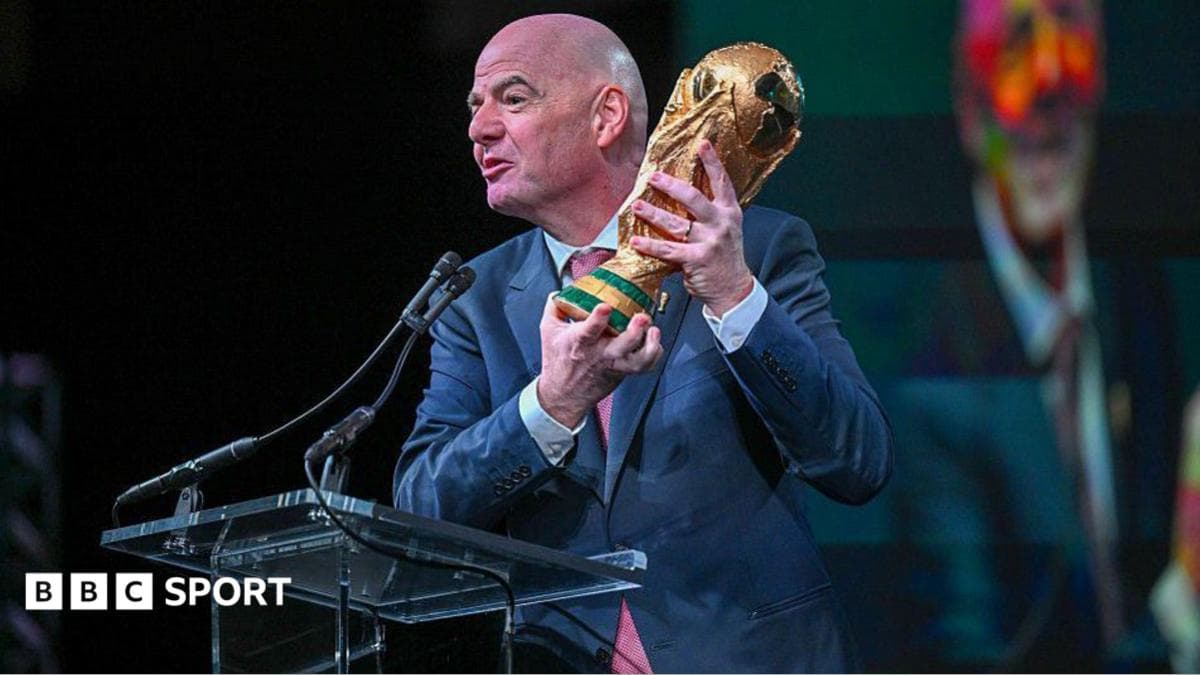

Is a 64-Team World Cup on the Horizon Under Gianni Infantino?
Gianni Infantino's Vision: Bigger World Cups?
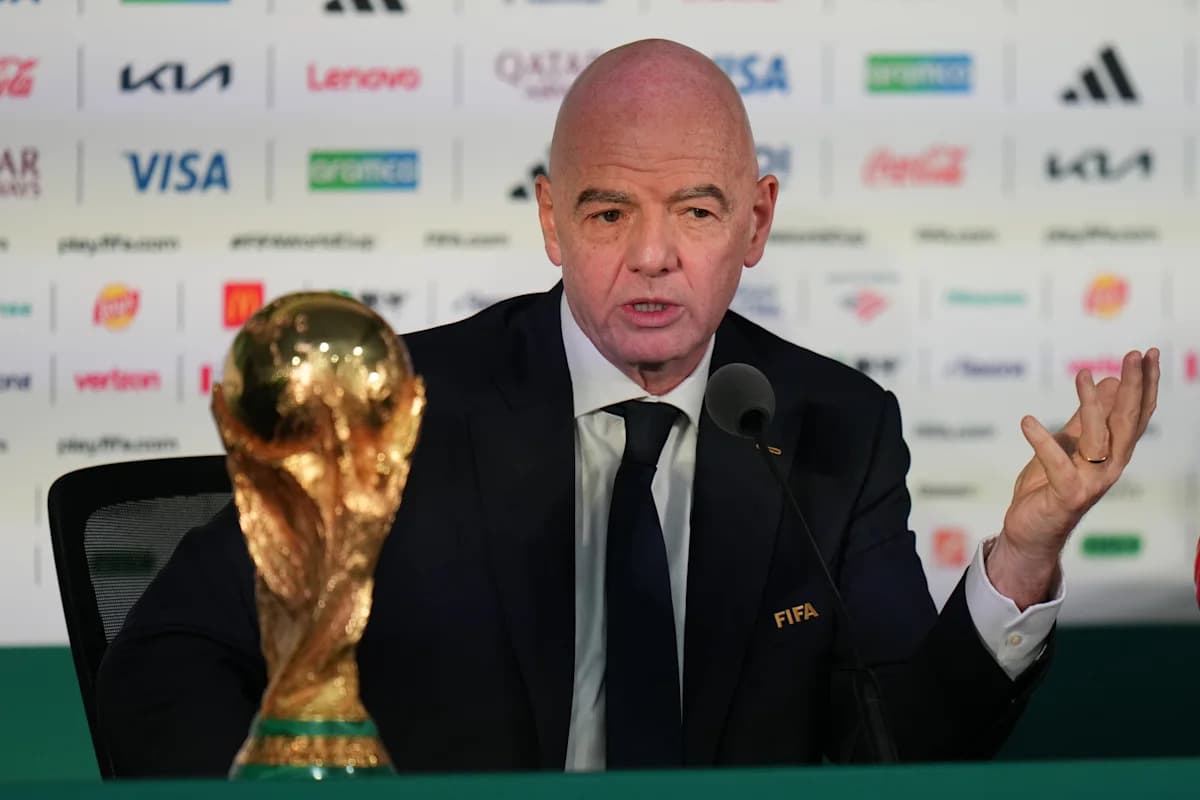
Gianni Infantino, Fifa's president for over a decade, seems to believe that more is better. More tournaments, matches, and revenue have defined his leadership so far. From the revamped Club World Cup and expanded World Cup formats to soaring ticket prices and extravagant halftime shows, the trend is clear. Now, he might be pushing for a World Cup featuring 64 teams.
The Case for Expansion
Infantino argues that smaller nations need chances to compete internationally to keep progressing. He said, "If you don’t give smaller countries a chance, they’ll lack incentive to improve." Yet, smaller teams already qualify if they perform well, as shown by nations like Cape Verde, Curacao, Jordan, and Uzbekistan. Expanding to 64 teams would create 16 groups with the top two from each advancing directly to knockout rounds, simplifying the tournament structure.
Who Supports This Idea?
The push largely comes from Conmebol, the South American football confederation. Ahead of the 2030 centenary World Cup, hosted mainly by Morocco, Portugal, and Spain—with opening matches in Uruguay, Argentina, and Paraguay—Conmebol has pushed for more games. Alejandro Dominguez, its president, described the 64-team format as a way to ensure no one is excluded from the event. After the 2026 World Cup, he reaffirmed plans to work towards this expansion.
Yet, most other confederations remain skeptical. UEFA’s Aleksander Ceferin called it a poor idea for both the tournament and qualification process. Concacaf's Victor Montagliani warned it could harm football’s broader ecosystem. Sheikh Salman bin Ibrahim Al Khalifa, president of the Asian Football Confederation, fears chaos could result. Still, the decision rests with the Fifa Council's 37 members, so the possibility remains.
Impact on Competition Quality
A 64-team tournament offers a cleaner format and more chances for emerging nations. Infantino champions the latter, pointing to Cape Verde's surprising run in 2026, where they drew against Spain and Uruguay and pushed Argentina to extra time in the knockout phase.
On the flip side, several debutants like Haiti, Iraq, Jordan, Panama, Tunisia, and Uzbekistan didn’t earn points, and some top teams breezed through group stages without much threat. Adding more teams might reduce unpredictability, making early exits by major football powers less likely.
Which Teams Could Join?
Based on 2026 qualifying, additional qualifiers in a 64-team setup might include:
Six teams rank within Fifa's top 50, spanning Europe, Africa, and South America. Asia and Concacaf showed weaker performances in 2026, with fewer teams advancing past the group stage. Africa outperformed others, with nine of ten teams moving forward.
This raises questions about how to balance competitiveness and representation. Should Europe get more slots to maintain standards? Or should expansion prioritize global development? Expanding might benefit football growth worldwide but risks diluting tournament quality. Almost a third of Fifa’s 211 members would be present in a 64-team event, potentially turning group stages into extended qualifiers.
Logistical Challenges
Adding four extra groups means roughly 24 more matches, requiring about five more days. The 2026 World Cup spanned 39 days and took advantage of multiple time zones and indoor stadiums to stretch matchdays. Future hosts might not enjoy such conditions. Climate concerns, like heatwaves, add complexity to scheduling.
Hosting a 64-team World Cup demands at least 20 stadiums with capacities between 40,000 and 80,000, plus elite training sites for all teams. Infrastructure for fans, including hotels and transport, would need massive upgrades. Single-country hosting may become impossible, pushing the need for multi-nation events, such as possible collaborations between the UK and Scandinavia or Eastern European countries. Funding these ventures would be challenging, especially for some Asian and African nations.
The Money Factor
Infantino promised more money for football associations. Currently, every association receives $8 million over four years, with smaller nations getting an additional $1.2 million. Confederations get $60 million to support football development and promotion. This funding mostly derives from the World Cup’s revenues.
In 2017, Fifa estimated a 48-team World Cup would generate $6.5 billion. By 2022, with added games, expectations rose to $9 billion. A 64-team tournament could increase this further through TV rights, sponsorships, and ticket sales.
Fifa claims a duty to expand the sport globally, using more football as their tool. Critics question whether endless expansion truly benefits the game or just inflates commercial gains.