.svg&w=384&q=75 "Naijagoal logo")

Three Hall of Famers, Ten Battles, and Over 100 Rounds: The Forgotten Rivalry That Shaped Lightweight Boxing's Golden Age
The Era of Relentless Lightweight Competition
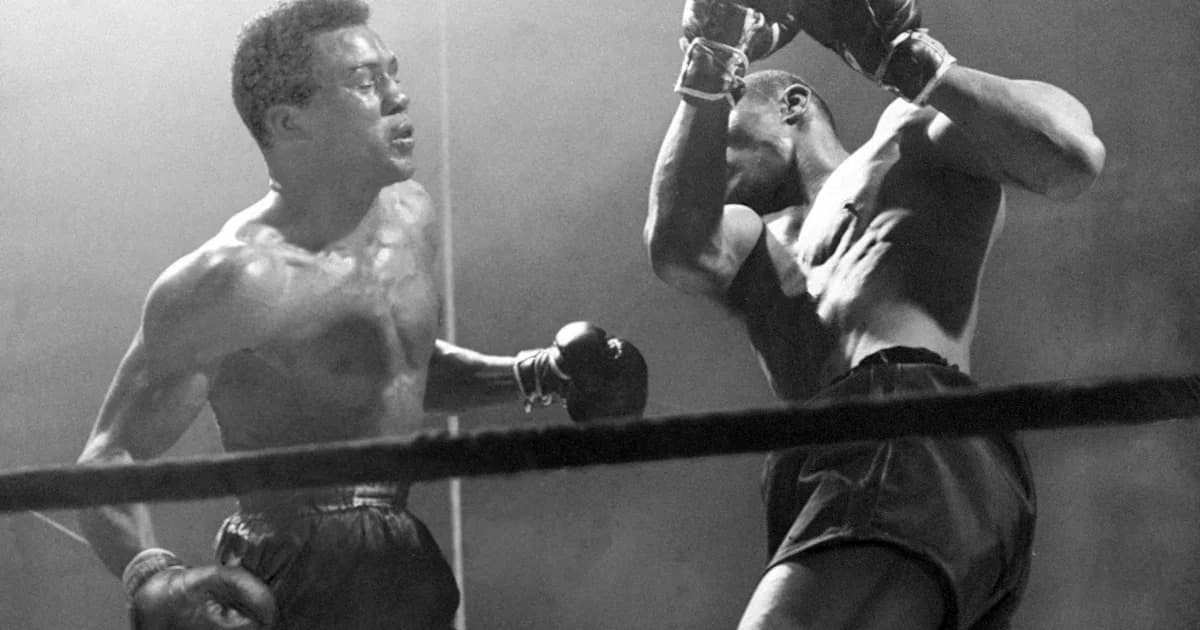
In the world of lightweight boxing, a forgotten rivalry between three future Hall of Famers once defined an entire era. Bob Montgomery, Beau Jack, and Ike Williams risked everything repeatedly in a series of ten intense fights spanning over 109 rounds from the 1940s to the mid-1950s. Their battles captured the spirit of a golden age for the division.
Comparing Past and Present Lightweight Stars
A few years ago, excitement surrounded a group dubbed the Four Princes—Ryan Garcia, Gervonta Davis, Teofimo Lopez, and Devin Haney. Expected to clash frequently, they have only faced each other twice so far. Davis knocked out Garcia in seven rounds in April 2023, and Garcia edged Haney by majority decision before the result was overturned due to a failed drug test. Now, most have moved up to welterweight, and it seems unlikely they will meet again in lightweight competition. Politics and ego seem to block those matchups.
Back then, though, Montgomery, Jack, and Williams fought not just once but multiple times to prove supremacy in the ring.
Origins of the Trio
- Bob Montgomery: Born in 1919 in Sumter, South Carolina, he moved to Philadelphia at 15. There, he worked in laundry factories and trained at a gym called The Slaughterhouse. Managed by Joe Gramby, a key figure in Philadelphia boxing, Montgomery developed an aggressive style that earned him the nickname “The Philadelphia Bobcat.”
- Beau Jack: Originally Sidney Walker, born in 1921 in Waynesboro, Georgia. After his mother's death, he lived with his grandmother in Augusta, where he worked shining shoes at Augusta National Golf Club. He endured tough Battle Royales as a child, and golf legend Bobby Jones helped support his early boxing career.
- Ike Williams: Born in 1923 in Brunswick, Georgia, he moved to Trenton, New Jersey, following his parents’ separation. Williams learned to fight on the streets and trained under former fighter Jesse Goss. He was also an athlete in track and baseball during high school.
All three came from tough backgrounds shaped by the Great Depression, turning to boxing as a way to support themselves and their families.
Styles Inside the Ring
Historian Bert Sugar ranked Jack No. 52 and Williams No. 60 among boxing’s greatest fighters. Jack's style involved relentless aggression with punches thrown from every angle, while Williams combined reach and power, delivering one of lightweight history’s hardest right hands alongside a fast left jab. Montgomery, though not on Sugar’s top 100, was known for his forward pressure and tenacity.
The Rivalry Unfolds: Key Fights
- May 21, 1943: Montgomery defeated Jack at Madison Square Garden for the NYSAC lightweight title in front of 18,000 fans. Montgomery’s comeback after an early round loss secured him the win and the title.
- Nov 19, 1943: In a rematch at the Garden, Jack executed a new strategy under trainer Larry Amadee and regained the title by decision.
- Jan 25, 1944: Montgomery stopped Williams in Philadelphia, handing the young contender his first loss with three knockdowns in the final round.
- Feb-July 1944: Montgomery and Jack met twice more, trading wins in hard-fought bouts, while Angott's title situation shifted the lightweight championship landscape.
- Aug 4, 1947: Williams defeated Montgomery at Philadelphia’s Municipal Stadium to claim the undisputed lightweight championship with a powerful right cross causing two knockdowns.
- July 12, 1948: Williams defended his title against Jack at Shibe Park. Despite being an underdog, Jack started strong but Williams dominated later rounds, winning by stoppage after a brutal body attack.
- 1951 & 1955: Williams and Jack fought three more times without a title on the line; Williams won two, and their rivalry concluded with a knockout in Augusta, Georgia.
Summary of Their Record Against Each Other
- Ike Williams: 4 wins, 1 loss, 1 draw
- Bob Montgomery: 3 wins, 3 losses
- Beau Jack: 2 wins, 5 losses, 1 draw
A Legacy of Courage and Competition
These three men faced each other repeatedly, knowing the toll on their bodies and minds, driven by a desire to prove themselves against the best. Their willingness to engage in such fierce competition helped build their Hall of Fame careers and left a lasting legacy for lightweight boxing.
Maybe today’s top lightweights like Garcia, Davis, Lopez, and Haney could take a lesson from this trio — embracing the challenge of fighting one another rather than avoiding it. That kind of commitment is how legends are made.