.svg&w=384&q=75 "Naijagoal logo")

Footballers Are Not Superheroes: The Hidden Toll of the World Cup Calendar
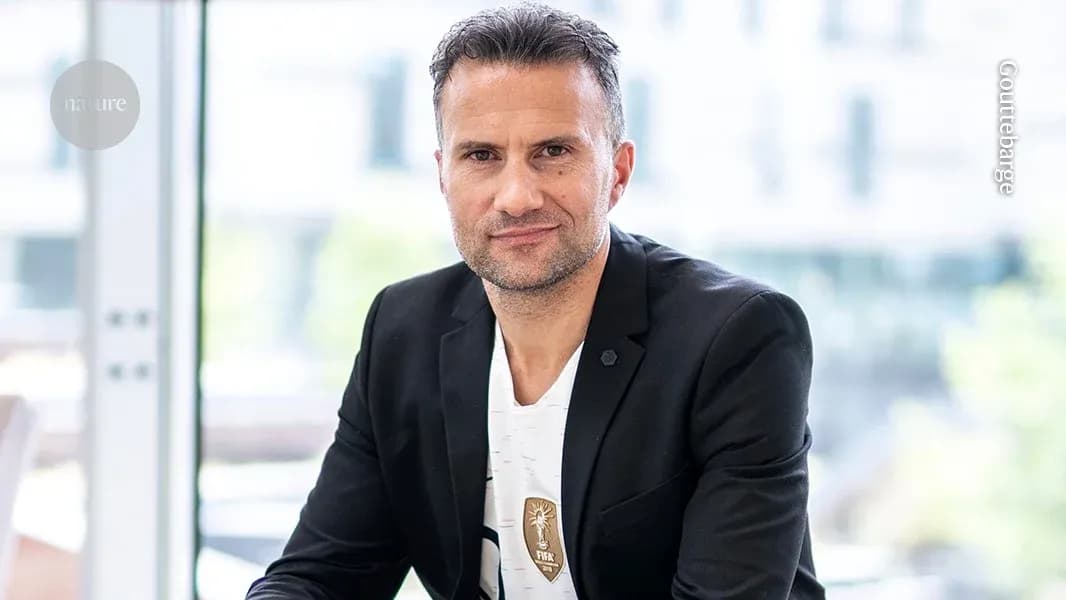
Vincent Gouttebarge knows what it feels like when a body starts to protest.
For more than a decade he played professional football in France and the Netherlands, carrying the usual collection of knocks, strains and quiet fears that follow any player through a career. He retired in 2007. The injuries stayed with him. So did the questions.
Now, as medical director at FIFPRO, the global players’ union, and chair of the International Olympic Committee’s Mental Health Working Group, Gouttebarge has turned those questions into a career. From his research bases at the University of Pretoria and Amsterdam University Medical Centre, he spends his time studying what football does to the people who play it.
As the 2026 men’s World Cup kicks off in the United States, Canada and Mexico, his message cuts sharply against the glossy tournament imagery: the players at the centre of the spectacle are far more vulnerable than they look.
The Myth of the Superhuman Footballer
“Footballers are not superheroes,” he stresses. They are workers. They are human. And they are exposed to a broad range of health problems that most fans never see.
Musculoskeletal injuries are obvious: torn ligaments, shredded muscles, battered joints. Those fill medical reports and press conferences. The hidden side is mental health — symptoms of depression, anxiety, sleep disturbance, adverse thoughts and behaviours that rarely make it into the public conversation.
Years after hanging up his boots, that gap drew Gouttebarge into a new line of work: documenting the mental-health challenges players face during their careers and once the stadium lights go out for good.
World Cup Euphoria, World Cup Cost
A World Cup call-up is supposed to be the pinnacle. For many, it is. The anthem, the shirt, the sense of representing something bigger than yourself.
But the emotional impact, Gouttebarge points out, depends heavily on context. Are you in the starting XI or stuck on the bench? Is your team winning or crashing out early? Are you playing freely, or carrying the weight of a nation’s expectation on your shoulders?
Then there is the part few supporters think about: what happens when the tournament ends.
Players barely have time to process the experience before they are dragged back into the club cycle. If they are fortunate, they snatch one or two weeks off. For many, even that is unrealistic. One season blurs straight into the next. There is no genuine recovery window, either physical or psychological.
This is not just a performance issue. It is a health problem.
A Calendar That Squeezes Players Dry
Across domestic leagues, continental competitions and international fixtures, the modern match calendar has become a grindstone.
At the elite level, Gouttebarge notes, players can be forced through two or three matches a week, week after week, with no real day off. Training, travel, media duties and commercial obligations fill the gaps. The body never truly resets; the mind never really switches off.
In 2024, FIFPRO and the World Leagues formally called on FIFA to rethink the schedule and build in more recovery time between major competitions. The demand was clear: protect players, not just the product.
And that is before you even get to the noise of the digital age. Social media has turned every performance into a referendum, every mistake into a meme. Abuse and criticism follow players through the season and into their supposed holidays. The game no longer ends at the final whistle.
When Injury and Mental Health Collide
Gouttebarge’s research, which has tracked elite athletes since 2012, does not rely on full clinical diagnoses. In the high-pressure environment of top-level sport, the time-consuming process required for formal psychiatric classification is rarely realistic. Instead, he and his colleagues measure self-reported symptoms: how players think, feel and behave.
The patterns are stark.
Like anyone else, footballers deal with relationship problems, family issues, financial stress and life events outside their job. On top of that sit sport-specific pressures.
Injury stands out. The evidence, he says, shows a bidirectional relationship between injury and mental health. Poor mental health can make a player more vulnerable to musculoskeletal injury. A serious injury, in turn, ranks as the most significant adverse life event in many athletes’ careers. It rips away routine, social contact, competition and identity in a single moment.
Unexpected poor performance is another trigger. A bad run of form, a high-profile mistake, a loss of place in the team — these can cut deep in a profession where self-worth is often tied tightly to output on the pitch.
The Stigma That Still Lingers
Progress is real, but incomplete.
In Europe, Gouttebarge believes, football has taken meaningful steps toward breaking the stigma around mental health. Players speak more openly. Campaigns run. Clubs invest in education.
Across South America, Africa and parts of Asia, the picture is more stubborn. Talking about depression or anxiety is still widely seen as a sign of weakness. In a conservative football culture, that perception bites hard.
The contrast is striking. An ankle injury or hamstring tear is discussed freely at press conferences. Recovery timelines are debated on television. No one questions a player’s courage for admitting physical pain.
When the issue is depression, anxiety or other mental-health symptoms, silence often returns. Players worry about how coaches will react. They fear that admitting to a mental-health struggle will cost them their place in the starting XI.
Gouttebarge argues that change has to come from both directions. From the bottom up, players and coaches need mental-health literacy programmes and education that place psychological wellbeing on the same level as physical injury. From the top down, governing bodies must embed mental-health expertise into their structures.
Right now, he points out, medical committees at national federation level are typically built around sports physicians, orthopaedic surgeons and cardiologists. Mental-health professionals are usually absent. That, he says, has to change.
Evidence That Education Works
In 2018, FIFPRO launched an educational programme aimed at professional players, focused on mental-health awareness and literacy.
The results, while not based on a randomized controlled trial, were encouraging. After the programme, players showed better attitudes and behaviours around mental health than before. For Gouttebarge, it was a small but important piece of evidence: invest even a modest amount of time in explaining why mental health deserves equal billing with muscle and ligament injuries, and you can shift the culture.
The message is simple. The impact is not.
The Cruelty of Isolation
One practice, in particular, angers him.
It is a familiar scenario in professional football. A new coach arrives. The squad is too big. Certain players are told to train alone or sent to work with the youth team, far from the main group.
From a trade-union standpoint, Gouttebarge calls it unacceptable. These are employees with contracts, yet they are being pushed to the margins of their workplace.
From a mental-health perspective, he sees something even more damaging. Social support is one of the strongest protective factors against psychological distress. Deliberately isolating a player from their teammates and daily environment strips that support away and increases the risk of mental-health problems.
In most industries, he notes, such treatment would be condemned as poor leadership and potentially as a breach of basic workplace standards. In professional football, it still happens regularly.
As the World Cup unfolds across three countries and a global audience loses itself in the drama, the question lingers behind the spectacle: how long can the sport keep asking its players to carry this load before the damage becomes impossible to ignore?