.svg&w=384&q=75 "Naijagoal logo")
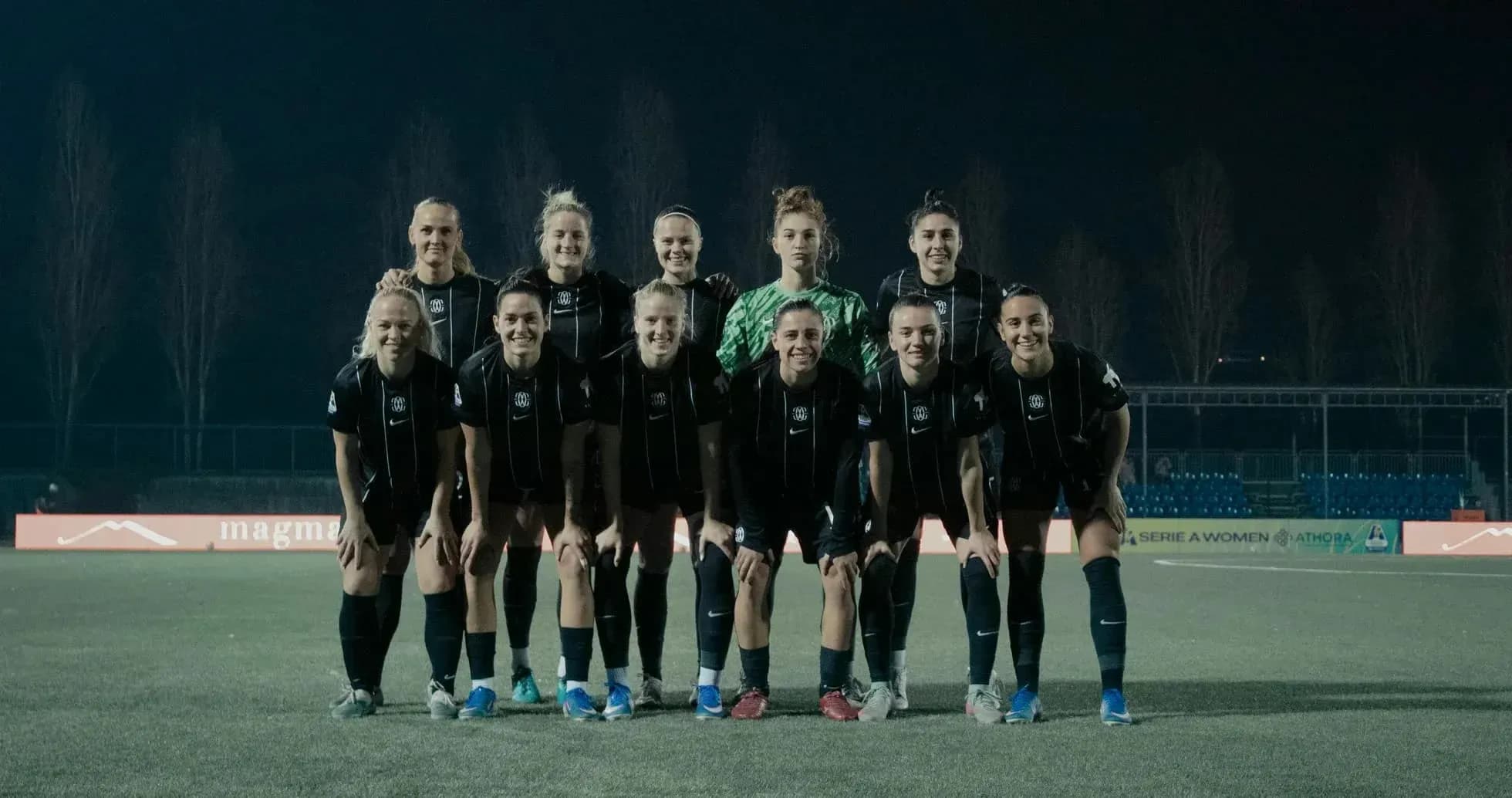
Fiorentina W Triumphs Over Genoa W in Thrilling Serie A Women's Clash
Under a grey Genoese sky at Stadio Luigi Ferraris, a fragile season narrative for Genoa W collided with Fiorentina W’s push for Europe – and, over 90 minutes, the table largely held its truth. The 3-2 away win for Fiorentina W in this Serie A Women clash, part of the Regular Season - 21, felt less like an upset and more like a confirmation: the side ranked 5th, with 33 points and a goal difference of 2, found just enough cutting edge to overcome the team marooned in 12th on 10 points and a goal difference of -23.
The scoreline – 1-1 at half-time, 3-2 at full-time – mirrored the season-long profiles. Genoa W, who heading into this game had won only 2 of 21 league fixtures overall, again showed flashes of resilience without the structural solidity to sustain it. Fiorentina W, with 9 wins from 21 overall and a balanced 31 goals for against 29 conceded, rode their superior attacking rhythm and squad depth to tilt a chaotic contest in their favour.
Sebastian De La Fuente’s Genoa W started with C. Forcinella in goal behind a backline anchored by F. Di Criscio and V. Vigilucci, with C. Mele and A. Acuti giving the side its combative edge. Up front, B. Georgsdottir and A. Sondengaard were asked to stretch a Fiorentina W defence that, on their travels, had conceded 15 goals in 11 matches – an average of 1.4 per game – but usually found ways to survive.
On the opposite bench, Jesus Pinones-Arce Pablo sent out a Fiorentina W XI that blended Nordic steel and Italian flair. C. Fiskerstrand guarded the posts, shielded by E. Faerge, M. Filangeri and I. Van Der Zanden. In midfield and attack, the creative core of M. Catena, S. Bredgaard and F. Curmark supported the front threat of I. Omarsdottir and H. Eiriksdottir, with A. Bonfantini offering direct running and verticality from wide areas.
Tactically, Genoa W’s season-long issues were written all over the pattern of play. Overall they had averaged just 0.9 goals for per game and 2.0 goals against, and the structure that has oscillated between 4-3-3, 4-1-4-1 and other back-four systems again looked vulnerable when stretched. At home, Genoa W had managed 11 goals in 11 matches – an average of 1.0 – but conceded 19, or 1.7 per game. The 2 goals they found here were in line with their best attacking days at Ferraris; the 3 conceded were depressingly familiar.
Fiorentina W’s attacking DNA, by contrast, was clear. Overall they had scored 31 goals in 21 matches, an average of 1.5 per game, and even on their travels they produced 12 goals in 11 fixtures (1.1 per match). The front line reflected that profile. I. Omarsdottir, with 4 goals in 19 league appearances and 13 shots in total (6 on target), is not a volume shooter but a penalty-box presence who comes alive when service arrives. Her 9 key passes and 70 duels contested underline a forward who participates in build-up and battles for territory, not just finishing.
Behind her, S. Bredgaard is the creative engine. With 5 assists in 15 league appearances and 17 key passes from 245 total passes, she is Fiorentina W’s primary conduit between midfield and attack. Her 28 dribble attempts, 13 of them successful, speak to a winger or attacking midfielder who constantly looks to break lines. Against a Genoa W side whose defensive shell has been repeatedly breached – 41 goals conceded overall – Bredgaard’s ability to isolate full-backs and find Omarsdottir or late runners like F. Curmark was always likely to decide phases of the match.
The “Engine Room” battle tilted purple as well. For Genoa W, A. Acuti and N. Cinotti bring bite and volume. Acuti, ever-present with 21 appearances and 1116 minutes, had accumulated 4 yellow cards, 26 tackles and 21 interceptions heading into this game. She is the archetypal ball-winner, and her 2 blocked shots over the season highlight a willingness to throw herself into danger. Cinotti, also on 4 yellow cards and with 21 tackles and 11 interceptions, adds a more box-to-box profile, though her missed penalty this campaign underlines that Genoa W’s margin for error from the spot is thin.
Yet Fiorentina W’s midfield triangle, anchored by players like M. Catena and supported by the work rate of F. Curmark and the two-way running of Bredgaard, had more balance. Bredgaard’s 7 tackles and 5 interceptions, combined with her offensive output, allowed Fiorentina W to press selectively and then spring forward with numbers. That dual-role capacity is exactly what Genoa W have struggled to find.
Discipline was another quiet subplot. Genoa W’s card profile shows a worrying late-game trend: 30.77% of their yellow cards arrive between 76-90 minutes, and another 19.23% between 61-75. That late-game surge in bookings reflects a side often chasing, stretched and forced into desperate interventions. Fiorentina W, meanwhile, concentrate 28.57% of their yellows between 46-60 minutes and 21.43% between 76-90, with a single red card this season arriving in the 76-90 window. A. Bonfantini, listed among the top red-card profiles with 2 yellows and 1 yellow-red, embodies that edge: aggressive, willing to risk bookings to disrupt transitions.
In this match, those trends converged. Genoa W, whose all-competitions form string heading into the game read like a long descent – LLWLWLLLLDLLLLLDDLLDL – once again faded under scoreboard pressure. Fiorentina W, with a more balanced form line of LDWWWDLWWDLLLWWDDLDWW, had the confidence to absorb and counter. Their defensive record overall – 29 goals conceded in 21 matches, an average of 1.4 – is not elite, but it is stable enough when paired with a consistent attack.
From a statistical prognosis standpoint, even without explicit xG numbers, the underlying indicators favoured Fiorentina W and the final 3-2 result reinforced that view. The away side brought a higher baseline of goals for, a more coherent creative structure through Bredgaard and Omarsdottir, and a defensive unit accustomed to coping with pressure. Genoa W, despite moments of defiance from leaders like Acuti and Hilaj – whose 9 blocked shots and 26 interceptions underline her defensive industry – remain a team whose structural frailties and late-game discipline issues repeatedly undo their effort.
Following this result, the storylines diverge further. Fiorentina W can frame Ferraris as another step in a season built on controlled aggression and timely quality in the final third. Genoa W, rooted in the relegation zone, are left clinging to isolated positives: the fact they can still score at home, that their penalty record this season is technically perfect from the spot (1 scored from 1 taken, 0 missed), and that their leaders continue to fight. But unless the defensive averages shift – from 2.0 goals conceded overall and 1.7 at home towards something more sustainable – nights like this, brave but beaten, will continue to define their campaign.