.svg&w=384&q=75 "Naijagoal logo")
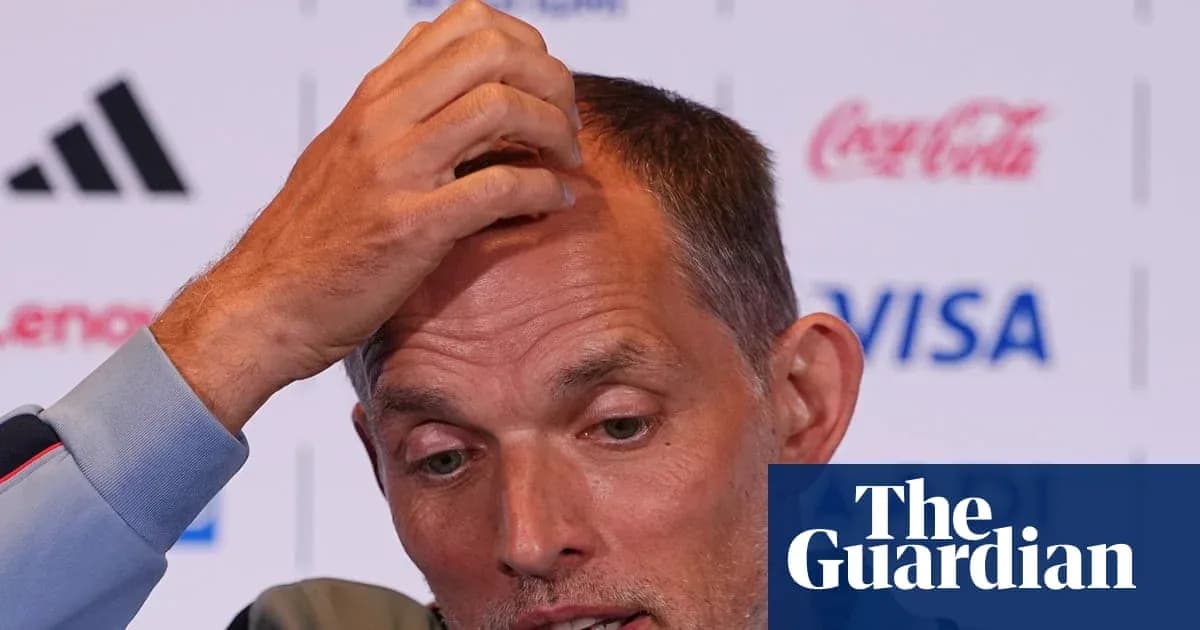

England's Tactical Challenge Against Panama: Tuchel's Dilemma
In Thomas Tuchel’s ideal tournament, the only question before England met Panama would be whether to wrap Harry Kane in cotton wool or let him loose to chase the Golden Boot. A gentle jog in New Jersey, a chance for the captain to pad his numbers against Group L’s fourth seeds and keep pace with Lionel Messi, Erling Haaland and Kylian Mbappé.
That fantasy vanished in the rain against Ghana.
The goalless draw on Tuesday did more than stall England’s momentum. It ripped up Tuchel’s rotation plan and turned what should have been a stress‑free third group game into a tactical tightrope. Top spot is still not secure. The schedule is unforgiving. Four games in 13 days is on the horizon if England go deep, and this was supposed to be the one where Ollie Watkins and Ivan Toney got their chance while Kane watched from the bench.
Now, nothing is simple.
Rotation under strain
There will be changes against Panama, but not the relaxed, experimental kind managers enjoy when qualification is wrapped up early. Some are forced. Some are risky.
Declan Rice is one yellow card from a suspension and finished the Ghana game with strapping on his left calf. Reece James is out for at least two matches with another hamstring problem, a blow that lands squarely on Tuchel’s long‑running struggle to solve low blocks.
This was the injury everyone could see coming. James has battled hamstring issues all season and missed almost two months at the end of the campaign. Tuchel still rolled the dice with his squad balance. He brought only three attacking full‑backs. Tino Livramento, another with a fragile record, has already left the camp and been replaced not by a like‑for‑like runner, but by a centre-back, Trevoh Chalobah.
So the burden of width and invention from deep now falls on Nico O’Reilly’s young shoulders. Behind him, the right‑back options – Ezri Konsa, Jarell Quansah and Djed Spence – are all more comfortable defending than marauding. None naturally stretch the game. The omission of Trent Alexander-Arnold, already controversial, now looks like a decision that will be picked apart from every angle.
What should have been a straightforward assignment against Panama suddenly carries a different tension. The price of that 0-0 with Ghana is that England cannot ease off the accelerator.
Kane, Bellingham and the balance of risk
So does Tuchel keep rolling out Kane and Jude Bellingham? He knows he needs some of his stars. He will not willingly risk finishing second and tumbling into a more hazardous knockout path. At the same time, he cannot ignore the physical toll. This is the balance that will define his team selection.
There is also the psychological piece. England dazzled when space opened up against Croatia. Then came another familiar second‑game stumble at a major tournament. The mood dipped. The passing slowed. The ideas dried up. Restoring rhythm and belief against Panama now feels almost as important as securing first place.
Tuchel is not panicking, but he is not blind. England have to be better against deep, disciplined defences. Ghana’s compact 4-5-1 turned the game into a grind. Panama, coached by Thomas Christiansen, are already out after narrow 1-0 defeats to Ghana and Croatia, yet they were stubborn and awkward in both. This is not the same team England shredded 6-1 at the 2018 World Cup. They have learned to dig in.
Tuchel expects a long, frustrating evening against a back five that can quickly become six or seven. He knows too many of England’s flat performances have come against this type of opponent. Give them grass to run into, as Croatia, Serbia and Wales did, and they fly. Ask them to unpick a packed penalty area and old anxieties resurface: memories of laboured qualifiers against Andorra, Albania and Latvia; sterile domination, few clear chances.
Ghana were the latest to exploit that weakness. Thomas Partey shadowed Kane, cutting off his favourite move of dropping into midfield to link play. The impact was stark. Kane had just 19 touches and combined with Bellingham only three times. England hogged 78.8% of the ball yet did not manage a shot on target until after the break.
Searching for the key to the low block
Tuchel has not cracked the code. He admits it. The magic pattern – “They do this, then we do that and the problem disappears” – still eludes him.
He wants control. He wants structure. He wants England to create overloads in specific zones and then accelerate sharply. Against Ghana, the overloads never came. Against Panama, he does not expect them to appear easily either.
So the message is clear: take more risks with the ball. Be braver between the lines. Avoid the traps Panama will lay to disrupt rhythm and launch counters. Bellingham’s irritation against Ghana, culminating in a needless free‑kick conceded just before half‑time, showed how quickly frustration can seep in when the ball moves slowly and the spaces close.
England must keep their intensity. The centre-backs have to step out with more conviction. This is where Kobbie Mainoo could come into the equation if Rice is protected. Mainoo’s composure in tight areas offers a different way to punch through the middle.
Out wide, the instruction is simple: attack your man. Run at the full-backs. Noni Madueke is likely to make way on the right, with Tuchel hoping Bukayo Saka is ready to return and restore some directness. On the left, Anthony Gordon’s influence has faded badly and Marcus Rashford is pushing to start, even if he has not yet convinced Tuchel he can dominate a game from the first whistle.
There are other shapes available. Eberechi Eze or Morgan Rogers could drift inside from the left, crowding central areas and linking with Bellingham. The Real Madrid midfielder showed constantly for the ball against Ghana but too often went ignored or was picked out late.
Tuchel’s frustration with the left flank is obvious. Earlier this month, in a friendly win over Costa Rica, Gordon and O’Reilly dovetailed so well that the manager thought the problem was solved. It has not carried over. The penetration has gone. The vertical runs have dried up. Two competitive matches have brought the same lack of bite.
Against Ghana, Spence came on at left‑back for the more adventurous O’Reilly and offered little going forward on his weaker side. Rashford did not appear until the 83rd minute. His campaign has yet to catch fire. Tuchel insists he is “a candidate to start” but the warning is clear: whoever plays on that flank must carry far more threat.
One-against-one or nothing
Tuchel keeps dragging the conversation back to the collective. He talks about encouraging his players to relish the “one-against-ones”, to accept that against a low block there will be no easy numerical superiority. Panama will not overcommit. They will not gift England the extra man in dangerous areas.
So the margins shrink. The details matter. The quality of the final ball, the aggression when attacking crosses, the willingness to shoot from distance and hunt for deflections – these are the small, ugly ways games like this are often decided.
Tuchel, to his credit, is not losing perspective. He knows what Ghana under Carlos Queiroz represent: a side who celebrate every duel, every turnover, every counterattack as if it were a goal. He has seen this script before in the Champions League group stages, where underdogs relish the grind and embrace a 0-0 as a famous night. Ghana did exactly that.
England live in a different world. Expectations are heavier. Panama will not be satisfied with merely spoiling; they will want a scalp. England, for their part, are under pressure to do more than win. They need to convince. They need to entertain. They need to walk into the last 32 with the noise around Tuchel’s tactics dialled down and the belief in this group turned back up.
Somewhere between control and chaos, between patience and risk, Tuchel has to find the gear that releases England’s attack without tearing open their defence.
He has to find a way to take the handbrake off.