.svg&w=384&q=75 "Naijagoal logo")

England's Knockout Challenge: Tuchel's Tactical Dilemmas
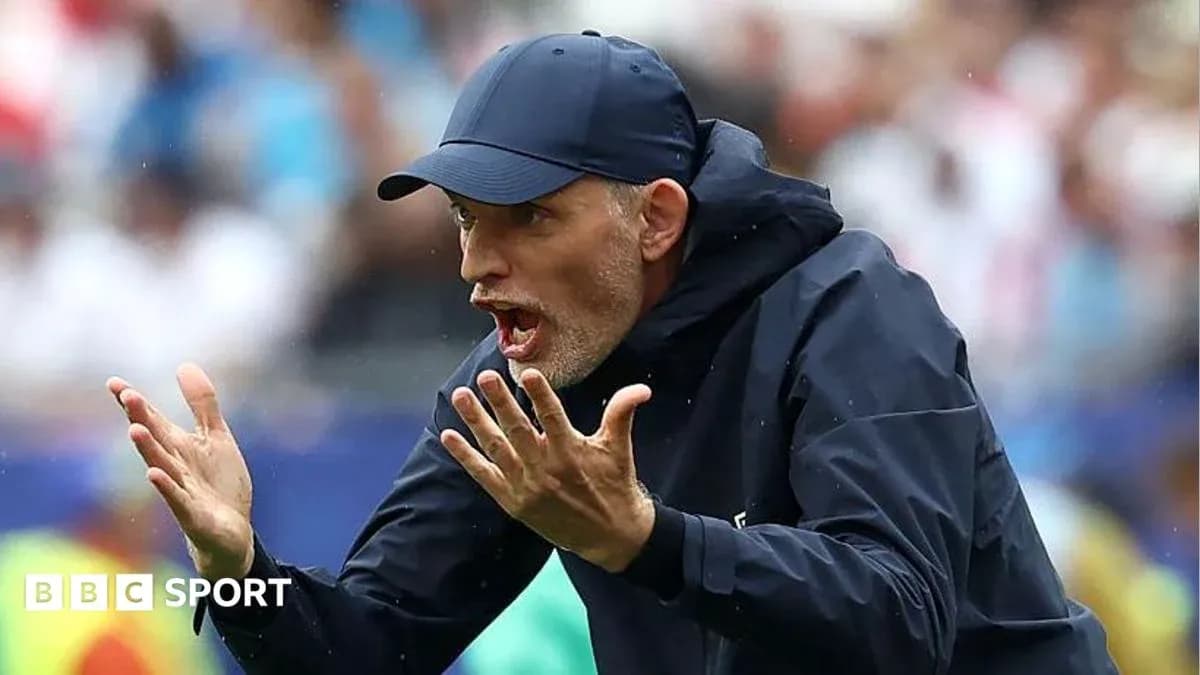
Thomas Tuchel talks about chapters. Miami was the prologue, the group stage the second act. Now comes the part of the story where one bad twist kills the book.
The knockout rounds.
On Wednesday in Atlanta, under the closed roof and cool air of the $1.6bn Atlanta Stadium, England face DR Congo with their World Cup on a knife-edge. The group phase was “job done” – top of Group L, a game to spare, flashes of quality without ever fully convincing. This is different. This is sudden death, where one misjudged selection or one lapse at the back can turn a dream into a post-mortem.
A story with a soft centre
Tuchel has spent the tournament shuffling his pack. Tactical tweaks, minute management, injury juggling – all part of the plan. Yet amid the rotation, one theme keeps nagging away at England’s prospects.
The defence.
Wayne Rooney put it bluntly on BBC Sport: the one area that demands stability – goalkeeper and back four – has been anything but settled. Jordan Pickford remains the fixed point. Everything in front of him feels in flux.
The warning signs were there long before a ball was kicked. Tino Livramento never made it to the World Cup, ruled out before the squad even boarded the plane. Reece James arrived with a medical file thick enough to cause alarm, then promptly added to it with a hamstring injury against Croatia. For Tuchel, the surprise was public. For most observers, it was grimly predictable.
The right flank has become a revolving door. Jarell Quansah, drafted in as James’ deputy, then limped out against Panama. Now both are out of the DR Congo tie. Tuchel insists they are “getting closer and closer”, with Quansah slightly ahead, but the reality is simple: England go into the knockouts with Djed Spence as the last orthodox right-back standing.
There is an option to slide Ezri Konsa across and recall John Stones in the centre. On paper, that offers balance. In practice, it is another reshuffle for a unit that badly needs continuity. Stones, 32, started only five Premier League games in his final season at Manchester City. James managed just 20 for Chelsea. Tuchel’s preference for defenders who can play everywhere has left him short of specialists just when he needs them most.
Look further ahead and the stakes sharpen. If England get past DR Congo, a potential quarter-final in Miami against Brazil – and Vinicius Jr – looms into view. That is not a night for improvisation at full-back. That is a night for a defender whose entire career has been built on handling exactly that kind of threat. Tuchel can talk up James’ progress all he likes. He will know he may be rolling the dice.
Rice, and the gap no one can fill
At the other end of the pitch, the dilemmas feel different. Bukayo Saka, eased in with his first World Cup start against Panama, is still nursing an Achilles problem. Tuchel must decide whether to risk him from the off or hold him back, knowing that every extra minute in the red zone could have consequences later in the tournament.
Yet the real irreplaceable figure does not operate on the flanks. He sits in the middle and knits the whole thing together.
Declan Rice.
Tuchel gave him the night off against Panama, partly because of a yellow card, partly because of a hamstring issue, and partly because Rice has already taken a kick to the calf in this tournament. England won 4-1, but the numbers and the feel of the game told their own story. They conceded 13 shots to an underdog and looked horribly vulnerable to the counter-attack. Elliot Anderson, honest and industrious, was left trying to plug gaps that kept opening around him.
The attacking thrust of Jude Bellingham and Morgan Rogers delivered going forward, but it stripped away protection. Against Panama, England got away with it. A side with more punch would have punished them.
Rice changes everything. He screens a shaky back line, reads danger early, and still has the range to drive England up the pitch. His delivery from set pieces adds another layer. Remove him, and the entire structure creaks. Keep him fit, and Tuchel has a platform on which to build his “third chapter”.
Alongside Harry Kane and Bellingham, Rice has become non-negotiable. Lose any one of that trio and England’s margin for error shrinks to almost nothing.
Lessons from the fallen
If anyone inside the England camp needed a reminder of how quickly a tournament can turn, they got it this week.
Germany, under Julian Nagelsmann, were dumped out by Paraguay on penalties. The fallout was instant, the pressure ferocious, with a loud chorus already calling for Jurgen Klopp to take over. The Netherlands, stocked with Premier League names, fell to Morocco and Ronald Koeman was gone within 24 hours.
These are not cautionary tales from decades past. They are live warnings from this very round. Big nations, big reputations, gone in a heartbeat.
Tuchel is not blind to it. He spoke of “no percentage of over-confidence” and of knockout football being decided by “narrow margins”. He even suggested the chaos elsewhere calms him. It strips away illusions, focuses minds, reminds everyone that a World Cup last-32 tie can resemble a quarter-final or semi-final in intensity and risk.
He is right about one thing: teams are too well-prepared now for anyone to expect a procession. Every opponent can sit deep, spring quickly, and punish a side that gets loose in transition. England’s performance against Panama showed exactly how fragile they can look when the balance in midfield tilts too far towards attack.
No hiding place now
So the stage is set. A closed roof, controlled temperature, and a World Cup that has already started to devour favourites. Carlo Ancelotti’s Brazil needed Gabriel Martinelli’s stoppage-time winner just to scrape past Japan. No one is cruising.
England enter this third chapter with a potent attack, a driven coach, and a glaring soft spot at the back. Their best midfielder is nursing muscle issues. Their best right-back is racing the clock. Their most experienced centre-half is short of club minutes.
Tuchel wanted a story that ends in historic glory. The next pages will be written in the tightest of margins, with no safety net and no excuses.
DR Congo stand in their way first. The shocks are piling up. The question now is simple: does this England side bend with the pressure of the plot, or do they become its next twist?