.svg&w=384&q=75 "Naijagoal logo")

Didier Deschamps Reflects on France's World Cup Semi-Final Achievement
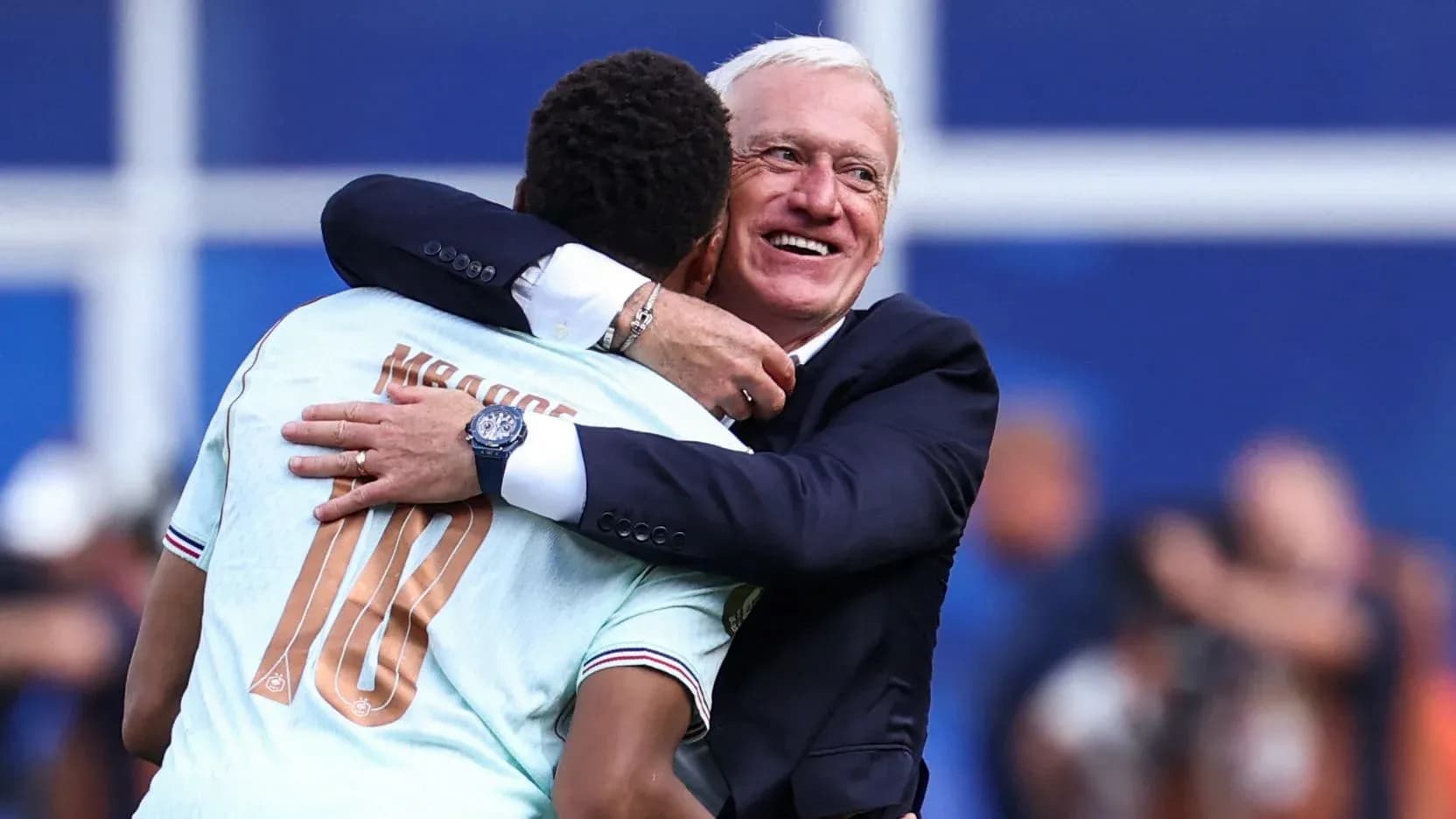
Didier Deschamps stepped in front of the cameras with the calm of a man who has seen it all before, yet fully understood the scale of what his France side had just achieved. Three consecutive World Cup semi-finals. For most nations, a dream. For him, as he put it, it now feels “logical and natural.”
The questions came quickly, and inevitably, they circled around Kylian Mbappé. The captain had dragged France through again, but not without concern. Deschamps confirmed what many had suspected watching from the stands and on screens around the world: Mbappé had been playing through pain.
“Kylian had a slight ankle issue; he was feeling some pain,” Deschamps told M6, laying out the situation with the matter-of-fact precision that has become his hallmark. No drama, no alarmism. Just a straight line between problem and solution.
He then moved on to the other knocks that had shaped his late changes. “Manu [Kone] took a blow to the knee and had cramps. But Warren [Zaire-Emery] made a very, very good impact when he came on, so that’s great. Everyone needs to feel ready. And those who aren't playing are still fully behind the rest of the group.”
That last line said as much about France’s enduring success as any tactical breakdown. Deschamps knows tournaments are won not just by stars, but by the players who might only get 20 minutes, yet must be razor-sharp when the call comes. Zaire-Emery answered that call, and the coach made sure the contribution did not go unnoticed.
The match itself had been far from straightforward. France missed a penalty, squandered chances, and allowed tension to creep into a night that could have slipped away. Deschamps did not sugar-coat it.
“It was complicated today,” he admitted. “Missing the penalty and the chances we didn’t convert makes things difficult. Kylian reacted well and scored. We are exactly where we wanted to be.”
That reaction from Mbappé, turning frustration into a decisive goal, underlined why Deschamps continues to build around him, even when the forward is less than fully fit. An aching ankle, a missed opportunity, and then the response of a captain who understands the weight of the shirt.
For Deschamps, the semi-final run is both an achievement and a standard. “I think three consecutive semi-finals is already good, but it seems logical and natural. I have great players. It’s good,” he said, the understatement barely masking the scale of the feat. Only the very best teams live at this altitude for so long.
The immediate plan is simple: rest, reset, and study. “We are going to recover well and watch our next opponent [on Friday, either Spain or Belgium],” he said. No big declarations, just the quiet confidence of a coach who has navigated these waters many times before.
Away from the tactics board and the medical updates, Deschamps allowed himself a moment to acknowledge what this run means beyond the dressing room. He knows how these nights land back home.
“That’s the beauty of sport and football: we create emotions and we share them,” the former defensive midfielder reflected. “I imagine there is a lot of passion back in France, even if we are inside our own bubble here. The players have a duty to do everything they can to go as far as possible. This is an important step, and we are in the final four once again.”
Inside that “bubble,” the message is clear: enjoy the moment, but don’t mistake a semi-final for the destination. Deschamps has built a culture where reaching the last four is celebrated, yet treated as just another checkpoint on the road to something bigger.
France are back in the World Cup’s sharp end. Their captain is carrying a knock but still delivering. Their fringe players are ready and trusted. Their coach, unflustered and relentless, sees history not as a burden, but as a standard to be met.
The semi-final is secured. The duty, as he put it, is to go as far as possible. How far this time?