.svg&w=384&q=75 "Naijagoal logo")
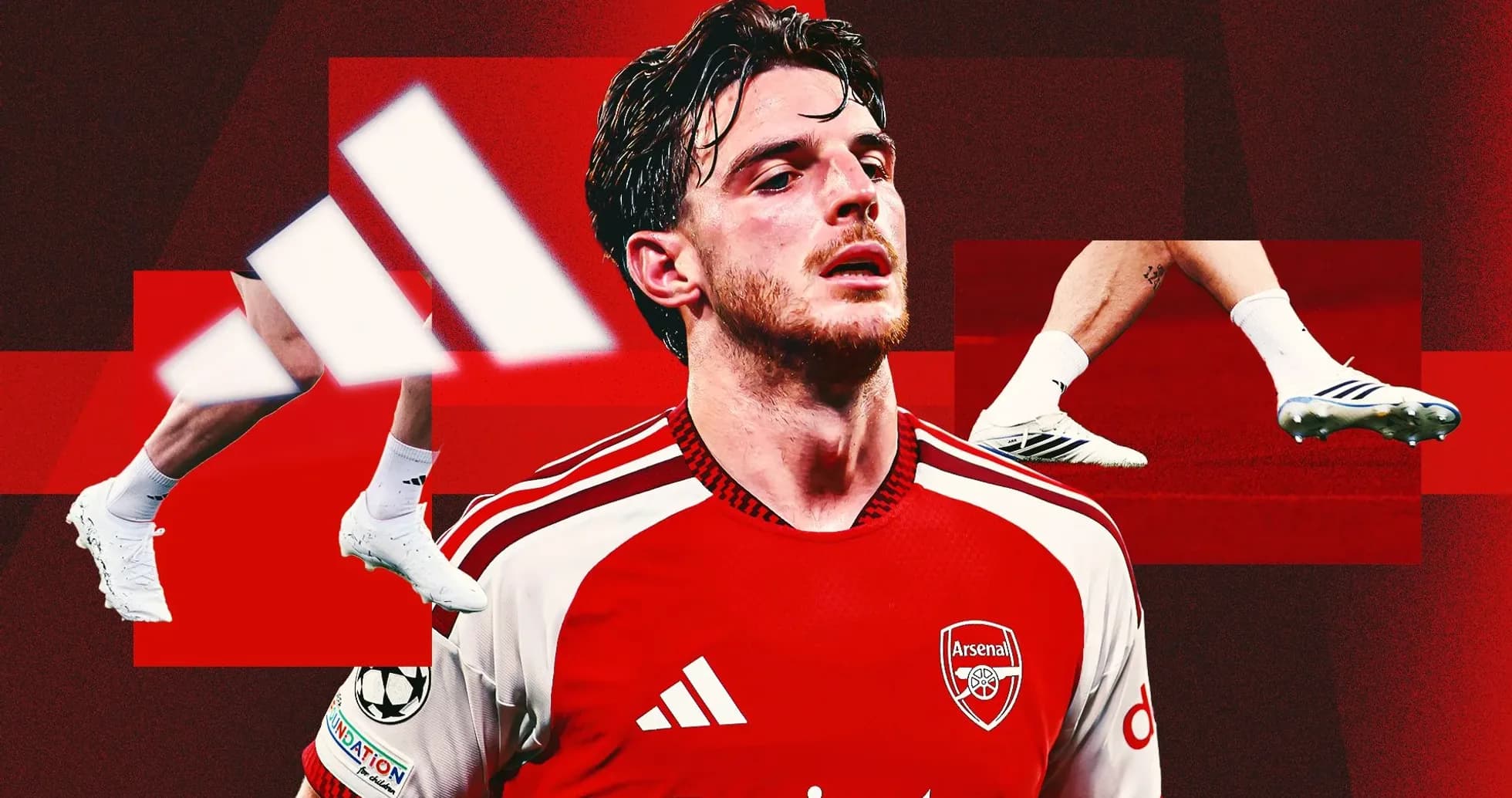

Declan Rice’s Boot Transition: A Shift from adidas to Nike?
Declan Rice’s boots are telling a story. And it sounds like the end of an era with adidas.
It started quietly in late August. Arsenal training, London Colney, a routine session – until the boot-spotters zoomed in. Rice, usually loyal to his adidas COPA Pure, had switched into a gleaming pair of Nike Tiempo Maestri in white, red and gold. For people inside the industry, that isn’t a fashion choice. That’s a flare in the sky.
Seven years with the Three Stripes, suddenly in Nike’s flagship control boot. The message looked obvious: something is shifting.
Back to the future?
If Rice does jump from adidas to Nike, it won’t be a leap into the unknown. It would be a return. The 27-year-old started his career as a Nike athlete, wearing Tiempos through his breakthrough at West Ham before signing with adidas in 2019. The Tiempo is familiar ground – a comfort-and-control boot that mirrors the heritage feel of the COPA he’s been fronting.
On paper, it’s a natural swap. Same profile of boot, different logo.
But Rice isn’t behaving like someone who’s already made up his mind.
After that Nike cameo in August, he went back to his COPAs for a spell. Then, earlier in September, came the most telling twist: an unbranded whiteout pair at London Colney. No logos. No colours. Just a blank canvas on his feet.
In matches, he has kept wearing adidas – almost certainly down to existing contractual obligations. Training, though, has become his testing lab.
A left-field contender
Those mystery whiteouts didn’t stay mysterious for long. Boot obsessives and insiders quickly narrowed down the silhouette. It wasn’t another Nike model. It wasn’t some secret adidas prototype.
The boots are believed to be Under Armour’s new Magneto 6, a fresh release that dropped at the end of August. That’s a very different lane. Away from the traditional Nike–adidas duopoly, into the territory of ambitious “second-tier” suppliers who are desperate for a marquee name.
Whiteouts and blackouts almost always mean the same thing: a deal is expiring, or a split has been agreed. A player is weighing up his market value. In Rice’s case, all the signs point to him actively shopping around before what looks like a likely exit from adidas.
What’s driving it? That part is less clear.
Undervalued, underused?
After seven years with the German giant, Rice might simply want a change. But the timing and the context suggest more than boredom with the same boots.
He has been a central figure for adidas’ COPA line, appearing in campaigns and wearing a more understated silo while flashier models hog the limelight. Yet when the brand rolled out its biggest recent pieces, his absence was hard to ignore.
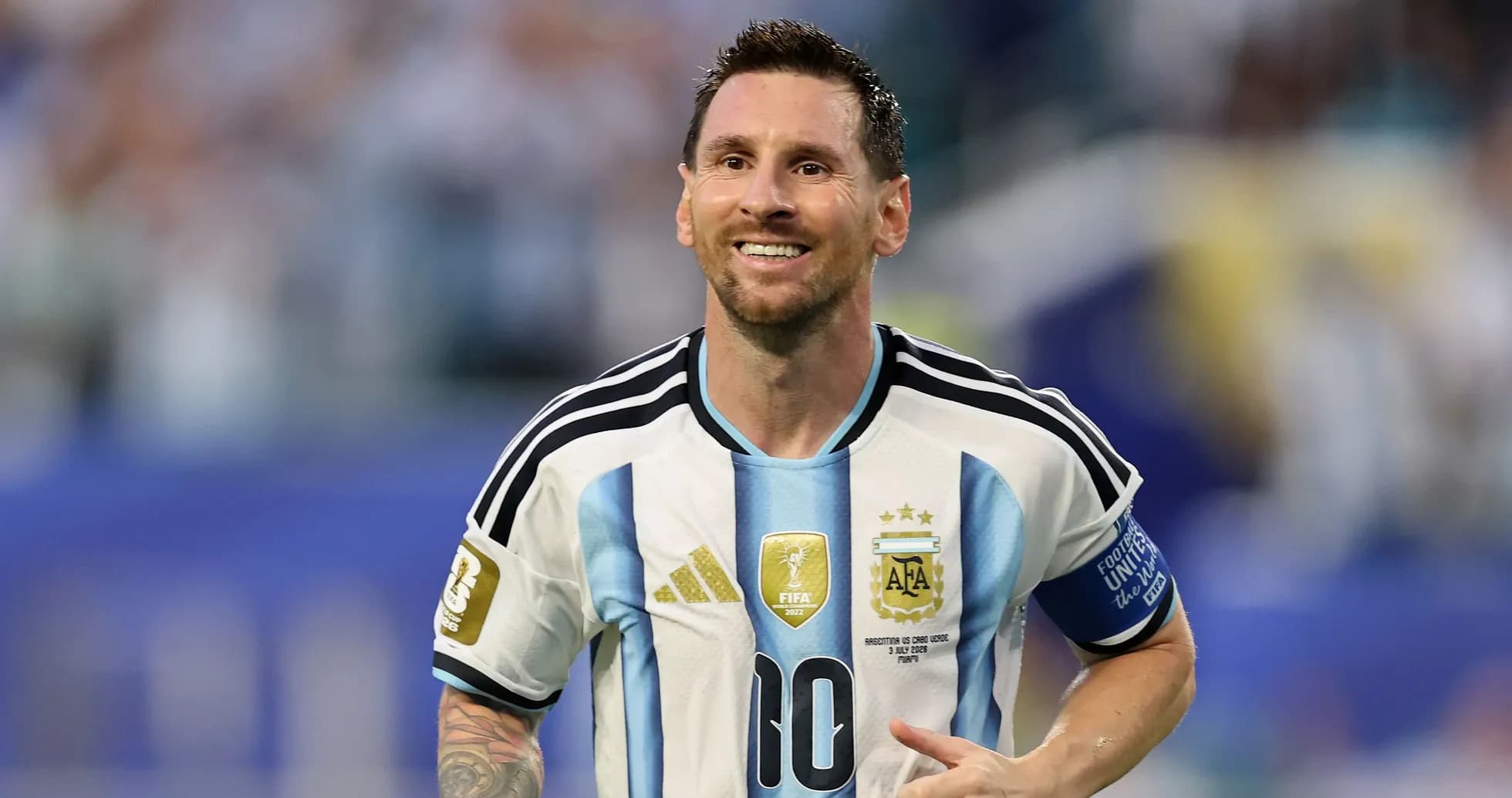
He did not feature in adidas’ high-profile, five-minute World Cup short film “Backyard Legends”, which starred Timothee Chalamet alongside Lionel Messi, Lamine Yamal, Jude Bellingham and others such as Ousmane Dembele, Pedri, Raphinha and Florian Wirtz. Before Euro 2024, Bellingham again fronted the pre-tournament push. Rice, an England starter and Premier League star, was nowhere near the centre of that universe.
Domestically, he is a huge character. Big personality, popular figure, elite midfielder. Globally, though, his profile hasn’t exploded in the same way as some of his peers. It’s easy to imagine him looking at the pecking order and wondering whether a different brand would treat him as a headline act rather than a supporting one.
With adidas’ roster stacked with megastars, Rice is one of many. At Nike or Under Armour, he would immediately sit near the very top of the tree. That kind of status – the face of a line, not just a face in a crowd – can be powerful.
Who’s really walking away?
There is another possibility: this isn’t Rice’s decision at all.
Suppliers routinely trim their athlete lists for financial reasons, especially in the post-pandemic era. Nike, for instance, cut ties with a number of elite footballers after Covid-19 to funnel more resources into their biggest commercial weapons: Cristiano Ronaldo, Kylian Mbappe, Marcus Rashford and a select few others.
According to The Athletic, players are usually told in the final year of their contract if they won’t be offered an extension, and brands often start dialling back funding and promotion once a parting of ways looks likely. That would neatly explain Rice’s recent absence from adidas’ major campaigns. If they’ve already decided to move on, he was never going to be front and centre.
Sources have also suggested that some top players look elsewhere because they “require more attention and promotion than they have sometimes received from the largest brands”. For a player of Rice’s stature, that line hits close to home.
The money and the power
None of this happens without money in the background. At the top end, boot deals can be worth the equivalent of 10–15% of a player’s club salary. If another brand comes in with better terms, more marketing commitment and a bigger role in their strategy, it’s natural for heads to turn.
There’s also a broader shift in how players think about their image. They don’t just want a cheque; they want control.
Vinicius Junior blacked out his Nike boots in 2022 in a very public show of dissatisfaction over renewed terms, forcing the American giant to reassess its offer. At the time, a source told The Athletic that he wanted a partner “willing to invest in his brand through campaigns and activation worldwide”. Nike eventually stepped up.
Mbappe’s situation hints at an even more radical model. Reports suggest the new face of Nike Football could yet walk away after two decades to join an “unknown” disruptor, widely rumoured to be Swiss brand ON. The pitch there? Not just a contract, but a stake in the company, influence over product strategy and the chance to co-design his own signature boots.
Rice is not operating at that level of leverage, but the trend filters down. PUMA, Under Armour, New Balance and Mizuno have all been busy building rosters with players who previously wore Nike or adidas. Neymar, Kai Havertz, Bukayo Saka, Eberechi Eze and Ibrahima Konate are among those who have already made that jump, trading the biggest logos for more individual attention and lucrative packages.
Others opt out entirely. Michael Olise at Bayern Munich famously has no boot deal at all. Hector Bellerin once chose to buy his own online rather than sign with a brand.
Door not fully closed
For all the noise, an adidas renewal for Rice is still on the table. History is littered with players who tested the market, trained in different boots or blacked out their pairs, only to circle back and sign improved terms with their original supplier. Erling Haaland did it. Vinicius Jr did it.
Rice’s recent carousel – Nike Tiempos, COPAs, Under Armour whiteouts – might be part of the same dance. A reminder of his value. A nudge to adidas. Or a genuine audition process as he weighs up where his name and game will be best served.
What’s certain is that the Arsenal midfielder has turned a usually mundane detail – what boots he’s wearing on a weekday morning – into a live subplot in the business of modern football.
The next contract he signs won’t just decide a logo on his laces. It will say a lot about where he sees his place in the game’s global hierarchy, and which brand is willing to match that ambition.