.svg&w=384&q=75 "Naijagoal logo")

Cristiano Ronaldo vs Spain’s New Generation in World Cup Clash
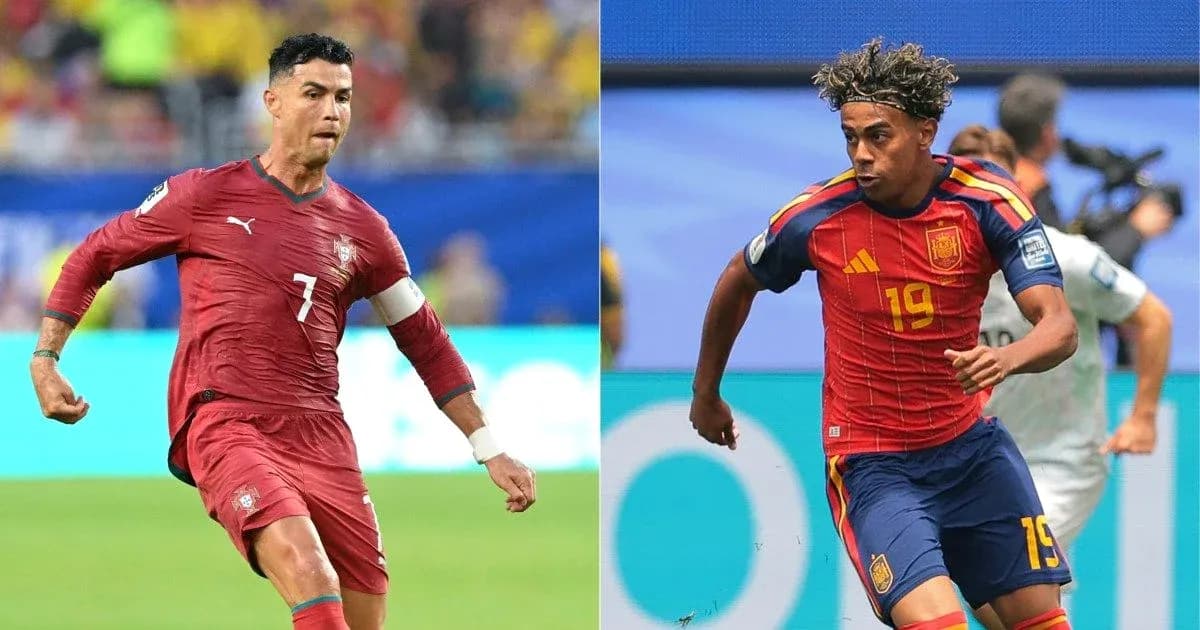
Cristiano Ronaldo’s last World Cup charge collides with Spain’s fearless new generation on Monday in Arlington, where an Iberian derby loaded with history and tension will decide who stays alive at USA–Canada–Mexico 2026.
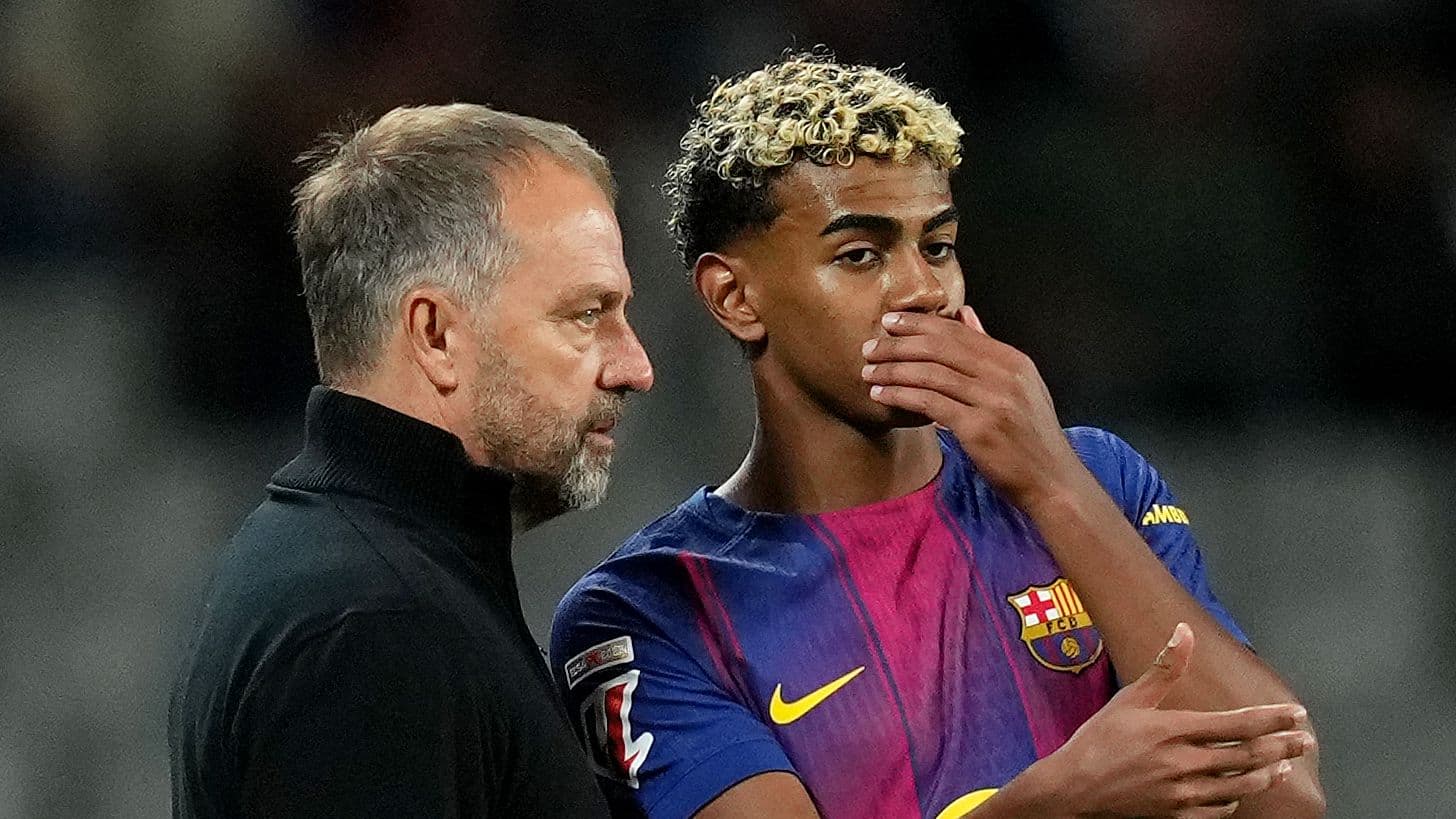
At Dallas Stadium, under the Texas heat and a global spotlight, a 41-year-old icon and an 18-year-old phenomenon step into the same frame. One chasing the perfect ending. The other just opening the first chapter.
A rematch with the balance of power reversed
This is not just Portugal vs Spain in the round of 16. It’s the sequel to last year’s UEFA Nations League final, when Portugal edged Spain on penalties to lift the trophy and briefly reclaim bragging rights on the peninsula.
That night, Portugal were the ones riding the wave. Now they arrive bruised, vulnerable, and far from convincing.
They finished second in Group J with five points, hammering Uzbekistan but stumbling to draws against the Democratic Republic of Congo and Colombia. In the round of 32, they flirted with disaster, falling behind to Croatia before scrambling back to win 2-1 in a match overshadowed by controversy.
Spain’s path has been cleaner. Colder. More ruthless.
La Roja topped Group H with seven points, beating Saudi Arabia and Uruguay and only being checked by a goalless draw against Cape Verde. When the knockouts began, they hit another gear, sweeping aside Austria 3-0 in the round of 32. That win extended their unbeaten run to 34 matches (25 wins, nine draws), one short of matching their all-time record streak set between 2007 and 2009, the golden era that produced Euro and World Cup titles.
The context is clear: Portugal arrive searching for themselves. Spain arrive knowing exactly who they are.
Ronaldo’s thin line between glory and goodbye
Everything around Portugal still orbits Cristiano Ronaldo. Just not in the way it once did.
At 41, the second-oldest player at this World Cup remains the face of his national team, the figure every camera finds, the name that dominates every headline. On the pitch, though, the picture has changed. The explosive acceleration has faded. The penalty-box dominance no longer feels inevitable. He still demands the ball, still draws defenders, still commands the stage — but the performances no longer always match the aura.
The stakes for him could not be sharper. This tournament has long been circled as his likely last World Cup, and his sister has already said he will retire from international football when it ends. He has swerved questions about his future, but the clock keeps ticking.
Every Portugal knockout match now carries a double edge: lose, and they go home. Lose, and Ronaldo’s international story ends without the one trophy that has eluded him.
From Manchester to Madrid, Turin to Lisbon, his career has overflowed with silverware and records. European champion with Portugal in 2016, winner of league titles and Champions Leagues, scorer of more goals than most nations. Yet if Spain knock Portugal out in Dallas, the World Cup will remain the missing jewel in a glittering crown.
Yamal’s moment: “The World Cup starts now”
On the other side stands Lamine Yamal, the teenager who speaks about this stage with the calm of a veteran and the swagger of a prodigy.
A hamstring issue threatened to derail his first World Cup before it truly began, but the 18-year-old winger has brushed it aside and is now bending this tournament to his rhythm. His man-of-the-match display in the demolition of Austria showcased exactly why Spain have built so much of their attacking identity around him.
Two years ago, he lit up Euro 2024 and helped Spain to the title. Now he wants more.
“I want to advance through the rounds and win with Spain,” Yamal said. “We aren’t afraid of any team. We are Spain. The World Cup starts now.”
He has one goal to his name so far, while Mikel Oyarzabal leads Spain’s scoring charts with four. But Yamal’s influence goes beyond numbers: he stretches defences, opens passing lanes for Pedri and Dani Olmo, and gives Rodri and the back line the platform to control games.
This is a Spain side chasing their second World Cup, 16 years after their first in South Africa in 2010. The echoes of that generation are there — the passing, the patience, the territorial suffocation — but this version carries more vertical threat, more directness, more edge.
Form, numbers and a fragile favourite
The data backs up what the eye suggests.
Opta’s supercomputer gives Spain a 49.2 percent chance of winning in 90 minutes. Portugal sit at 25.6 percent, with a 25.2 percent likelihood of the tie going to extra time.
On paper, Spain are the form team: unbeaten in 34, dismantling opponents, conceding little, and playing with the confidence of a group that knows it is one of the tournament’s heavyweights.
Portugal are harder to read. They have the talent — from Bernardo Silva and Bruno Fernandes to Rafael Leão and Rúben Dias — but their performances have lurched between slick and stuttering. They needed a fightback and a slice of fortune to survive Croatia. They struggled to put away sides they were expected to beat with ease in the group stage.
Yet this fixture rarely obeys logic.
A rivalry written in fine margins
The history between these two neighbours only adds more crackle to the night.
Across five meetings at major tournaments, the record is almost perfectly balanced: one win each, three draws. Their last World Cup clash, in 2018, produced a 3-3 epic in which Ronaldo scored a hat-trick and dragged Portugal to a point almost by force of will.
Overall, Spain have the edge: 18 wins from 41 meetings, Portugal with seven, and 16 draws. But Portugal can point to the most recent chapter — that Nations League final in June 2025, when they held their nerve in a penalty shootout to deny Spain another trophy.
These games usually come down to moments: a set piece, a slip, a save, a burst of genius. Both sides know it. Both sides have lived it.
Lineups, absences and the tactical chessboard
Spain arrive with one significant problem. Nico Williams, a key part of their wide threat and pressing game, is out with a hamstring injury. His absence narrows Luis de la Fuente’s options on the flank and increases the burden on Yamal and Olmo to carry the creative load.
The expected XI still looks imposing:
Spain (4-2-3-1):
Simon (goalkeeper); Porro, Cubarsi, Laporte, Cucurella; Rodri, Pedri; Yamal, Olmo, Baena; Oyarzabal.
Rodri will dictate from deep, Pedri will knit everything together, and Yamal will attack the Portuguese full-back with that familiar blend of speed and audacity. Oyarzabal, quietly efficient and relentlessly dangerous, will prowl across the front line looking for gaps between centre-backs and full-backs.
Portugal, by contrast, report no injury issues and are expected to line up with their familiar blend of experience and flair:
Portugal (4-2-3-1):
Costa (goalkeeper); Cancelo, Dias, Veiga, Mendes; Neves, Vitinha; Neto, Fernandes, Leao; Ronaldo.
Bruno Fernandes will try to slide passes into the channels for Leão and Pedro Neto, while Neves and Vitinha battle to wrest control from Rodri. João Cancelo’s raids from right-back could be decisive — or dangerous — depending on how much space Yamal finds behind him.
The tactical question is simple: can Portugal disrupt Spain’s rhythm enough to turn this into a broken, transitional game where Leão and Ronaldo can strike? Or will Spain smother them, recycle the ball, and slowly squeeze the life out of the contest?
What’s at stake in Dallas
Kickoff comes at 2pm local time in Arlington (19:00 GMT), with the match broadcast across Portugal on RTP1, SPORT.TV5, LiveModeTV and RTP Play (8pm WES T), and in Spain on TDP, RTVE Play, LA 1 and DAZN Mundial (9pm CEST). Viewers in the UK can watch on BBC One and BBC iPlayer (8pm BST), while fans in the United States have FOX, FOX One, Telemundo Network, Telemundo App and Peacock (3pm EDT).
The winner heads to Los Angeles for a quarterfinal on Friday, July 10, against either the USA or Belgium. The loser leaves with regrets — and, in Portugal’s case, possibly with the end of an era.
For Spain, this feels like the natural next step in a long unbeaten run and a march back toward the summit of world football. For Portugal, it feels like a crossroads: one more charge with Ronaldo at the helm, or the moment the team finally has to imagine life without him.
In a stadium thousands of kilometres from the Iberian Peninsula, an old rivalry will decide a new future. Who writes the next line — the legend on his last stand, or the teenager who insists his World Cup is only just beginning?