.svg&w=384&q=75 "Naijagoal logo")

Celtic Support Divided Over Robbie Keane's Potential Return
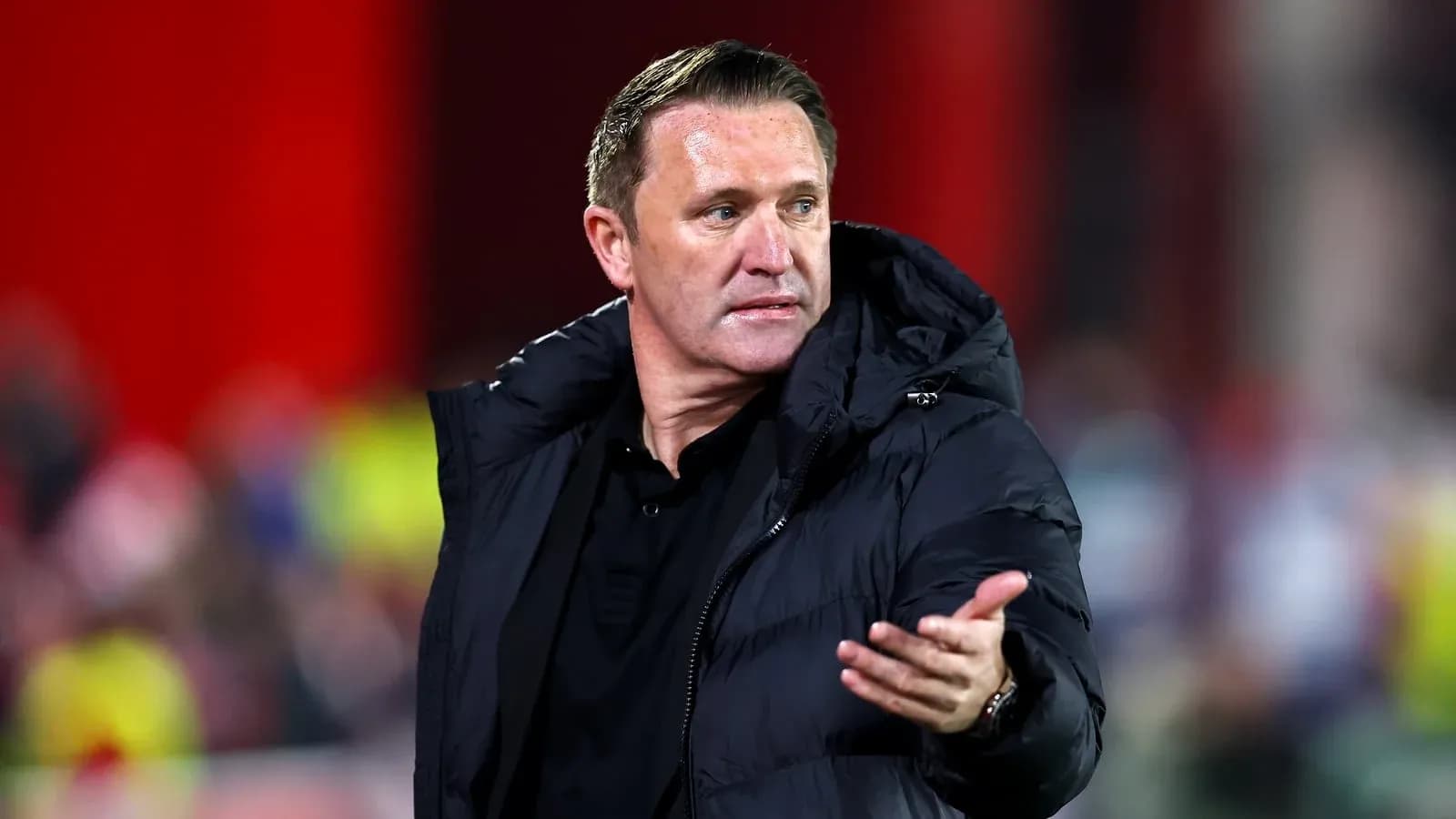
The idea should have been simple. A former hero back at Celtic Park, this time in the dugout, charged with driving the club into a new era. Instead, the prospect of Robbie Keane becoming Celtic manager has opened up one of the most politically charged fault lines the club has faced in years.
Keane, the Republic of Ireland’s record goalscorer and a prolific loanee in Glasgow back in 2010, is among the leading contenders for the job and is understood to be in talks with principal shareholder Dermot Desmond. On football terms alone, his CV is hardly flimsy: league titles in Israel and Hungary, a reputation as an ambitious young coach, and the lingering glow of that goal-laden spell in green and white.
But this is not just about football.
Supporters’ groups close ranks
In recent days, opposition to Keane has moved from scattered graffiti and banners outside Celtic Park to an organised, public front. A statement first issued by a group calling itself Celtic Fans for the Liberation of Palestine has now been endorsed by dozens of supporters’ clubs and fan organisations.
The North Curve Celtic account on X published a list of 67 groups backing the statement. It is not a fringe coalition. Among those named are the Green Brigade and Bhoys Celtic ultras, long-established supporters’ clubs such as Glasgow University Celtic Supporters Club and Craigneuk Tommy Gemmell CSC, and prominent fan media outlets including the Cynic and eTims.
Their message is blunt. The groups set out their opposition to Keane’s potential appointment and root it firmly in the club’s self-image and political tradition.
“Celtic supporters have a long and proud history of solidarity with the Palestinian people,” the statement reads, before homing in on Keane’s time in charge of Maccabi Tel Aviv. “For us, Robbie Keane's decision to manage Maccabi Tel Aviv during the genocide in Gaza is impossible to ignore.”
The language is stark and deliberate. The statement describes Keane’s choice “to manage a club in Israel while, less than 40 miles away, the same country was using indiscriminate weapons of mass murder against defenceless people” as “unconscionable”.
From there, it reaches back into the club’s origins. Celtic, founded in 1887 by Irish immigrants in Glasgow’s East End, is framed as a club born from trauma and solidarity. “Celtic was founded by a community shaped by the legacy of genocide, displacement and famine. Our club’s roots lie in solidarity with those who suffered injustice and oppression. We cannot forget where we came from, nor turn our backs on those facing genocide today.”
The conclusion is as much a warning as a plea. At a moment when the support believes unity is essential, the signatories argue that Keane’s appointment “would be deeply divisive among the support” and “a predictable and uninspiring choice at a moment when greater ambition is needed”. The board, they say, must “listen to supporters’ concerns and reconsider this appointment.”
Gaza, Maccabi and a manager under scrutiny
The flashpoint is Keane’s decision to remain in Israel during the war in Gaza.
He took the Maccabi Tel Aviv job in June 2023, months before the Hamas-led attacks of 7 October and the subsequent Israeli bombardment of Gaza. The conflict that followed has killed more than 70,000 people, according to widely cited figures, and last October an independent UN commission concluded that Israel had committed genocide against Palestinians in Gaza.
Keane stayed in his post through that period, guiding Maccabi to a league and cup double before resigning in the summer of 2024. His success on the pitch did nothing to soften the criticism in some quarters, particularly in Ireland, where his decision to remain in Israel during the conflict drew anger and dismay.
The Irishman has since explained why he chose to see out the season. He spoke of a “duty of care” to his staff, highlighting, for example, an analyst who had left Middlesbrough after 12 years to follow him to Maccabi. To walk away mid-season, Keane argued, would have meant abandoning colleagues and their families in a volatile situation. He says he instead chose to complete the campaign and then walk away from what he described as a lucrative deal, with another year – and possibly two – left on his contract.
Those explanations have not cut through with a significant section of the Celtic support. For them, the symbolism of managing in Israel during the Gaza war outweighs any professional justification. The banners and spray-painted slogans around Celtic Park in recent days have made that clear; the coordinated statement has now given that anger an organised voice.
A club’s identity on the line
Celtic’s relationship with the Palestinian cause is not new. Palestinian flags have become a regular sight at Celtic Park, especially in European fixtures. The Green Brigade in particular has long used displays and banners to express solidarity with Palestine, accepting fines and sanctions in the process.
This is the backdrop to the current flashpoint. The opposition to Keane is not only about one man’s career choices; it is about what many supporters believe Celtic stands for, and what they expect the club’s leadership to reflect in its decisions.
The board faces a stark calculation. On one side, a high-profile former player with recent success as a manager and a strong personal relationship with the club’s most powerful figure. On the other, a vocal and organised segment of the fanbase insisting that appointing him would betray the club’s roots and fracture the support at a critical juncture.
The football argument around Keane – whether he is the right fit tactically, whether his managerial record truly justifies the job – has almost been drowned out by the politics. For many of those now speaking out, this is not a debate about formations or transfer budgets. It is about identity.
Celtic have been here before, wrestling with questions of politics, protest and the limits of supporter influence. This time, though, the issue sits at the very heart of who leads the team and what that choice says about the club.
If the board presses ahead and appoints Robbie Keane, it will do so in the full knowledge that a sizeable and organised portion of its support has already drawn a line in the sand. If it steps back, it will have effectively conceded that, at Celtic, some principles still outweigh even the most convenient footballing choice.