.svg&w=384&q=75 "Naijagoal logo")

Beşiktaş Dominates Kauno Žalgiris with 3–0 Victory
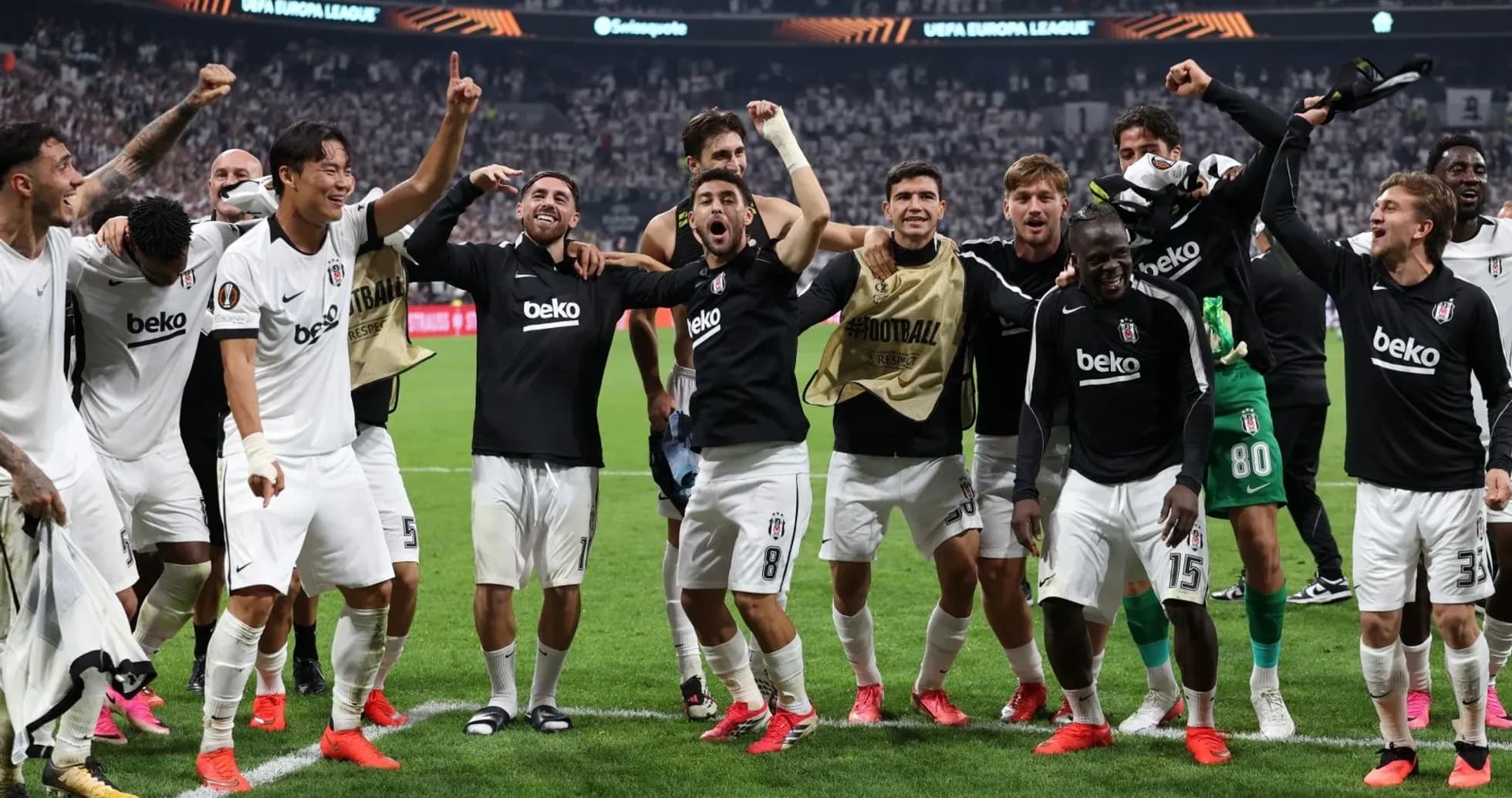
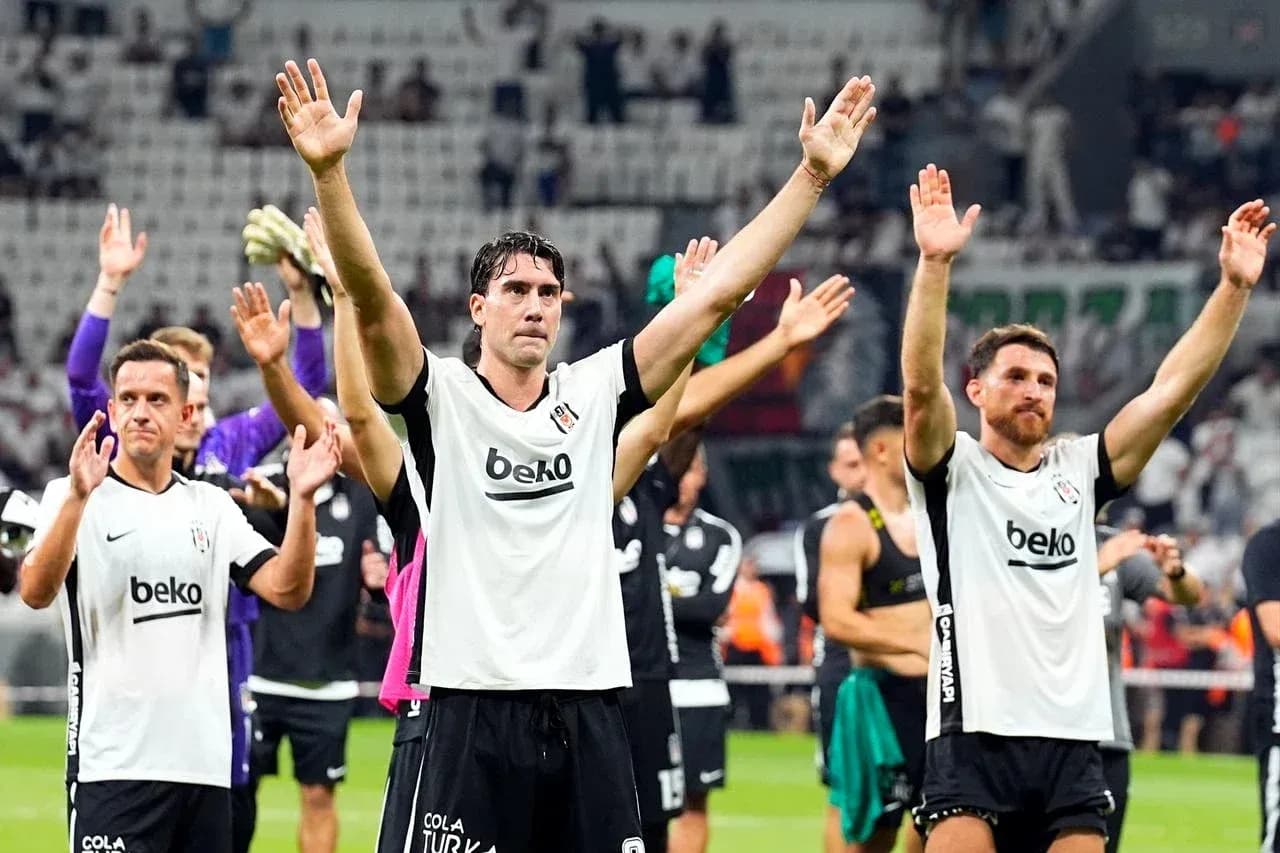
Beşiktaş’s 3–0 win over Kauno Žalgiris at Tüpraş Stadyumu was built on structural dominance and territorial suffocation rather than goalmouth drama. Vincenzo Italiano’s 4-1-4-1 controlled every phase, turning 77% possession and a 6–0 shots-on-goal advantage into a stress-free Europa League Play-offs first leg.
Structural Overview
Structurally, Beşiktaş’s base shape was clear: a back four of R. Yilmaz, T. Djalo, M. Murillo and E. Topcu, screened by S. Ozcan as the single pivot. Ahead of him, a fluid line of four – V. Cerny, J. Olaitan, O. Kokcu and L. Trossard – rotated around central reference point Oh Hyeon-Gyu. The early 2–0 lead shaped everything: with goals at 6' and 12', Beşiktaş could lean fully into a positional-possession game, using the pivot and full-backs to recycle play and pin Kauno Žalgiris deep.
Corner Count and Attacking Structure
The 15–2 corner count and 7 blocked shots underline how relentlessly Beşiktaş camped in the final third. Wide overloads were central: R. Yilmaz, from left-back, produced the assist for both open-play goals, repeatedly stepping high to create a de facto front five. On the right, Topcu provided width while Cerny drifted inside, giving Beşiktaş a 3-1-6 structure in long settled spells – three defenders plus Ozcan behind six attack-minded players occupying all vertical lanes.
Kauno Žalgiris’ Struggles
Kauno Žalgiris’ 4-2-3-1 under Eivinas Cerniauskas never escaped survival mode. With only 23% of the ball, they defended in a low to mid-block, the double pivot of V. Slivka and A. Kalik sitting very close to the centre-backs. The front four – L. Krekovic, F. Baldassarra, A. Benchaib and G. Debeljuh – were forced so deep that any counter-attacking threat evaporated; the away side finished with just 2 shots off goal and none on target. Their 16 fouls and 4 yellow cards were as much about breaking Beşiktaş’s rhythm as contesting territory.
Pressing and Defensive Control
Beşiktaş’s pressing was selective rather than manic. With an early cushion, they focused on rest defence: Djalo and Murillo held an aggressive line near halfway, Ozcan sat just in front to kill any direct outlet into Debeljuh. That structure meant that even when Kauno Žalgiris tried to play out, the first or second pass was almost always forced backwards or wide, rarely beyond the initial pressure line. The fact that Kauno Žalgiris did not register a single shot on goal is as much a credit to this collective control as to individual defending.
Key Moments
The penalty at 59', converted by O. Kokcu, reflected Beşiktaş’s repeated ability to access the box through central combinations once the wings had been used to stretch the block. With Kauno Žalgiris tiring and chasing shadows, late challenges became more frequent, contributing to the disciplinary imbalance and further tilting the game state.
Substitutions and Tactical Management
Substitutions from Italiano were clearly management of load and tempo rather than tactical firefighting. At 46', V. Cerny (OUT) made way for I. Fakili (IN), a like-for-like swap that preserved the 4-1-4-1 structure while refreshing the right side. Around the hour, J. Olaitan (OUT) was replaced by A. Hadziahmetovic (IN) and Oh Hyeon-Gyu (OUT) by D. Vlahovic (IN), again maintaining the same positional map but with fresh legs and slightly different profiles – Hadziahmetovic offering more control in deeper pockets, Vlahovic more penalty-box presence. Later, L. Trossard (OUT) for M. Rashica (IN) and R. Yilmaz (OUT) for K. Ouattara (IN) ensured intensity stayed high on the flanks without changing the overall scheme.
Kauno Žalgiris’ Adjustments
Cerniauskas’ changes were more reactive, searching for a foothold that never came. At 46', J. Moutachy (OUT) was replaced by L. Kastrati (IN) and G. Debeljuh (OUT) by M. Burba (IN), hinting at a desire for more energy and perhaps more direct transitions down the right. Later, A. Kalik (OUT) for Renan Oliveira (IN), L. Krekovic (OUT) for F. Ourega (IN), and A. Benchaib (OUT) for I. Fiolic (IN) reconfigured the attacking midfield band, but with Beşiktaş monopolising the ball, these tweaks rarely translated into sustained possession or final-third entries.
Defensive Stability
Defensively, Beşiktaş’s back four were rarely stretched into emergency actions. The 1 blocked shot total for Kauno Žalgiris compared to Beşiktaş’s 7 illustrates how one-sided the pressure map was. Without goalkeeper save data, the clearest indicator of control is simply that Kauno Žalgiris never tested the Beşiktaş keeper, while their own defence was repeatedly forced into last-ditch interventions inside the box.
Tactical Summary
The statistical profile aligns perfectly with the tactical picture: Beşiktaş’s overwhelming possession, corner dominance and shot volume reflect a side that imposed its structure from the opening minutes and never relinquished it. Kauno Žalgiris, by contrast, were pinned so deep that their 4-2-3-1 often resembled a 4-5-1 or even a 6-3-1, with wide players dropping onto the full-backs and the No.10 line collapsing onto the double pivot.
In sum, this was a textbook home-leg performance from Beşiktaş in Europe: early goals to kill jeopardy, positional discipline to suffocate transitions, and enough attacking variety to keep Kauno Žalgiris under constant strain. The 3–0 scoreline, the 6–0 shots-on-goal margin and the 77–23 possession split all point to a tactical plan executed with near-total control.