.svg&w=384&q=75 "Naijagoal logo")

Beşiktaş Secures 1-0 Victory Over Hradec Králové in UEFA Qualifiers
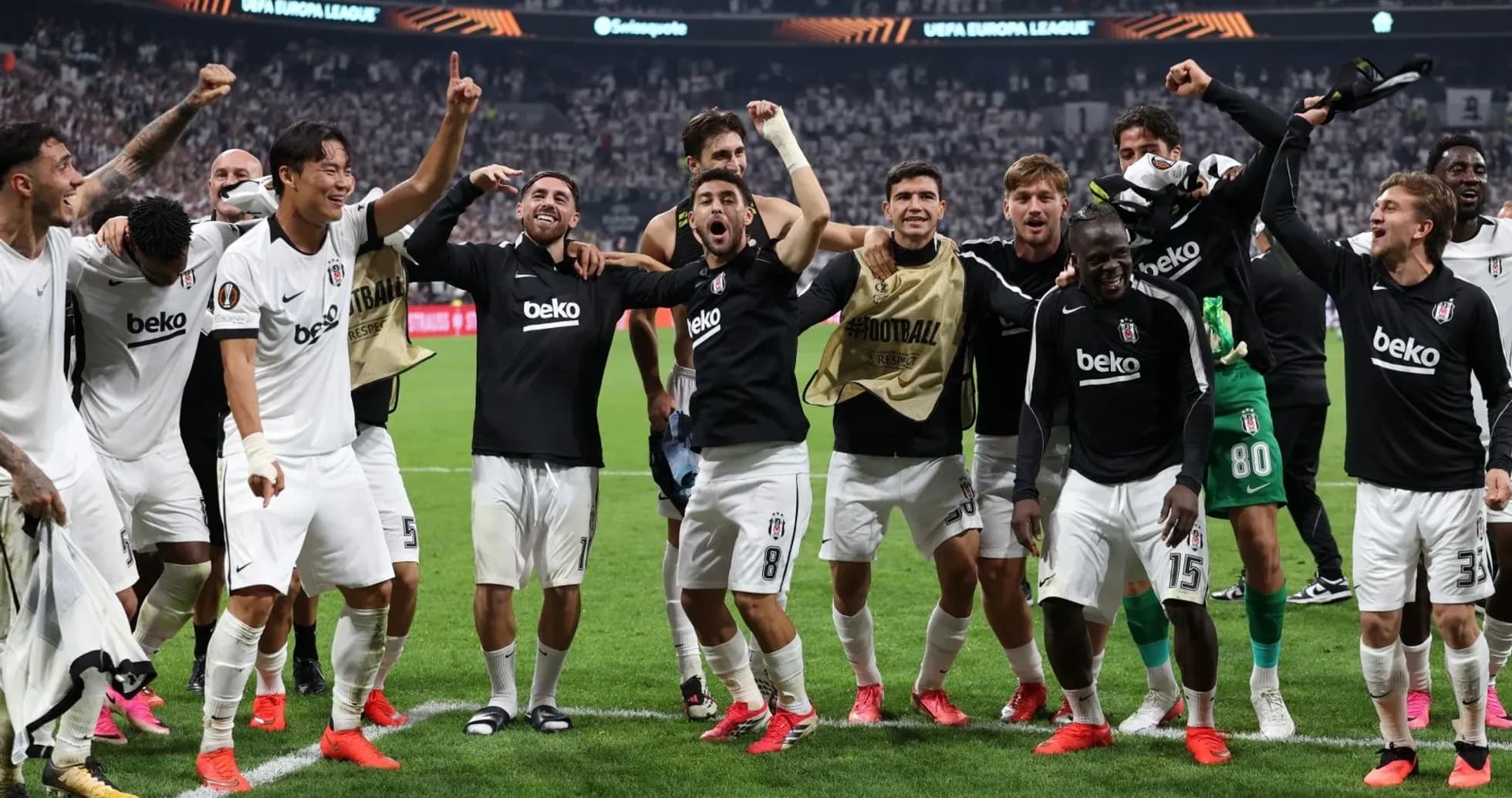
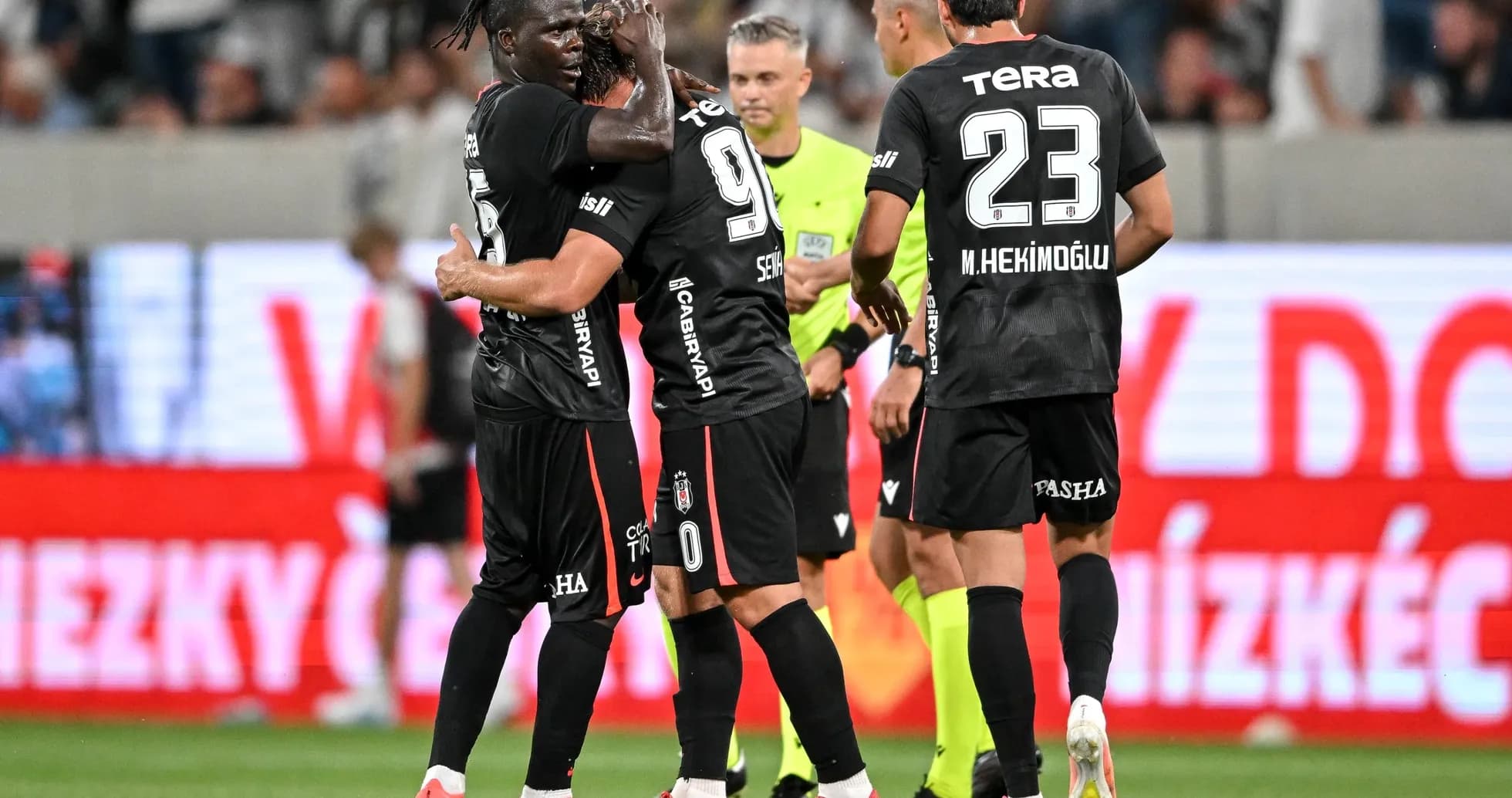
The 1-0 Beşiktaş win at Malsovicka arena was defined less by volume of chances and more by structure, control and game management, especially once reduced to ten men. Hradec Králové, in a 3-4-2-1 under David Horejs, produced more shots on goal (9 to 5) and a higher corner count (8 to 5), but struggled to convert territorial pressure into high-quality final actions. Beşiktaş, set up by Vincenzo Italiano in a 4-1-4-1, leaned on compact spacing, a strong defensive line and transitional threat, and ultimately found the decisive moment through S. Kilicsoy on 80 minutes despite Kassoum Ouattara’s dismissal.
Hradec Králové's Structure
Hradec Králové’s 3-4-2-1 gave them natural width and numbers in the middle third. The back three of F. Cech, F. Cihak and J. Uhrincat allowed the wing-backs J. Kucera and D. Horak to push high, with V. Darida and S. Dancak forming the central hinge. The front triangle of T. Sloncik and M. van Buren underneath O. Mihalik was designed to overload the half-spaces and drag Beşiktaş’s midfield line out of shape. This structure helped the hosts to a strong attacking volume: 9 shots on goal and 8 corners, suggesting frequent arrivals in the final third and pressure on the Beşiktaş box.
However, Hradec Králové’s lack of precision in the last pass and finishing undermined their territorial work. With no blocked shots recorded and Total Shots not specified, the profile points to many of those 9 efforts being allowed through to goal rather than being smothered before release, but without the cutting edge to beat the Beşiktaş goalkeeper. The early yellow card for Mick van Buren at 2' and Jakub Uhrinčať’s booking at 29' slightly constrained Hradec’s aggression in counter-pressing and duels, particularly against a Beşiktaş side looking to break through wide channels.
Beşiktaş's Defensive Strategy
Beşiktaş’s 4-1-4-1, anchored by S. Ozcan as the single pivot, was built to control central lanes and spring quickly in transition. The back four of K. Ouattara, E. Topcu, T. Djalo and M. Murillo faced sustained pressure but defended the box with discipline, registering 6 blocked shots. That number is critical: despite conceding more shots on goal overall, Beşiktaş consistently got bodies in front of attempts before they could trouble the goalkeeper, a key factor in preserving the clean sheet. Their 52% possession reflects a willingness not just to absorb but to circulate and reset, taking the sting out of Hradec’s momentum phases.
In the first half, Beşiktaş’s midfield line of V. Cerny, J. Olaitan, O. Kokcu and I. Fakili worked horizontally to deny Darida and Dancak the vertical lanes into Sloncik and van Buren. The yellow card for V. Cerny at 37' came from that intense contest in the middle third, but overall Beşiktaş kept their foul count to 6, far lower than Hradec’s 10. This lower foul volume, combined with slightly higher possession, underlines a controlled defensive approach rather than one reliant on constant disruption.
Second Half Adjustments
The second half hinged on adjustments and the red card episode. Horejs reacted first: at 42', D. Ludvicek (IN) came on for J. Kucera (OUT), hinting at a desire for more defensive stability or fresh legs on the flank before the break. On 59', M. Valenta (IN) replaced S. Dancak (OUT) and A. Umar (IN) came on for M. van Buren (OUT), injecting energy and a different profile up front to attack tiring Beşiktaş defenders. These changes maintained Hradec’s attacking tempo, contributing to their sustained shot output and corner threat, but did not significantly alter the pattern of chance quality.
Turning Point
For Beşiktaş, the match’s key turning point was the disciplinary sequence around Kassoum Ouattara. Booked at 65' and again at 71', followed immediately by a red card at 71', Beşiktaş were forced to reconfigure their left side and defensive block with a man down. Italiano’s response was swift and tactically coherent: at 76', W. Ndidi (IN) came on for O. Kokcu (OUT), R. Yilmaz (IN) for I. Fakili (OUT), and S. Kilicsoy (IN) for V. Cerny (OUT). These three substitutions collectively tightened the central corridor (Ndidi as a more defensively oriented presence), reinforced the back line (R. Yilmaz) and introduced a fresh, direct attacking outlet in Kilicsoy to threaten in transition.
Remarkably, it was Beşiktaş, down to ten, who found the decisive action. On 80', S. Kilicsoy struck the only goal of the game, converting Beşiktaş’s 5th shot on goal and turning a controlled but cautious performance into a clinical away win. Hradec Králové responded immediately with more attacking intent and another change: at 81', D. Trubac (IN) replaced T. Sloncik (OUT), adding a different creative profile between the lines. Yet Beşiktaş’s restructured block, now with Ndidi screening and R. Yilmaz shoring up the defensive line, managed the closing phase effectively.
Game Management
The late yellow card for Hyeon-gyu Oh at 83' and further substitutions at 88' — E. Agbadou (IN) for S. Ozcan (OUT) and M. Hekimoglu (IN) for Oh Hyeon-Gyu (OUT) — were about game management: fresh legs to defend deep, attack clearances and run down the clock. Even with Hradec’s superior shot-on-goal count and corner volume, Beşiktaş’s compactness, blocking (6 blocked shots) and ability to manage space with ten men ensured that those final waves did not translate into an equaliser.
Statistical Overview
Statistically, the picture is clear: Hradec Králové generated more direct efforts on target (9 vs 5) and more corners (8 vs 5), reflecting phases of territorial dominance and pressure. Their 48% possession shows this was not a backs-to-the-wall display but a relatively balanced game in terms of ball share, tilted slightly towards Beşiktaş. The hosts’ 10 fouls and 2 yellow cards underline an aggressive approach to duels, necessary to disrupt Beşiktaş’s rhythm but also indicative of the strain of chasing a deficit.
Beşiktaş, with 52% possession, fewer fouls (6), yet more disciplinary sanctions (3 yellow cards and 1 red card), walked a fine line between intensity and over-commitment. Still, their defensive metrics — especially the 6 blocked shots — and the ability to score the decisive goal while a man down speak to tactical resilience and clarity. In a tight UEFA Europa League 3rd Qualifying Round tie, the Turkish side’s structural solidity and in-game adjustments outweighed Hradec Králové’s volume of attempts, turning a marginal statistical edge in control into a crucial 1-0 away victory.