.svg&w=384&q=75 "Naijagoal logo")

Augsburg's Banks Chooses Germany Over USMNT
Augsburg teenager Banks has chosen Germany over the United States, shutting the door on a long-running USMNT recruitment push and underlining the ruthless reality of the dual-national tug-of-war.
The 19-year-old centre-back has filed a one-time switch to represent Germany at U-21 level, a decisive move that ends any chance of him turning out for the Stars and Stripes at senior level. Born in Honolulu to an American father and a German mother, Banks grew up largely in Europe and has long been viewed as one of the most intriguing defensive prospects available to both federations.
He wore U.S. colours at youth level and climbed high enough in the pecking order to earn a senior call-up for friendlies against South Korea and Japan in September 2025. He never actually stepped on the field, though, and that detail now looms large. Without an official senior appearance, the door to Germany remained wide open. He has walked through it.
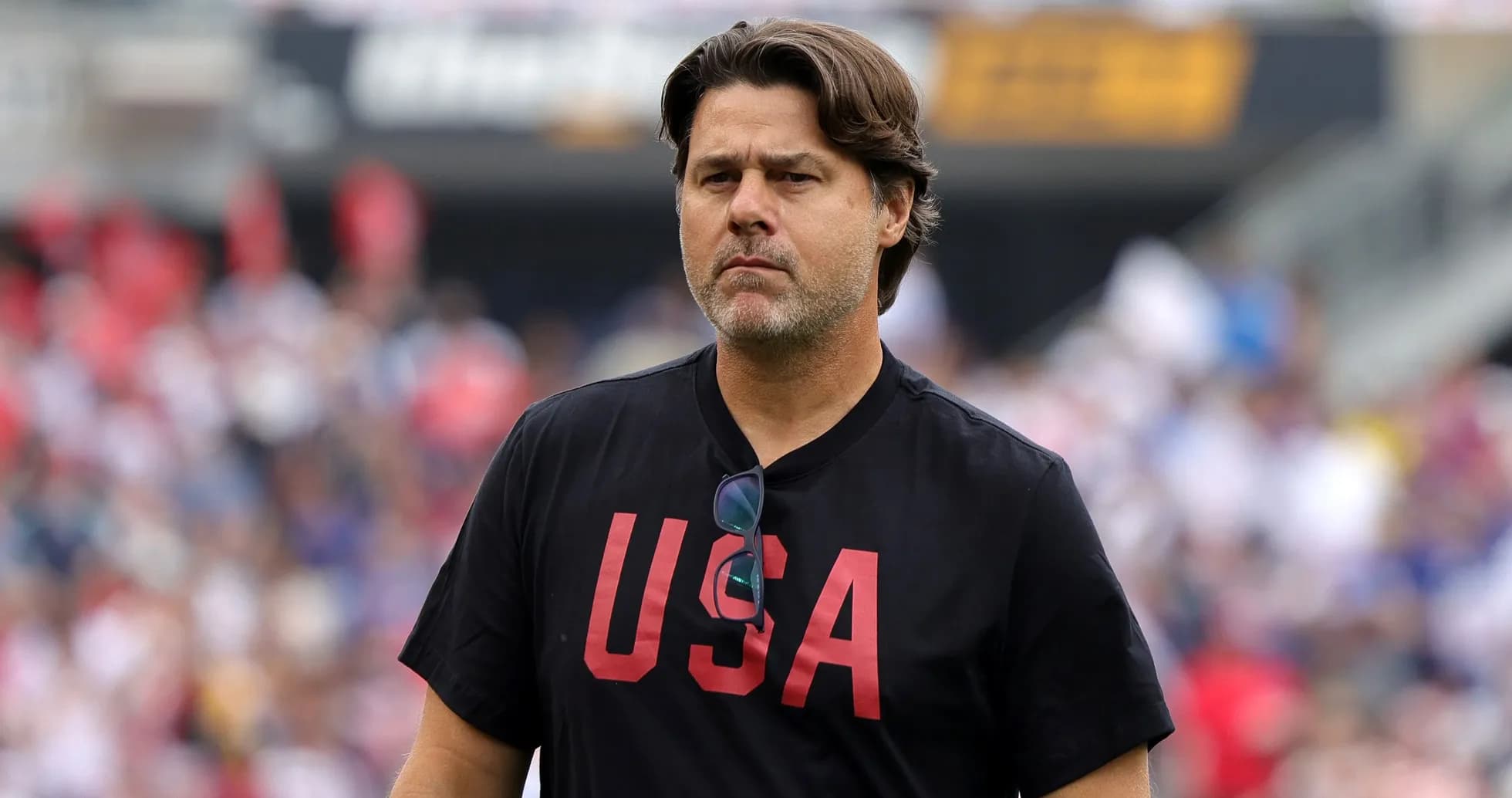
For Mauricio Pochettino, it marks the end of a chase that stretched across months of conversations and careful persuasion. The USMNT head coach revealed that Banks did not leave him guessing.
"Yes, he called us. He said, 'I decide to go for Germany'," Pochettino said, as quoted by CBS Sports. The Argentine appreciated the clarity but did not hide what the decision means for his own project. "That is a situation that we need to deal with. We want players that show commitment but commitment is not 50 per cent. It's 200 per cent, but it's good.
"He was honest because every time that we contact[ed] him with the possibility to join us, he said, 'No, still in doubt. I don't know if I want to pick USA or Germany,' and he was honest."
USMNT’s Identity Battle
The national team is in the middle of a generational reset, with Pochettino trying to weld together a group that treats the shirt as a non-negotiable commitment, not a career option to be weighed indefinitely.
"We want players with no doubt," he insisted. "We want players that are committed and desperate to play for the badge and play for us, and that is the most important thing."
The United States, with its vast diaspora and multicultural roots, lives this dual-national reality more than most. Talents like Banks will always have options. Pochettino knows it and addressed it head-on.
"Of course, it's a thing that we need to deal [with] because we are in a country [where] that happens often but I think that organization is so strong.
"U.S. Soccer is an organization that is [above] any player, any name, any dual national and I think [what] is the most important that the player [has] no doubt when [they] join us, [there's] no doubt that they want to die for that chance."
Banks’ choice is a setback, but not a shock. The defender has deep roots in Germany and now steps into a powerful development pathway with the German U-21s. For the United States, the response is already underway.
Scouting the Next Wave
Pochettino did not retreat to his office to dwell on the loss. He went to work.
On Friday, he took his seat at the New York derby, alongside former Manchester City boss Pep Guardiola, to run the rule over domestic options. Red Bull New York edged New York City FC 1-0, but the scoreline was only part of the story for the USMNT coach.
He tracked NYCFC goalkeeper Matt Freese closely. Freese started for the United States at the World Cup and remains central to the conversation about the position going forward. Every high ball, every decision with the ball at his feet, every command of his box fed into Pochettino’s evaluation of how secure that spot truly is.
The real intrigue, though, came from the other side of the age spectrum. Pochettino also cast a careful eye over RBNY teenagers Julian Hall and Adri Mehmeti. Both are uncapped. Both are highly rated. Both are dual nationals.
These are exactly the types of profiles that can shape a decade of USMNT football if handled correctly—or slip away to rival federations if not. U.S. Soccer knows that. So does Pochettino.
Banks has made his choice. The USMNT cannot change that. What it can control is how aggressively it moves to ensure Hall, Mehmeti and the next wave of dual-national talent do not become the next big “what if” in American soccer.