.svg&w=384&q=75 "Naijagoal logo")
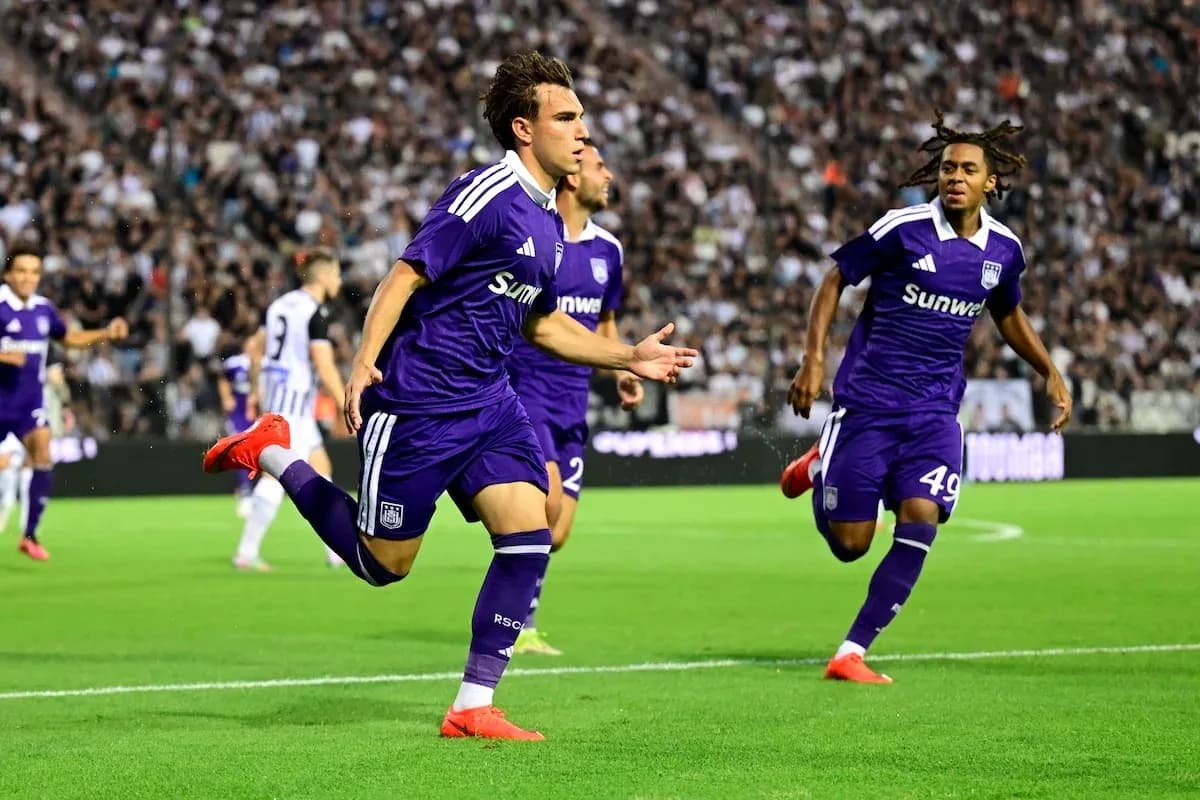

Anderlecht vs PAOK: Key Tactical Insights for Europa League Clash
Anderlecht host PAOK at Lotto Park in the second leg of the UEFA Europa League 3rd Qualifying Round, a pivotal tie for both clubs’ ambitions to reach the main competition phase; with no group standings available yet, this match effectively decides who keeps a realistic path toward the Europa League proper and the financial and sporting boost that comes with it.
Head-to-Head Tactical Summary
The only recent meeting in the data is the first leg on 6 August 2026 at Toumba Stadium in Thessaloniki, where PAOK, as the home side, lost 0-1 to Anderlecht. Anderlecht led 1-0 at half-time and held that advantage to full time, indicating a controlled away performance with defensive solidity and effective game management once in front.
Global Season Picture
- League Phase Performance: There is no standings data yet for either team in the 2026 UEFA Europa League, so goals for, goals against, and points in a group context cannot be quantified at this stage. The qualifying round is therefore the current reference point for their continental campaigns.
- Season Metrics: In the league phase context of this Europa League campaign so far, Anderlecht have played 3 matches, winning 2 and drawing 1, scoring 5 goals and conceding 2. They average 1.7 goals scored and 0.7 conceded per match, with no failures to score and one clean sheet, suggesting a balanced side with a slight attacking edge and generally secure defending. Their disciplinary profile shows a spread of yellow cards across the match, with notable bookings between minutes 16–75 and a red card late in games, hinting at occasional late-game volatility. PAOK have also played 3 matches, with 2 wins and 1 loss, scoring 5 and conceding 3 (1.7 scored, 1.0 conceded per match). They have one clean sheet and one match where they failed to score, and their yellow cards cluster around the end of each half, pointing to intensity spikes in key phases rather than constant aggression.
- Form Trajectory: Anderlecht’s form string “DWW” shows an upward curve: they started with a draw and followed it with back-to-back wins, including the away victory at PAOK, indicating growing confidence and momentum. PAOK’s “WWL” pattern reflects a strong start with two consecutive wins followed by a defeat in the first leg, which may dent confidence slightly and forces a reaction away from home in this decisive return match.
Tactical Efficiency
Across this Europa League qualifying phase, Anderlecht’s numbers point to a compact, efficient side: they combine a positive goal difference with an unbeaten record and no matches without scoring, underlining a reliable attacking output supported by a relatively tight defense. Their ability to win 3-1 at home and 1-0 away in their biggest victories suggests they can both outscore opponents and protect narrow leads. PAOK’s profile is more open: a 2-0 home win and a 3-2 away win show they are capable of high-tempo, chance-rich games, but the 0-1 home defeat to Anderlecht highlights vulnerability when chasing a match. Without explicit comparison indices, the qualitative contrast is that Anderlecht appear slightly more controlled and balanced, while PAOK’s attacking threat comes with a higher defensive risk. For this second leg, Anderlecht’s tendency to manage leads and consistently find the net gives them a tactical edge, whereas PAOK must tilt the balance towards their more expansive attacking style without overexposing a defense that has already conceded three times in as many matches.
The Verdict: Seasonal Impact
This result will be season-defining for both clubs. If Anderlecht convert their first-leg advantage into aggregate progression, they move one step closer to the Europa League proper, reinforcing an early-season narrative of resilience and upward form, and strengthening their continental coefficient and financial base. It would validate their controlled approach and give them a platform to rotate and manage domestic commitments from a position of strength. Conversely, elimination here would abruptly halt a promising unbeaten run and shift pressure back onto domestic competitions as the sole arena to salvage their year. For PAOK, overturning the deficit in Brussels would mark a major early-season statement, showing they can respond to setbacks and win high-pressure away fixtures, keeping their European campaign alive and maintaining the club’s visibility and revenue on the continental stage. Failure to progress would frame the early season as a missed opportunity: a strong start undermined by home defeat and inability to break down a disciplined Anderlecht, increasing scrutiny on their defensive structure and big-game management as they turn fully towards domestic targets.