.svg&w=384&q=75 "Naijagoal logo")

2026 World Cup Quarter-Finals: Key Matches and Players to Watch
The 2026 World Cup has narrowed to a knife-edge. Seven nations remain, six of them European, with Argentina standing alone for South America and for the rest of the world. One defeat now ends everything. One mistake, one moment, can flip an entire tournament.
The giants are still here. So are a couple of teams who were never supposed to get this far. The bracket is tightening, the stars are sharpening their focus, and the margins are shrinking by the minute.
Here’s where it stands.
France – Mbappé chasing history
France are already waiting in the semi-finals, businesslike and ominous. A 2-0 win over Morocco on Thursday pushed the two-time champions one step closer to a historic three-peat, and they have done it without dropping a game.
Les Bleus cruised through Group I, brushing aside Senegal 3-1, Iraq 3-0, and Norway 4-1. The knockout phase has been just as ruthless: Sweden dismantled 3-0, Paraguay edged 1-0, Morocco handled with authority.
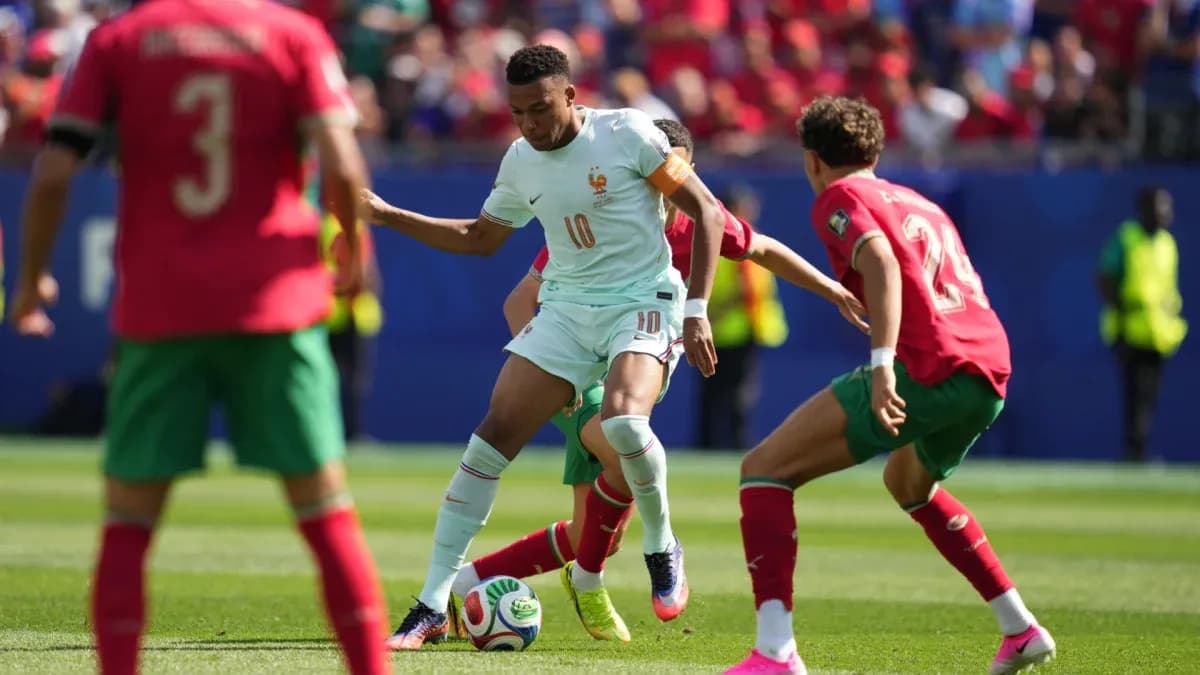
At the heart of it all, again, is Kylian Mbappé.
The captain has become France’s all-time leading scorer and is dominating this tournament. He has more goals than anyone at this World Cup so far and has drawn level with Lionel Messi on 17 non-penalty World Cup goals across his career. That is rarefied air, and he’s still only chasing, in his own words, the standards set by Messi and Cristiano Ronaldo.
An ankle scare against Morocco briefly rattled French nerves, but Mbappé has insisted he is “completely fine.” France will need every stride of his acceleration and every ounce of his finishing when they walk into AT&T Stadium in Dallas on Tuesday, July 14. Spain or Belgium will be waiting. Whoever it is, they know exactly who the main problem will be.
Spain – La Roja’s new era, Yamal’s stage
Spain arrive at the quarter-final with the calm of a team that knows it belongs in the latter stages. Ranked just behind Argentina in the FIFA standings, La Roja sense an opening to reclaim the trophy they last lifted in 2010.
Their path through Group H was controlled rather than chaotic: a cagey 0-0 with Cabo Verde, followed by a 4-0 dismantling of Saudi Arabia and a tight 1-0 win over Uruguay. When the stakes rose, Spain rose with them, knocking out Austria 3-0 and then edging Portugal 1-0.
Next comes Belgium on Friday at SoFi Stadium in Los Angeles, with a place in the semi-final against France on the line.
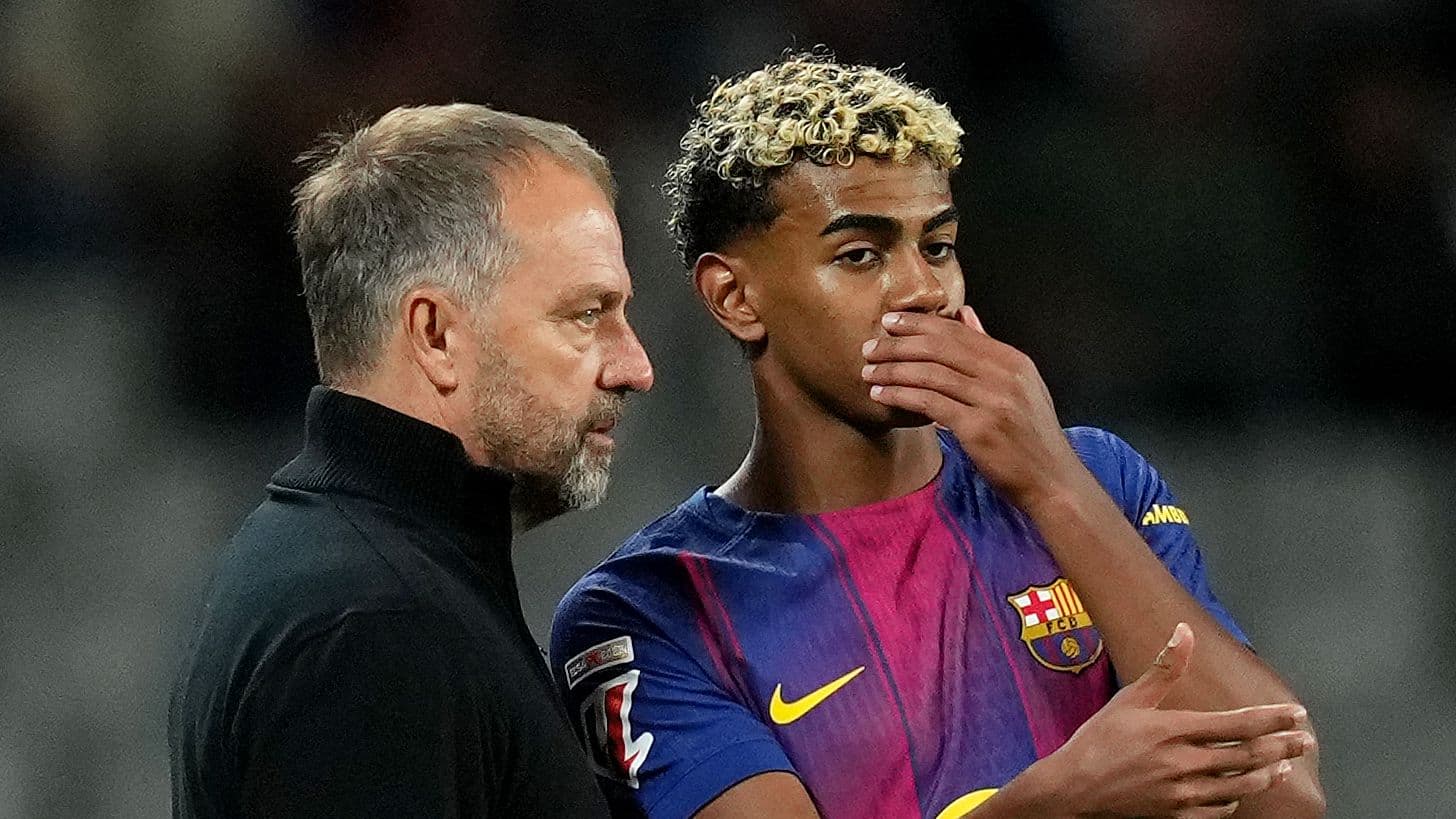
The spotlight falls on Lamine Yamal. Just 18, the right winger has already shown in previous tournaments that he thrives under pressure. He came into this World Cup still managing his minutes after a hamstring injury, openly acknowledging he was building back toward a full 90. Even in that context, his quality has shone through. Give him space, and he’ll twist a game. Deny him space, and he’ll still find a way to influence it.
Spain’s structure is familiar. The difference now is that their cutting edge might belong to a teenager.
Belgium – Lukaku and the chip on their shoulder
Belgium did more than just beat the United States. They silenced a stadium and punctured a storyline.
The 4-1 demolition of Team USA on Monday, on American soil, came after FIFA suspended Folarin Balogun’s red card to allow the U.S. star to play. The decision drew political noise, with President Donald Trump claiming a role in the intervention. Betting markets tilted toward the hosts. The script looked written.
Belgium tore it up.
De Rode Duivels had eased into the tournament with draws against Egypt (1-1) and Iran (0-0), then exploded with a 5-1 thrashing of New Zealand. In the knockouts they edged Senegal 3-2, then dismantled the U.S. with a ruthless, grown-up performance.
Still, skepticism lingers. Even after the upset, coach Rudi Garcia remarked that “everyone thinks [they] are going home.” That sense of disrespect has become fuel.
Romelu Lukaku embodies that response. Belgium’s all-time top scorer has turned the World Cup bench into his personal stage, scoring in each of the team’s last three games after coming on as a substitute. In doing so, he became the first player in World Cup history to score as a substitute in four separate matches. Impact player? That label no longer covers it.
Spain await in Los Angeles. If Lukaku keeps rewriting records, Belgium’s stay in this tournament will last longer than many expected—or wanted.
Norway – Haaland drags a nation into new territory
For Norway, every step now is history. Their quarter-final against England on Saturday, July 11, at Hard Rock Stadium in Miami is already the furthest they have ever gone at a World Cup. They are not treating it as a ceiling.
Landslaget emerged from the same Group I as France. They were thumped 4-1 by Les Bleus, yet recovered instantly, beating Iraq 4-1 and Senegal 3-2 to reach the knockouts. There, they removed Côte d’Ivoire 2-1 and then stunned Brazil by the same scoreline. That alone changes how the world views Norwegian football.
It helps when you have Erling Haaland.
Norway’s all-time top scorer has been tearing up the record books. Sixty goals in 53 senior internationals. His 60th came against Côte d’Ivoire at this World Cup, a milestone Messi and Ronaldo both needed more than twice as many games to reach. Haaland has brushed aside comparisons to those two, but the numbers won’t listen.
Against England, his presence changes everything. One half-chance, one cross, one loose ball in the box—and the underdog suddenly doesn’t look like an underdog at all.
England – Kane’s goals and a familiar weight
England know this stage. They also know the weight that comes with it.
The Three Lions have fought their way out of Group L with a 4-2 win over Croatia, a tense 0-0 against Ghana, and a professional 2-0 victory over Panama. In the knockouts, they edged the Democratic Republic of Congo 2-1 and survived a 3-2 thriller against Mexico.
Now comes Norway in Miami, and beyond that, potentially Argentina or Switzerland. Three more wins would end decades of waiting.
Harry Kane stands at the center of the push. England’s captain and all-time top scorer has six goals at this World Cup, trailing only Mbappé, Messi, and Haaland. He already owns a Golden Boot from 2018 and is putting together another monstrous season, with 73 goals in the 2025–26 campaign so far—second only to Messi’s legendary 2011–12 haul.
Kane is not just finishing chances; he is anchoring an entire project. When he drops deep, England play. When he stays high, defenders panic. Against Norway, his duel with Haaland—direct or otherwise—will shape more than just one match. It will shape how this generation of England players is remembered.
Argentina – Messi, still defining the era
Argentina walk into every match with a target on their back and an aura around them. Ranked No. 1 in the world, La Albiceleste have carried that burden with a calm that comes only from years of winning.
Group J was a statement: Algeria beaten 3-0, Austria 2-0, Jordan 3-1. The knockout phase tested their nerve a little more, but the outcome was the same—Cabo Verde sent home 3-2, Egypt dispatched by the same scoreline.
Now they stand as the last non-European side in the tournament, a lone standard-bearer for South America. No one is calling them underdogs.
Lionel Messi remains the axis around which everything spins. Head coach, captain, and still the man who decides games. Argentina’s all-time top scorer has stacked records upon records. He became the first player to win the World Cup’s Golden Ball twice. This year he has extended his mark as the top scorer in World Cup history, now up to 21 goals, and he is the first player ever to score in eight consecutive World Cup matches.
The numbers feel almost secondary to the feeling: when Messi is on the pitch, anything is possible. Switzerland will try to deny that truth at Arrowhead Stadium in Kansas on Saturday, July 11. Many have tried. Few have succeeded.
Switzerland – Xhaka and the art of defiance
Switzerland know exactly what they are up against. Argentina, Messi, the No. 1 team in the world. The rankings say this should be straightforward: Argentina at the summit, Nati down at 19.
The Swiss are not reading from that script.
Their Group B campaign built quietly: a 1-1 draw with Qatar, a 4-1 win over Bosnia and Herzegovina, a 2-1 victory over Canada. In the knockouts, they handled Algeria 2-0, then survived a goalless grind with Colombia before winning 4-3 on penalties. It has been a run built on resilience and structure.
At the core of that structure is Granit Xhaka.
The captain and defensive midfielder has driven Switzerland to their first World Cup quarter-final since 1954. He rarely scores, but he dictates. He breaks lines with his passing, snaps into duels, and sets the tempo for those ahead of him. Against Argentina, his job becomes even more complex: protect the back line, disrupt Messi’s rhythm, and still find a way to launch his own forwards.
Switzerland have spoken openly about the thrill of facing Messi. The respect is real. So is the ambition to send him home.
Seven nations remain. Legends chasing one last peak, prodigies announcing themselves, outsiders refusing to accept their assigned role. In a tournament where one night can rewrite history, which of them will still be standing when the lights go out in 2026?