.svg&w=384&q=75 "Naijagoal logo")

2026 World Cup Highlights: Messi, Mbappe, and Ronaldo Shine
The 2026 World Cup has finally caught fire. Lionel Messi, Kylian Mbappe, Erling Haaland and now Cristiano Ronaldo have all stamped their names on the tournament, dragging the expanded 48‑team format out of the realm of theory and into something visceral, noisy and very real.
From Cape Verde to Egypt, from Japan to a string of unfancied sides, the underdogs have refused to play their assigned roles. The football has been sharper than many dared hope. The doubts about dilution have not vanished, but they have been drowned out, at least for now, by the sound of big stars delivering and new stories emerging.
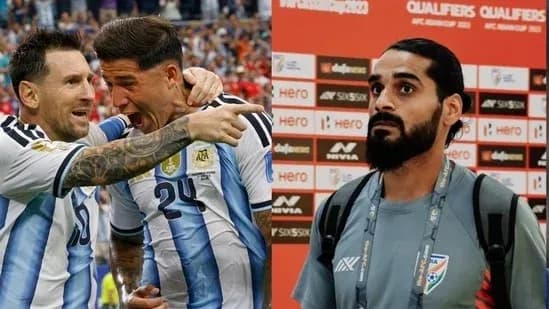
Amid it all, India defender Sandesh Jhingan, part of the Zee5 expert panel for the World Cup, has been watching closely. Speaking to Hindustan Times Digital, he broke down Messi’s astonishing start, Argentina’s steel, Mbappe’s tournament aura, the Ronaldo storm, and the quiet menace of a teenager named Lamine Yamal.
Messi at 39: “He makes you feel like a kid”
Five goals in two games. Braces, hat-tricks, the same familiar glide, the same ruthless left foot. Messi, at 39, is not just surviving on the biggest stage; he is dictating it.
“I think it’s incredible, first of all, to have that longevity and that consistency,” Jhingan said. “Being an athlete myself, the hardest thing to do, or the greatest talent you can have, is to have that consistency, performing at such a high level in the best way you can and having the longevity with it.”
He lingered on the privilege of watching Messi’s whole journey.
“We are fortunate that we… have seen his whole career in front of our eyes, and it’s brilliant,” he said, recalling a moment from the Zee studio. “There was a lady who was 100 years old… when you watch Messi, it gives you that feeling of being a kid. So that 100-year-old lady yesterday must have felt like a 10-year-old watching him play. He gives you that kind of joy.”
That, more than the numbers, is what grips Jhingan: the way Messi still makes football feel simple, pure, and impossibly young.
Argentina’s wall: the platform behind the genius
Messi’s fireworks have dominated the headlines, but Argentina’s clean sheet record might be the more ominous detail. They have not conceded. They have barely flinched.
For Jhingan, the connection is obvious.
“The reason Messi is doing so well is because the team's shape and compactness are so good,” he said. The praise quickly moved from the No. 10 to the dugout. “A lot of credit goes to Argentina’s coaching staff. The best coaches adapt their tactics around the players they have rather than forcing their own ideas.”
Argentina, he pointed out, are not wedded to one script. They can sit deep. They can hold a mid-block. What never changes is their organisation.
“That structure gives Messi the freedom to operate higher up the pitch and make the difference. The defenders and midfielders know their job is to win the ball back and get it to Messi because they trust that he can create something special. That belief gives the whole team confidence.”
Bodies on the line, distances tight, roles clear. The old cliché about defending from the front suddenly looks very modern when the entire plan is to tilt the pitch towards Messi.
“Reliant on Messi”? Jhingan shrugs
Lautaro Martinez ran himself into the ground against Austria. He dropped in, pressed, chased, linked, and still the noise outside focused on a familiar accusation: Argentina rely too much on Messi, the strikers are not scoring enough.
Jhingan didn’t need long to answer that.
“If I’m an Argentine player or a fan, I wouldn’t mind being called reliant on Messi as long as the team is winning,” he said. But he refused to accept that the world champions are a one-man show.
“Argentina are not just dependent on him; they are built on a strong system. Their organisation, defensive discipline, and ability to stay compact are just as important. They know when to sit back, how to hunt the ball together, and how to create the right conditions for Messi and the other attacking players to decide games.”
The scoreboard tells its own story: they are winning, they are through, and they look like a team that knows exactly who they are.
“A lot of credit goes to the coaching staff for creating a system where everyone understands their role,” he added. The reliance, if you want to call it that, is deliberate. It is by design.
Mbappe and the World Cup switch
Some players grow into tournaments. Mbappe seems to arrive already in fast-forward.
“With his goals and his numbers, it’s incredible. I think he’s 27, 28 right now. What he has achieved is mind-blowing,” Jhingan said, before adding a note of reality: Mbappe himself will know the job is far from finished.
“How do you put him in that bracket, because everyone will have that judgment with Messi and Ronaldo now, because they are the pillars, or they are the standard,” he said. “It’s up to him if he can maintain this, because what Messi and Ronaldo did in the past 20-odd years is unbelievable.”
The tools, though, are all there.
“Mbappe has all the credentials; he has all the qualities to do it. It’s up to him how motivated he can stay and how fit he can stay.”
Then came the line that really captured Mbappe’s World Cup persona.
“I’ve noticed whenever the World Cup is there, that guy just brings an extra level. The 2022 World Cup or the 2018 one. That’s the sign of a big player. When they come on the big stage, they kind of get that extra edge in them.”
In a tournament built on short bursts and high stakes, that “extra edge” can define careers.
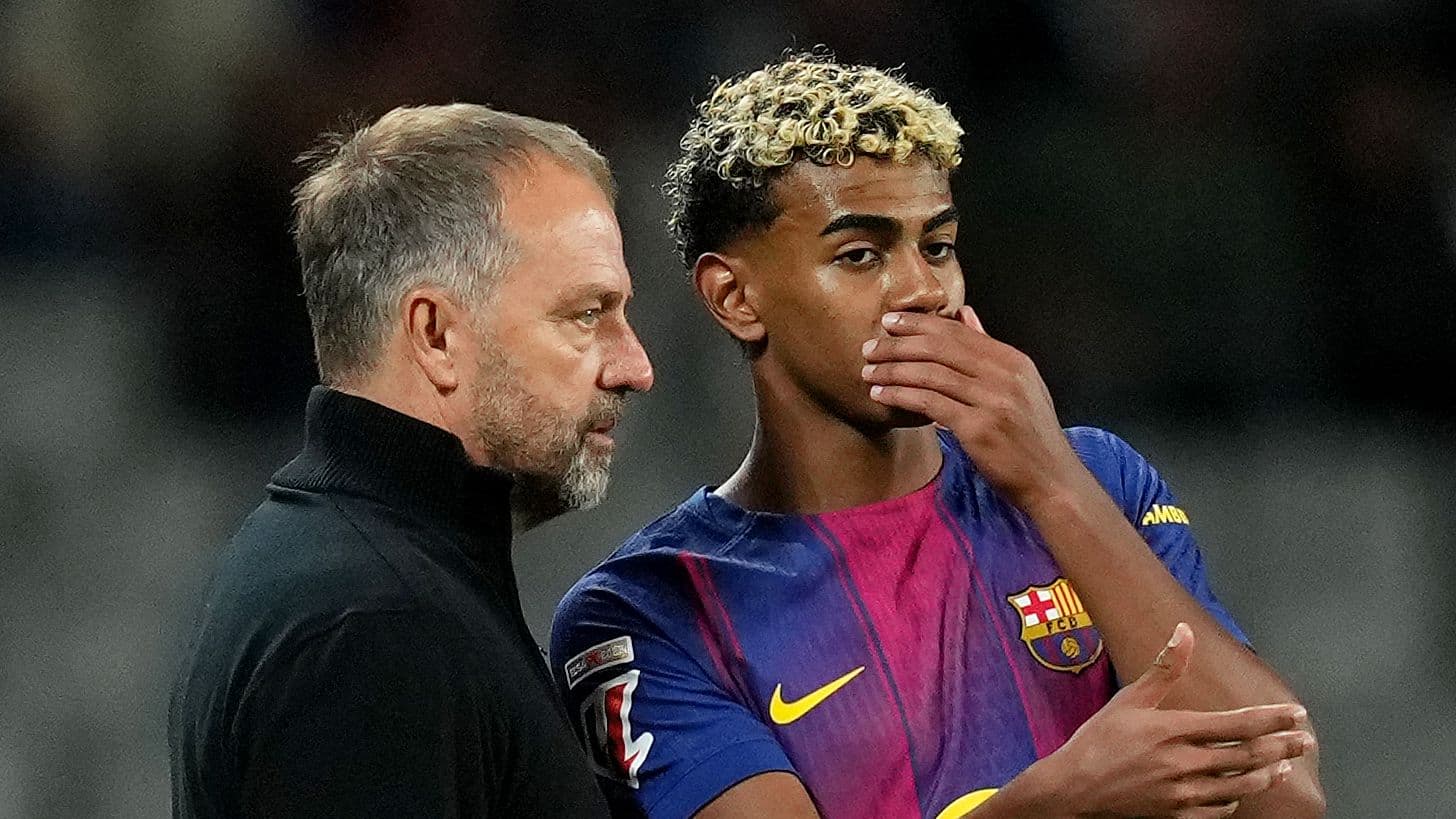
Lamine Yamal: joy for the crowd, headache for defenders
He has not started every game. He has not played every minute. Still, Lamine Yamal has already carved his name into this World Cup with flashes of daring and a simple idea: get the ball, run at the man in front.
From a defender’s eye, Jhingan knows exactly how that feels.
“If you’re in a one-on-one situation with Lamine, most of the time he’s going to get past you because that’s his biggest quality,” he admitted. “He’s one of those players you pay to watch because he brings so much joy to the game.”
So how do you stop a winger who lives to isolate you?
“The wrong approach is to think only about stopping him one-on-one,” Jhingan warned. A full-back can win 89 minutes of duels and still be buried by one deflection, one shot, one clip on the highlight reel.
“For me, the focus has to be on reducing those chances. My job is to keep the team compact, limit the space he receives in, and cut the supply. That means the midfielders have to press, the forwards have to press, and the defensive line has to stay high.”
You don’t beat Lamine by beating Lamine. You beat him by starving him.
“Of course, he will get opportunities,” Jhingan said, “but the aim is to minimise them rather than think you can win every single duel against him.”
Ronaldo, the bench debate, and a “bold statement”
Ronaldo’s clinical showing against Uzbekistan has not silenced the noise. The argument keeps circling back: is he still undroppable, or should age and recent form push him to the bench?
Jhingan did not tiptoe around it.
“I think the debate that is there right now, I’m going to give a bold statement, but all this debate is from the ones who never played professional football, or in case who never played much of it professionally,” he said.
“You can have your own opinions, but at the end of the day, it’s Martinez who decides. He’s the head coach. If he thinks he’s good enough, he will play.”
Ronaldo, like Messi, lives permanently under a magnifying glass.
“There’s so much spotlight on them, especially the ones you always compare with. If they are scoring and you don’t score in a game, they will always bring all these things out: his age, this, that.”
Context, he argued, gets lost too quickly.
“If you see him at the club level, he scored a lot, I think he was the top scorer in the Saudi league. And he scored many goals in the qualifiers, also. But people tend to forget that and just pinpoint.”
Ronaldo has heard it all before. Jhingan expects the response he has seen so many times.
“I think today Ronaldo will kind of open his account as well in a big way because they always notice whenever there’s a lot of doubt around him, he’s someone who steps up and kind of shuts those critics up.”
Golden Boot race: the giants at full stride
Five goals in two games have flung Messi to the front of the Golden Boot race. Mbappe is lurking. Haaland is looming. Ronaldo, Jhingan believes, is about to join them.
“I think it could be between Messi and Mbappe,” he said. “I think it’s still an early stage, two games, but Messi has a very healthy lead now with five goals. Even Haaland, it’s all three of the biggest names which people wanted to score.”
Then came that prediction of a Ronaldo surge.
“So it’s going to be a tight race. Messi is there, Mbappe is there, Haaland is there, and it’s good for us to watch. More goals, more fun, more excitement.”
If the group stage has been this explosive, the knockout rounds promise something ferocious.
One bold pick: “I’m going to root for Japan”
Ask a defender who has spent his career grinding through games who he thinks will lift the trophy, and you might expect a safe answer. Jhingan did not bother with that.
“I’m going to be biased. I’m going to root for Japan. I hope they make it,” he said, unapologetically.
He knows the established powers are circling.
“Of course, Argentina and all are there. But I’m going to be biased, going for an Asian team, so I’ll say Japan. I want them to go as high as they can.”
In a World Cup where Messi is rewriting time, Mbappe is chasing history, Ronaldo is fighting the clock, and new names like Lamine Yamal are tearing at the script, an Asian side barging into the final act would fit the mood perfectly.
The stars have arrived. The outsiders have found their voice. The tournament is no longer waiting to start; it is already racing ahead. The only real question now is who can keep up.