.svg&w=384&q=75 "Naijagoal logo")

2026 FIFA World Cup Kicks Off in North America
The biggest World Cup ever has finally landed in North America, and the continent is bracing for a month-long roar.
From Mexico City’s sprawling bowl at altitude to the glass-and-steel cathedrals of New York and Toronto, 48 national teams are about to test an expanded format that changes the shape of the sport’s biggest stage. For the first time, three countries share hosting duties. For the first time since 1998, the field has swelled beyond 32. The scale is new. The stakes are not.
Three hosts, three opening acts
This World Cup doesn’t tiptoe into view. It explodes across three nations with three separate opening ceremonies, each designed as a statement of identity.
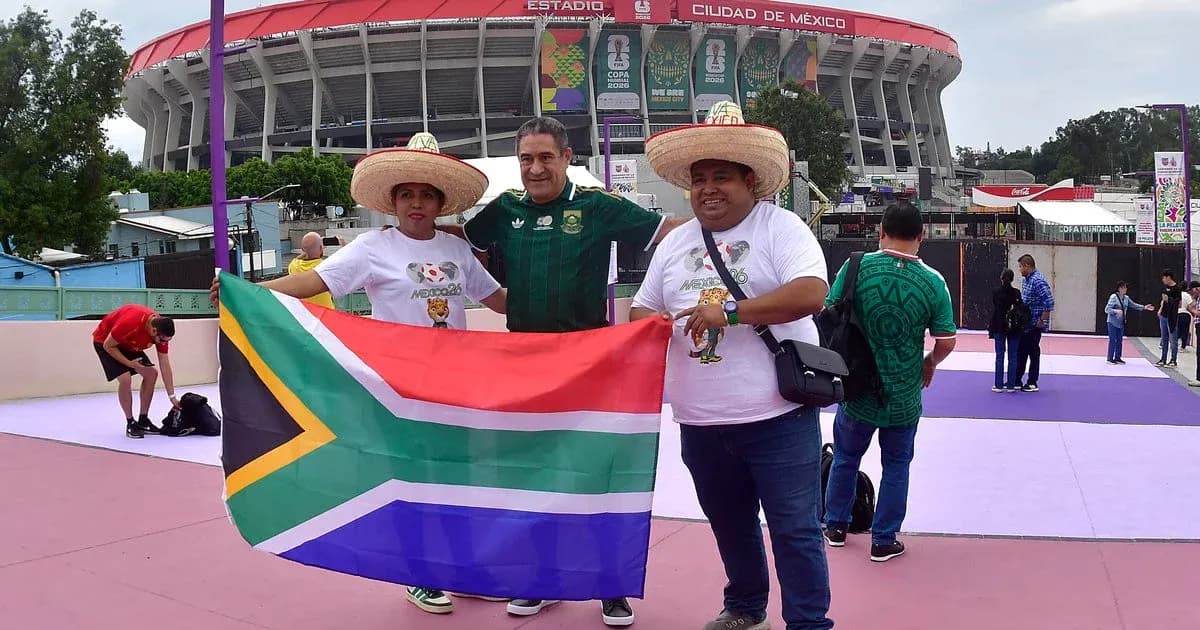
The curtain lifts on Thursday at the Estadio Azteca, where Mexico opens Group A against South Africa. Before a ball is kicked, Shakira and Burna Boy will lead the show with “Dai Dai,” the official song of the 2026 FIFA World Cup. The performance starts at 11:30 a.m. local time (1:30 p.m. ET), with a full slate of artists drawn from the tournament’s first official album. Alejandro Fernández, Belinda, Danny Ocean, J Balvin, Lila Downs, Los Ángeles Azules, Maná and Tyla are all on the bill, turning one of football’s most storied arenas into a global concert hall.
On Friday, the focus swings north. Toronto’s BMO Field, freshly bulked up from 28,000 seats to 45,000, stages Canada’s home World Cup debut against Bosnia and Herzegovina in Group B. Ninety minutes before the 3 p.m. ET kick-off, at 1:30 p.m. ET, the Great White North gets its own pregame spectacle. Alanis Morissette, Alessia Cara, Jessie Reyez, Michael Bublé and others will front a show built for a country that has waited generations for this moment.
Later that same day, Los Angeles gets its turn. SoFi Stadium hosts the United States’ opener against Paraguay, with the U.S. Men’s National Team stepping out at 6 p.m. local time (9 p.m. ET) in new Nike kits inspired by past designs, including the striped look from 1994. The U.S. opening ceremony begins at 4:30 p.m. local (7:30 p.m. ET), with Katy Perry, Future, Anitta, LISA, Rema and Tyla headlining. FIFA President Gianni Infantino has framed the lineup as a snapshot of American cultural diversity and the reach of its music and entertainment scene, a reminder that this World Cup is as much about spectacle as sport.
A déjà vu opener and a packed first slate
Once the fireworks fade in Mexico City on Thursday, the football finally takes center stage.
Mexico and South Africa meet at 2 p.m. local time (3 p.m. ET) in a fixture loaded with symmetry. The same nations opened the 2010 World Cup in Johannesburg on June 11, playing out a 1-1 draw that still lingers in memory. Sixteen years later, the date is the same, but the roles are reversed: now it is Mexico at home, in its own cathedral, under its own sky.
Later that night, at 9 p.m. local time (11 p.m. ET), Akron Stadium in Zapopan, near Guadalajara, stages the other Group A clash as South Korea face Czechia. It is a reminder that this expanded World Cup spreads games far beyond the headline cities and into the heartlands of Mexican football.
Friday belongs to the co-hosts. Canada’s first-ever World Cup match on home soil kicks off at 3 p.m. ET in Toronto against Bosnia and Herzegovina, a landmark for a country that has long chased relevance in the global game.
On the other side of the continent, SoFi Stadium in Los Angeles hosts the U.S. against Paraguay at 6 p.m. local time (9 p.m. ET). The last time the USMNT played a World Cup match at home was July 4, 1994, a 1-0 Round of 16 defeat to eventual champions Brazil. Thirty-two years on, the Americans return to a home World Cup with a deeper player pool, a new generation, and the weight of expectation.
Security operation on an unprecedented scale
The football will be played in 16 stadiums across the three countries. The security footprint is just as sprawling.
The FBI has deployed tactical teams to Atlanta, Boston, Dallas, Houston, Kansas City, Los Angeles, Miami, New York, New Jersey, Philadelphia, the San Francisco Bay Area and Seattle as those cities brace for an influx of supporters. FBI Director Kash Patel described the units as crisis response experts brought in to support the enormous task of protecting players, fans and visitors.
In practical terms, it means longer lines and earlier arrivals. Fans heading to Gillette Stadium in Foxborough, Massachusetts, have been warned they may need to arrive more than an hour before kick-off to clear security, according to local reports.
Marlo Graham, special agent in charge of the FBI’s Atlanta field office, framed the operation as an extension of existing playbooks for major events, with one key difference: the World Cup stretches across 39 days. Tactical teams from multiple agencies have been training together for months.
Immigration and Customs Enforcement will also be part of the security net. White House border czar Tom Homan has said ICE’s “primary focus” during the tournament will be national security rather than immigration enforcement, a sensitive point after more than a year of tightened U.S. entry policies under the Trump administration.
Those policies have already brushed the tournament. Somali referee Omar Abdulkadir Artan, scheduled to officiate at the World Cup, was denied entry to the U.S. over the weekend. Customs and Border Protection cited “vetting concerns,” and FIFA confirmed the decision without disclosing further details.
What fans can and can’t bring
Inside the stadiums, the rules will be tight.
FIFA’s stadium code of conduct bans nontransparent bags and a wide range of hazardous items: weapons, body protection gear, helmets, umbrellas, strollers and chairs are all off-limits. Initially, the list also included “bottles, cups, jars, cans or any other form of closed or capped receptacle that may be thrown or cause injury,” as well as branded water bottles.
That stance collided quickly with reality. With matches staged in the height of summer, concerns over extreme heat and fan safety grew, and so did anger over the water bottle ban. Free Lions, a group of English supporters, blasted the policy on social media, asking, “What next? Suncream banned and fans forced to buy it in stadiums?” and branding it “the latest money-grab” in the eyes of many traveling fans.
Under pressure, FIFA adjusted. World Cup 2026 Chief Operating Officer Heimo Schirgi clarified that each spectator at stadiums in the U.S. and Canada will be allowed to bring one soft, plastic, disposable, factory-sealed water bottle of up to 20 ounces. Hard reusable bottles remain prohibited. Once inside, all beverages, including water, sodas and juices, will be supplied by long-time FIFA sponsor Coca-Cola.
The price of being there
For all the talk of accessibility in a 48-team World Cup, getting through the turnstiles is proving a brutal financial test.
With matches spread across 16 venues, more people than ever have a chance to see a World Cup game in person. Many are being priced out. Group-stage tickets have climbed into the high hundreds and even thousands of dollars for certain fixtures.
“It’s an absolutely punishing number with regards to the ticket prices to get into a game,” said Phil Labas, captain of the Chicago chapter of the American Outlaws, a U.S. supporters’ group of around 30,000 fans. Labas has attended nearly every U.S. Soccer event over the past four years. This time, even with the World Cup on home soil, he and many others have been pushed into the upper reaches of the stadiums.
“We’re in the 300 section. We are upper deck in a corner ... It’s an absolute travesty,” he said.
They will go anyway. They always do. “You’ll hear us, you’ll see us if they pan up, but we will absolutely be there,” Labas promised. For many supporters, the choice is stark: pay more than they ever imagined, or miss the moment they have waited decades to experience.
Who might own this World Cup?
Away from the ticket queues and security lines, the tournament has already become a magnet for gamblers and forecasters. With 48 teams and a new format, the 2026 edition is expected to be one of the biggest betting events in history.
German economist Joachim Klement, who has correctly picked the last three World Cup winners, has turned heads with his prediction this time. He told CBS News’ Ramy Inocencio that his choice for 2026 is the Netherlands, a nation that has reached three World Cup finals — in 1974, 1978 and 2010 — but has never lifted the trophy.
Klement ranks the Dutch ahead of established favorites such as France, Spain, England and Brazil. His reasoning is simple: consistency and balance. He describes the Netherlands as one of the “constant outperformers,” a side without a singular superstar like Lionel Messi but with a uniformly high level across the squad.
“I think they have a team that doesn’t have real stars, like Messi for Argentina, but they are a team that is very, very leveled in the performance of every one of the players in the team. So there’s no real weak spot,” he said. He also points to their defensive solidity, leaning on an old truth of tournament football: attack wins matches, defense wins tournaments.
For the United States, his view cuts both ways. The draw has placed the USMNT in Group D with Paraguay, Australia and Turkey. On paper, it is a balanced group, one that gives the Americans a realistic path to the knockout rounds and, in Klement’s model, even a possible run to the quarterfinals.
The obstacle, he argues, lies not in the squad but in the country’s sporting culture. “The U.S. has so many sports that compete for the talent pool that it isn’t really the dominating, most important sport in the U.S.,” Klement said. “While if you go anywhere in Europe or Latin America, it’s soccer and then there’s the rest.”
North America now has 39 days to show what happens when “the rest” finally makes room for the world’s game at full volume.