.svg&w=384&q=75 "Naijagoal logo")
Vancouver Prepares for FIFA World Cup: Challenges and Changes
Vancouver is about to change — and not just inside B.C. Place.
From Wednesday, the city officially enters its FIFA World Cup 2026 “event period,” a 10-week stretch that will bring more structures, louder nights and tighter control over what happens in public spaces. City hall calls it a plan for a “clean, safe, and organized” tournament. Critics see something else: a global spectacle reshaping local streets, with the poorest residents pushed further to the edge.
The stakes are enormous. The province expects roughly 350,000 visitors to pass through B.C. Place during the tournament. Vancouver is preparing to spend between $532 million and $624 million to host seven matches, with the city on the hook for up to $281 million.
That kind of money always comes with strings. This time, many of them run straight through FIFA.
A New Rulebook for the City
The FIFA World Cup 2026 Bylaw hands Vancouver expanded powers from May 13 to July 20, 2026. It reaches into advertising, vending, noise, graffiti removal and the management of public space, especially around key venues.
On paper, the changes look technical. On the ground, they will be hard to miss.
Starting Wednesday, the city will:
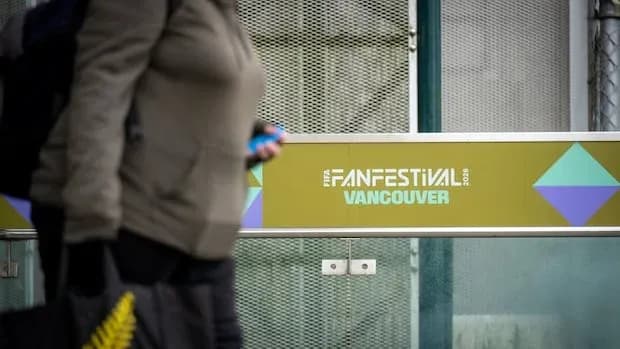
- Loosen rules for temporary event infrastructure — fan zones, towers of signage, branded installations — especially near B.C. Place and Hastings Park, home to the FIFA Fan Festival.
- Clamp down on street vending, busking and certain types of advertising in designated “event areas.”
- Speed up the removal of unauthorized commercial signs to protect FIFA’s tightly controlled branding.
- Extend noise allowances, with late-night and early-morning leeway to fit international broadcast schedules and stadium operations.
- Reroute trucks and adjust deliveries in parts of the downtown core to clear space for security and logistics.
Most of this will be concentrated in a two-kilometre “controlled area” around B.C. Place and the fan festival site. Inside that bubble, the city’s usual balance between public space and private rights shifts.
For common violations, bylaw officers can hand out tickets ranging from $250 to $1,000. Enforcement will be shared between the City of Vancouver and the Vancouver Police Department.
The machinery for a mega-event is now in place.
Whose Public Space?
That machinery has set off alarms among housing advocates and legal scholars who have watched other cities host global tournaments — and watched what happens to people living on the margins.
“This is basically the privatization of public space,” said Penny Gurstein, professor emeritus at the University of British Columbia’s School of Community and Regional Planning. For her, the language of “cleanliness” and “beautification” carries a familiar subtext: move visible poverty out of sight.
“I think people should be worried, especially people who are experiencing homelessness, living on the streets,” she said.
City officials insist the bylaw does not roll back existing protections for unhoused residents. They say people experiencing unsheltered homelessness will still be allowed to erect temporary overnight shelter in parks where current bylaws permit it.
On beautification, the city draws a firm line. It says the term refers to physical infrastructure — repairing sidewalks, dressing up construction sites, tidying the urban backdrop for the cameras — and argues that this work has “no assessed impact on human rights.”
The concern from critics is less about what’s written into the bylaw than how it might be enforced once the pressure of the tournament hits.
Celebration for Some, Disruption for Others
Margot Young, a constitutional law professor at UBC’s Allard School of Law, sees an uneven impact coming.
“There will be disruption, but that disruption will be different for different groups in the city depending really upon their … social and economic status,” she said.
For wealthier residents, the World Cup may feel like a month-long festival: tickets to matches, packed fan zones, late-night celebrations that the new noise rules allow to run a little longer.
“For those with money, they maybe can go to games, they can take part in the parties,” Young said.
For those at the other end of the income scale, she sees something more unsettling.
“For individuals who are at the bottom of our ... income and wealth distribution … they will be moved around by the reordering of city space by FIFA.”
The city has promised “trauma-informed” enforcement, a phrase that has become standard in municipal policy documents. Young questions how that will translate when officers on the street are under instruction to keep event zones clear and brand images pristine.
“There's no system in place to sort of monitor what is happening with respect to the vulnerable populations,” she said.
In other words, there is no built-in scoreboard for the human cost.
Services Stay, Scrutiny Grows
City hall maintains that core supports will not disappear when the World Cup arrives.
Officials say homelessness services and outreach programs will continue through the tournament. Vancouver currently counts more than 1,500 shelter beds and about 8,100 supportive housing units, backed by outreach teams, hygiene services and storage programs for people living without stable housing.
In a written statement, the city framed the World Cup as a “once-in-a-generation opportunity” to showcase Vancouver on a global stage.
The question hanging over that promise is simple and uncomfortable: when the final whistle blows and the crowds move on, who will feel that opportunity actually belonged to them?