.svg&w=384&q=75 "Naijagoal logo")

Tottenham's Struggles Under De Zerbi: A Tough Start
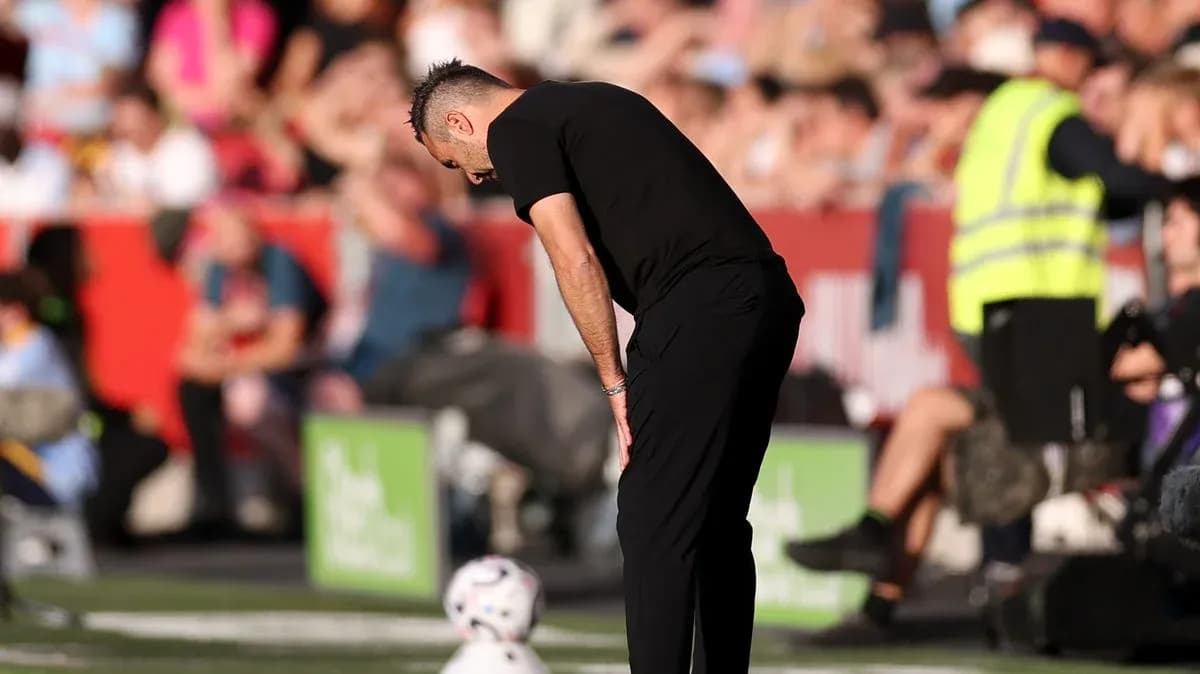
Tottenham’s new era under Roberto De Zerbi began with a thud rather than a statement. A 3-0 defeat at Brentford on opening day, and a head coach who walked into the press room at the Gtech Community Stadium knowing there was nowhere to hide.
He did not try to.
“We are not a team yet,” De Zerbi repeated, almost as a refrain. Not an excuse, he insisted, but the reality of a club trying to bolt a new project together at Premier League speed.
A bruising start
Tottenham were opened up early and never recovered. In the 12th minute, new Brentford signing Mamadou Sangare drifted into the Spurs box with far too much room. He had time to look up, slide the ball across, and find Keane Lewis-Potter in even more space. Side-foot finish. 1-0. Alarm bells.
The second goal was uglier. Poor hold-up play from Richarlison, a weak moment from Lucas Bergvall, and suddenly Mathias Jensen was driving at goal. Antonin Kinsky parried his shot straight into the path of Vitaly Janelt, who tapped in. Self-inflicted damage, the kind that kills you away from home.
Within four minutes of the restart, it got worse. Sangare’s shot squeezed through a crowd, Kinsky saved again, but the loose ball dropped for Michael Kayode, who lashed it into the roof of the net. 3-0. Game gone. Spurs’ opening day had turned into a full-blown stinker.
Brentford even had the chance to rub salt into the wounds when Rodrigo Bentancur brought down Kevin Schade in the box. Igor Thiago stepped up, hit the left post from the spot, and Spurs escaped a fourth. It was one of the few moments that did not go against them.
“We are late”
De Zerbi knew this performance was coming. He had seen the warning signs.
“I knew after the Hoffenheim game,” he said. “We are not in the right point, we are late for the start of the Premier League.”
He pointed to the obvious: fitness levels not where they should be, players arriving late after the World Cup, a pre-season trip to Australia that limited proper work. But he refused to dress any of it up as justification.
“They are not excuses,” he said. “They are the normal situation when you are building a new project, a new process. I don’t want time, but we have to pass through these problems.”
The numbers behind his argument were stark. The defensive line that finished last season so strongly – Pedro Porro, Kevin Danso, Micky van de Ven, Destiny Udogie – had been ripped out. At Brentford, Spurs started with Archie Gray, Jan Paul van Hecke, Marcos Senesi and Andy Robertson. Four new faces across the back.
In midfield, the contrast was just as sharp. Where last season ended with Bentancur and João Palhinha, this one began with Bergvall and others still finding their feet.
“We are working well as a club, as a project,” De Zerbi insisted. “We need the time, like the big teams have done in the last 10 years.”
Youth, risk and the cost of learning
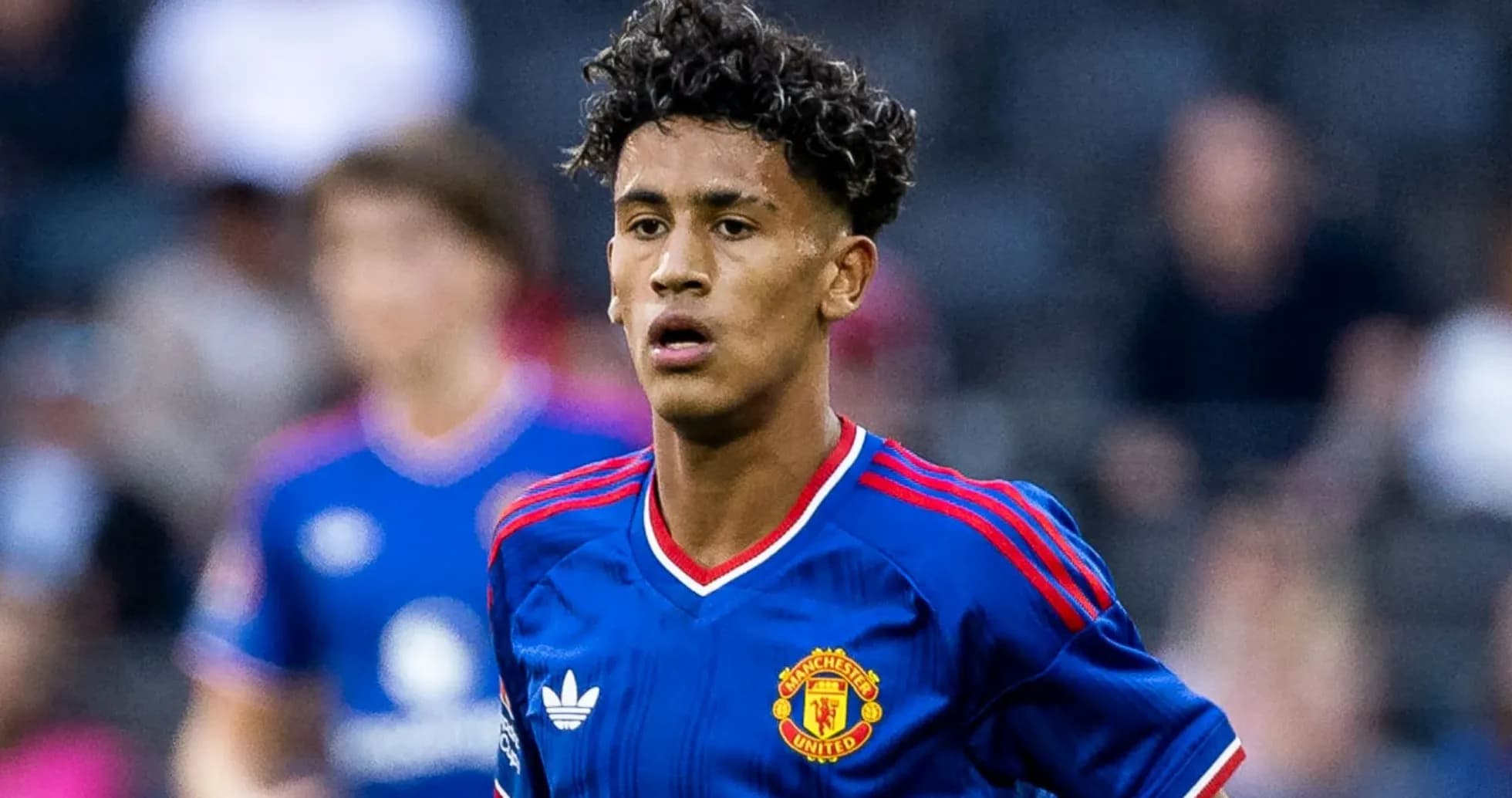
He was not hiding from his own decisions either. Bergvall, born in 2006, started. Another teenager, Mikey Moore, was involved. Mathys Tel is part of that same young core. De Zerbi knows the cost of throwing them into the fire.
The second Brentford goal stemmed from Bergvall’s error, yet the head coach defended him fiercely.
“I think he didn’t play bad today, even if I substituted him at half-time,” De Zerbi said. “In the next two years, he will not lose that ball in that moment of the game. But there are steps to become better.”
So why not start Bentancur, nine years older and far more seasoned?
“Because he came late in the pre-season,” De Zerbi explained. “In the pre-season we worked with Lucas Bergvall. At the beginning of a new project, it was right to play with Lucas.”
That is the line he is walking: build for today and Spurs might be steadier; build for tomorrow and there will be days like this.
“We go, and we try to build something good for the club,” he said. “We need also Archie Gray, we need also Lucas Bergvall, or we work for today. And tomorrow, I don’t know.”
No soul, no style
The defeat cut deep. Not just the scoreline, but the manner.
“We lost too many duels, we made too many mistakes in the timing when we wanted to push the pressure higher,” De Zerbi said. “We arrived second for the second ball, we didn’t win one second ball, one duel, one tackle, and it’s tough.”
He had spoken before the game about two non-negotiables in his teams: soul and style of play. At Brentford, he saw neither.
“To become a team, in my home, there are two big conditions,” he said. “The soul and the style of play. And today, we didn’t show the soul, and we didn’t show the quality of the play. With the ball and without the ball.”
That, in his eyes, is why this defeat might prove useful, as painful as it was.
“Today, I think it’s important for us, this defeat,” he said. “Because maybe we woke up stronger than we thought, maybe.”
Archie Gray and the new spine
One of the biggest questions around this new Tottenham side is the role of Archie Gray after Djed Spence’s departure. De Zerbi sees a multi-purpose player, even if this was not a day to showcase it.
“Archie Gray can play as a full-back, as a midfielder,” he said. “But I think he’s much better than his performance today. But not just Archie Gray, also JP Van Hecke, Sandro Tonali, Richarlison, everyone. We didn’t play a good game.”
He refused to let one afternoon reshape his view of any of them.
“We can’t change our idea on Archie Gray for today, or for Richarlison or Mathys Tel,” he said.
That stance will be tested quickly. Spurs face Newcastle next, and De Zerbi was asked how long it will take for this side to find rhythm.
“We need time,” he replied, “but I think we are much better than we showed today. So from Wednesday we can show our qualities, and we can show who we are.”
Then came the caveat.
“Even if we win Wednesday or next Saturday, we need time to become a team. Because to become a team we need time. We have to analyse the situation, we have to understand the situation. The improvement we have to do, every one of us, because we lose and we win together.”
Set-pieces and steel
One of Tottenham’s great strengths last season was their set-piece threat, powered by the presence of Cristian Romero and Palhinha. Both are gone, and the question was obvious: how do Spurs regain that edge?
De Zerbi did not dodge Brentford’s particular strength.
“Brentford in set-pieces are maybe the best team in the Premier League,” he said. “So it’s normal to suffer.”
But he felt the real problem lay elsewhere.
“I think we suffered more the duels, more the second ball than the set-pieces.”
That line summed up the day. This was not about clever routines or intricate patterns. It was about Brentford being sharper, stronger, more cohesive, while Spurs looked exactly what De Zerbi says they are: a group of players still trying to become a team.
The project is only just beginning. The question now is how quickly Tottenham can turn this kind of bruising lesson into the identity, the soul and the style their head coach keeps demanding.