.svg&w=384&q=75 "Naijagoal logo")

Tottenham’s £400m Rebuild Faces Same Old Collapse
Roberto De Zerbi will spend close to £400m trying to drag Tottenham Hotspur into a new era. On the opening day of the Premier League season, he got a brutal reminder that you cannot buy a backbone.
Seven games to save them last spring, that was his first assignment. He spoke then about being more psychologist than coach as he inched Spurs over the line, survival sealed only on the final day against Everton. The money that followed was supposed to ensure they never went that close to the edge again.
Yet in the west London sun, with a reshaped squad and a fresh narrative ready to be written, Spurs folded at the first real shove. Brentford didn’t just beat them. They exposed them.
A New Project, Same Old Spurs
This was supposed to be the clean break. A revamped transfer strategy, major investment, a raft of new faces. Instead, the opening chapter of De Zerbi’s first full season read like a grim sequel.
From the outset, Brentford sensed fragility. Spurs cracked early, and then kept cracking.
De Zerbi has tried to tackle a culture that has produced back-to-back 17th-place finishes. He has cut, reshaped, and spent heavily. Yet on this evidence, the scars run deeper than the squad list.
He later pointed to fitness issues – World Cup returnees, late arrivals, players short of sharpness. But that did not explain the missing basics. The lack of resilience. The way Brentford dominated every area of the pitch, physically and mentally.
“Bad game. We lost and suffered the difference in the duels. It was the key of this game. We didn't fight in the right way,” De Zerbi told BBC Sport’s Match of the Day. “Our physical condition was not in the right level for all players… But we have to analyse this game better because we can't play this way in this type of game.”
He was right about one thing. This was not just a bad day. It felt like a continuation.
Optimism in the Corner, Empty Seats by the Hour
The day began with noise and hope. In one corner of The Gtech Community Stadium, Spurs fans roared in their new era, greeting their expensive recruits with real belief.
By the 49th minute, many of those same supporters had seen enough.
When Michael Kayode swept Brentford into a 3-0 lead, the exits filled. By full-time, the Spurs players were clapping banks of empty red seats, their applause echoing in a stadium that had long since made its judgment.
It could have been uglier. Igor Thiago, usually so reliable, smacked a penalty against the post. A small mercy on a day that offered De Zerbi none.
Rock star Jon Bon Jovi watched on from the stands. Spurs gave him the soundtrack to a bleak concept album: bright start, early mistake, slow collapse, no redemption.
Debuts Under the Harshest Spotlight
De Zerbi threw four of his new signings straight into the storm. Andrew Robertson, Marcos Senesi, Jan Paul van Hecke and Sandro Tonali all started. None of them will want this to be their defining Spurs memory.
They were not alone in struggling, but they did little to lift those around them. The whole side sagged.
Tonali, the £100m marquee arrival from Newcastle United, suffered the sharpest contrast. Across from him, Brentford’s record signing Mamadou Sangare bossed the game. Sangare was everywhere – snapping into duels, driving his team on, setting the tone.
Tonali’s standout moment? A first-half effort that ballooned horribly into the sky, enough for the home fans to taunt that Spurs had thrown their money away.
Matheus Fernades, an £85m signing from West Ham United, came off the bench. Savinho and possibly Omar Marmoush will follow, adding more talent, more options.
What they cannot import is what Spurs lacked most: heart, fight, and the conviction to stand firm when the game turns hostile.
Brentford Smell Blood
From the first whistle, this did not look like a contest between a club starting a bold new project and one punching above its weight. It looked like a continuation of an old story.
Brentford pressed, harried, and hunted Spurs down. They saw a side that could be bullied and went after them relentlessly.
They should have led even earlier than they did. When Keane Lewis-Potter finally broke through after 12 minutes, it felt inevitable. By the time Vitaly Janelt made it 2-0 before the interval, the match already felt decided.
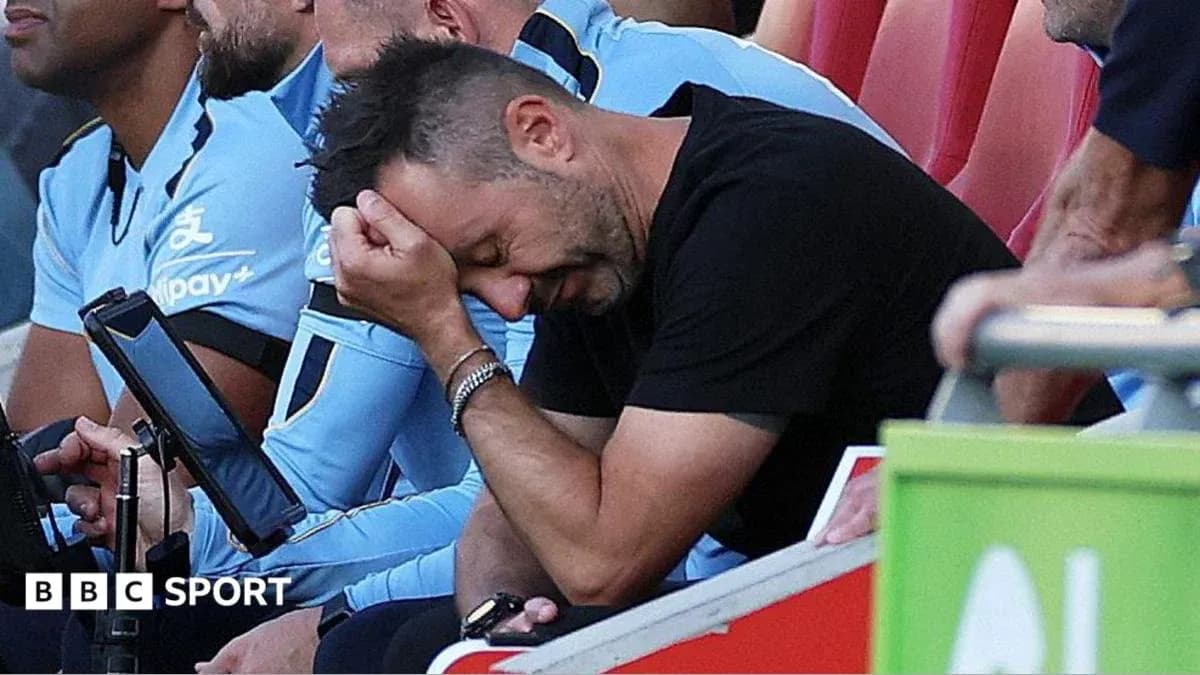
On the touchline, De Zerbi raged and gestured, a blur of frustration. On the pitch, his players shrank. Heads dropped. Duels were lost. Panic replaced any semblance of structure. There was no sign they believed they could claw their way back.
Conor Gallagher and Lucas Bergvall did not emerge for the second half. They might reasonably argue several others could have joined them in the dressing-room reshuffle.
Kayode’s third early in the second half simply underlined what the game had been screaming for some time: Brentford were sharper, stronger, and far more sure of themselves.
Money Can’t Buy Mentality
De Zerbi knows this is now about more than tactics or transfers. It is about psychology, again.
He has to reach into a dressing room scarred by two seasons of struggle and convince them they are something different. That defeats like this are not their natural state.
“I am surprised for the result and performance. I knew we were not in the right condition. We can't find an excuse,” he said. “We are starting a new project and we couldn't find the principle.
“Marcos Senesi, Jan Paul van Hecke and Sandro Tonali are not in the best physical condition. We knew that before the game. We have to improve on that and many other things like organisation and pressing.”
There will be more signings. That much seems certain. Yet De Zerbi refused to hide behind that.
“I don't want the excuse that the first XI was not enough to compete and get a result,” he added. “Brentford's spirit on the pitch was great, it has to be the right example for us.”
He is right to look at Brentford. Their performance was a blueprint: cohesion, aggression, clarity. A collective that knows exactly what it is.
Spurs, by contrast, looked like a club still haunted by recent history. Ange Postecoglou at least delivered a Europa League title before his exit. Thomas Frank and Igor Tudor followed, the latter gone almost before his reign began. The pattern – hope, drift, disappointment – has become suffocatingly familiar.
Yes, it is only the first game. Ambitious teams have started seasons with heavy defeats before and recovered. This, though, felt less like a false start and more like an extension of something Spurs cannot seem to shake.
New faces can freshen a squad. They cannot, on their own, rewrite a culture.
De Zerbi does not just need to change his team. He needs to rip out the habits that make days like this feel routine. The question now is stark: with all that money spent and all those promises made, how long will Spurs tolerate seeing the same story play out again?