.svg&w=384&q=75 "Naijagoal logo")
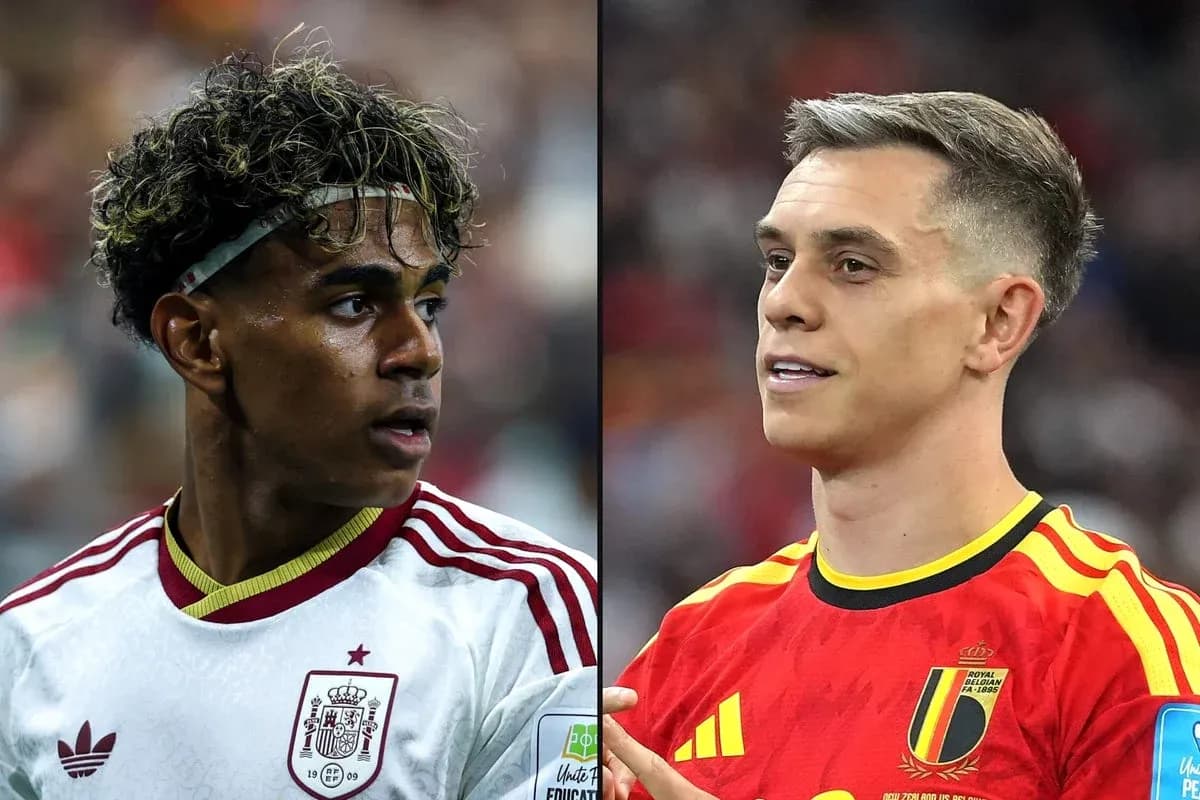

Spain vs Belgium: A Clash of World Cup Quarter-Final Trajectories
Spain arrive in Inglewood as the only side in this World Cup yet to concede a goal. Belgium arrive as the team that detonated the United States’ dream. One has glided into the quarter-finals with barely a ripple; the other has lurched here through chaos, controversy and a tactical revolution.
On Friday at SoFi Stadium, something has to give.
A clash of trajectories
Spain are ranked No 3 in the world, European champions, and still feel a little like a sleeping giant. They topped Group H with seven points without ever needing to hit top gear: a goalless opening against Cape Verde, a 4-0 dismantling of Saudi Arabia, a controlled 1-0 against Uruguay.
Then came the knockout rounds. Austria were brushed aside 3-0 in the round of 32. Portugal were suffocated in the last 16 until Mikel Merino appeared in stoppage time to nod in a 91st-minute winner. Five games, five clean sheets, not a single moment behind on the scoreboard.
Belgium’s path has been anything but smooth. They edged through Group G with five points — draws with Egypt (1-1) and Iran (0-0), then a 5-1 release of tension against New Zealand. The real turning point came in the round of 32 against Senegal.
Trailing 2-0 with five minutes of normal time left, Belgium were going home. Romelu Lukaku struck, Youri Tielemans followed, and extra time beckoned. Tielemans then buried a late penalty for a 3-2 comeback that changed the tone of their tournament and, crucially, their team.
Rudi Garcia ripped up his hierarchy that night. Since then, Belgium have looked like a side reborn, even as they lost Amadou Onana to an anterior cruciate ligament injury early against the United States. They still overpowered the co-hosts 4-1 in the last 16, a result made even more charged by the controversy over FIFA suspending Folarin Balogun’s red-card ban.
Now they meet Spain, with France waiting in the semi-final.
Spain: control, clean sheets and an unanswered question
Spain’s story so far is written at the back. Unai Simon has gone 609 minutes of World Cup football without conceding, stretching back to 2022 — an all-time tournament record. Aymeric Laporte and Pau Cubarsi have been almost immaculate in front of him.
But the real shield is higher up the pitch. Luis de la Fuente’s team strangles games through the ball and through the press. They hold possession for long spells, then swarm when they lose it. No side has won more possessions in the final third than their 36. No side has drawn more offsides than their 18. They squeeze, trap, and suffocate.
The flip side: their attack has flickered more than it has roared.
Mikel Oyarzabal has provided the main cutting edge, with doubles against Saudi Arabia and Austria, yet Spain drifted for long periods in the final third against Uruguay and Portugal. Their moves were neat, their angles clever, but the final thrust often missing.
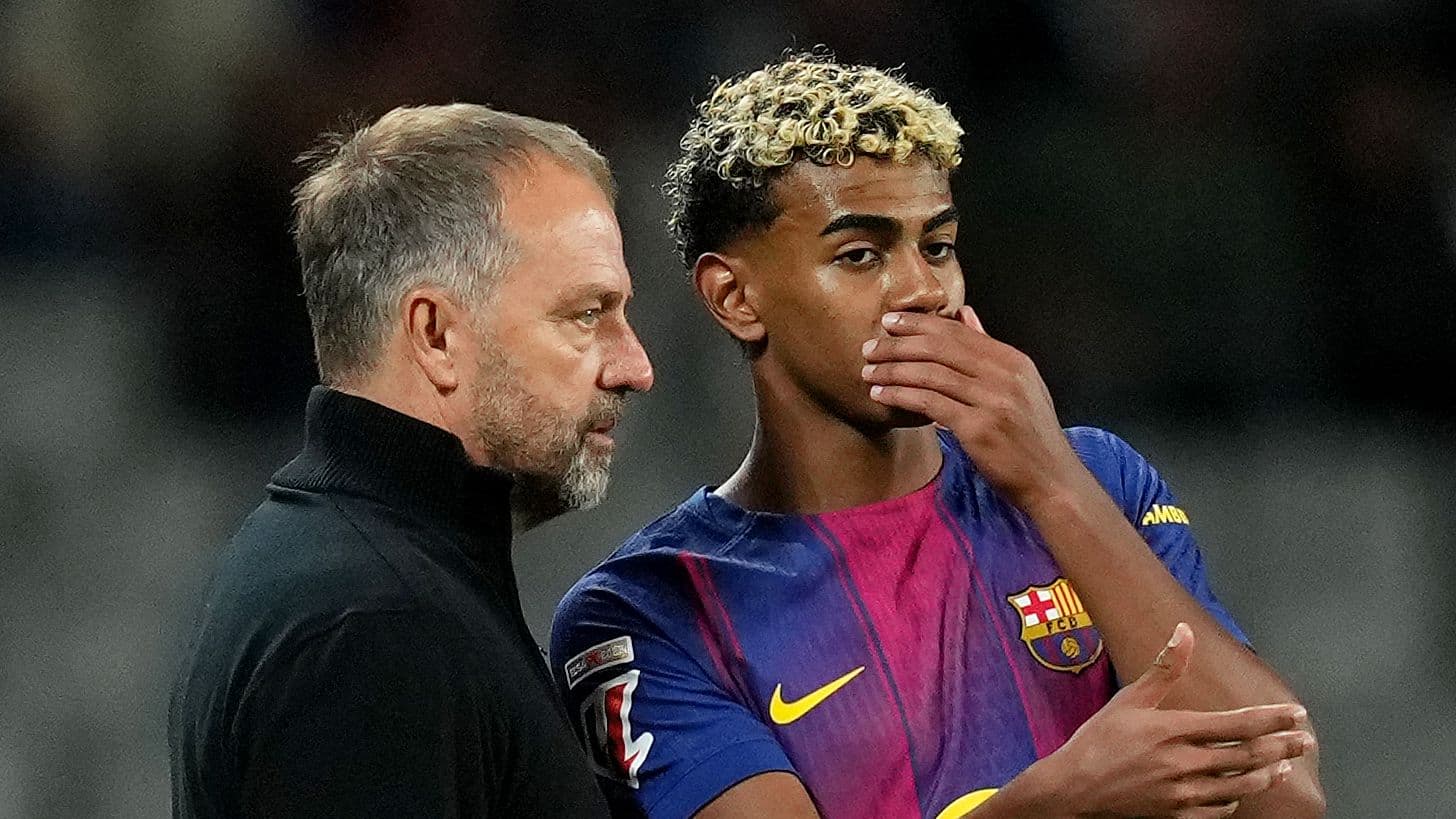
The intrigue lies with the stars who still seem to be winding up. Lamine Yamal, who turns 19 on Monday, has offered flashes rather than fireworks. He was kept quiet by Nuno Mendes and then Nelson Semedo against Portugal. Rodri, the 30-year-old metronome at the base of midfield, has been playing his way towards full sharpness after arriving short of peak condition.
De la Fuente’s main dilemma is the No 10 role. Dani Olmo has had a solid, quietly effective tournament and was one of the few attacking starters to impress against Portugal. Yet Merino’s late winner off the bench has given the coach a different kind of problem: reward the match-winner, or stick with the structure?
There is also the Pedri question. The Barcelona midfielder has not hit his best level; Fabian Ruiz of Paris Saint-Germain offers a more assertive alternative. Out wide on the left, Alex Baena has done enough to keep his place, linking sharply with Marc Cucurella in the overloads that have become a trademark of this Spain side.
Everything about them suggests a team coming to the boil. The question is whether the attacking temperature rises in time.
Belgium: big names benched, belief restored
Belgium looked lost in the group stage, a team caught between eras. Too many stars, not enough structure. Then Senegal happened.
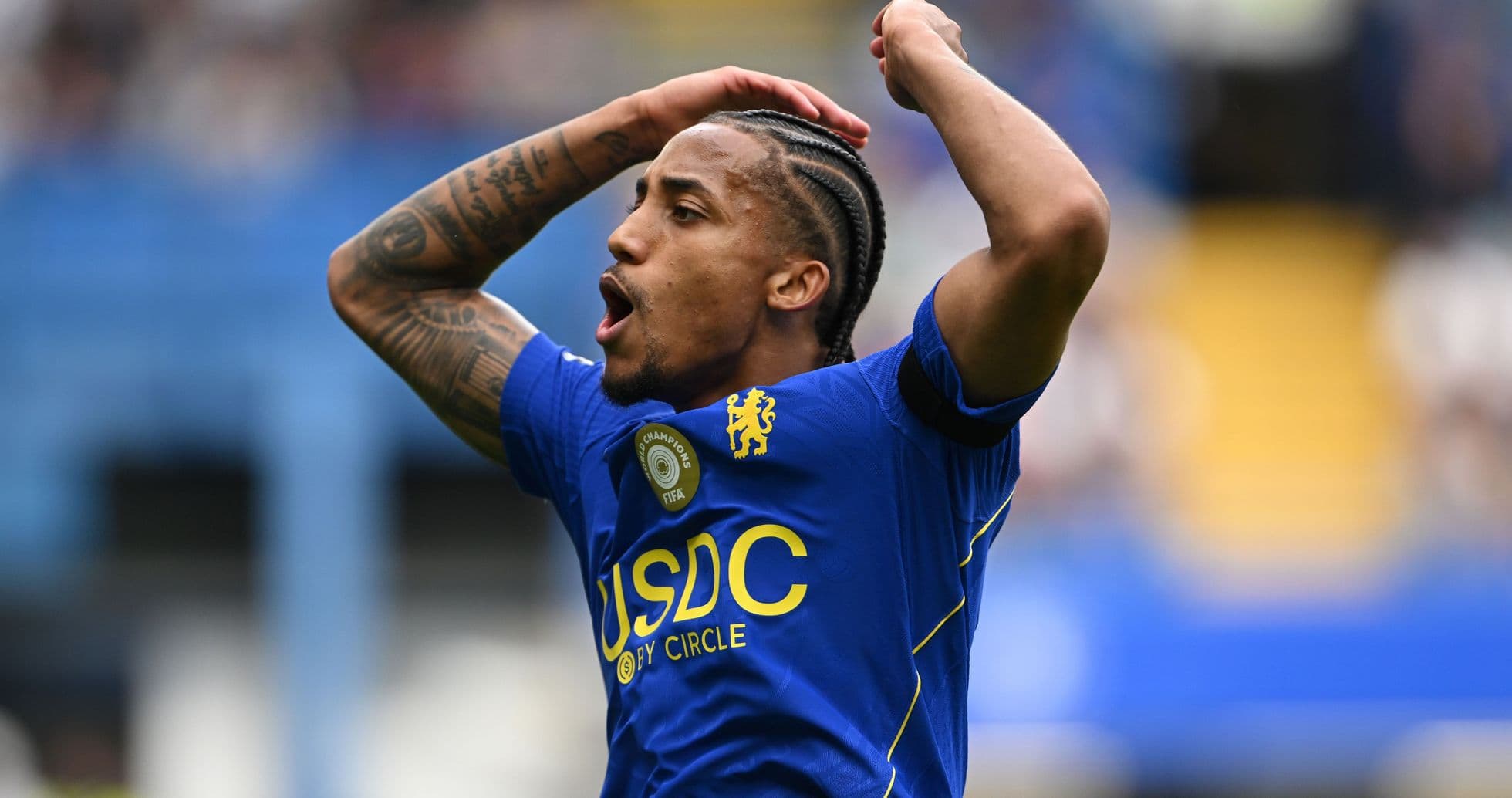
At 2-0 down, Garcia made the call that has defined their World Cup: Kevin De Bruyne and Jeremy Doku off, Dodi Lukebakio and Nicolas Raskin on. On paper, it seemed a conservative move. In reality, it gave Belgium legs, balance and bite.
Raskin, a ball-winner rather than a playmaker, anchored a midfield that suddenly looked coherent alongside Onana and Tielemans. Lukebakio gave them width and work rate. Belgium stopped playing in moments and started playing as a team.
Onana’s ACL injury against the United States was a brutal blow, but even with Hans Vanaken stepping in, Belgium kept control. Then Garcia turned to the heavy artillery late on. Lukaku and Doku arrived into a game stretched by American desperation, and the damage was swift. Belgium ran away 4-1 winners.
The implications for Spain are stark. De Bruyne and Doku may again start on the bench. De Bruyne did not play a minute against the U.S. Garcia seems ready to trust the structure first and unleash the stars later, when the spaces appear.
Leandro Trossard has quietly become their creative hub, leading all players at this World Cup with 17 chances created. Tielemans has been the heartbeat, combining composure in possession with those late, box-crashing runs that have proved decisive.
Belgium still have flaws. They have conceded 53 shots — almost double Spain’s 29 — and have made six errors leading to shots, a total bettered only by the United States and Brazil. They have had 32 efforts blocked, more than any other team, and only 14 of their 107 shots have been “clear” attempts with zero or one defender in the way. The remarkable part is what they have done with those 14: 13 goals, a conversion rate that outstrips France, England and Spain.
They are living on thin margins in both boxes. Against this Spain, that is a dangerous game.
The battle zones: touchlines and turnovers
This quarter-final will likely be decided on the flanks and in the moments after possession changes hands.
Out wide, Spain carry one of the tournament’s most terrifying one-on-one threats in Yamal. His partnership with right-back Pedro Porro has hinted at something devastating without quite exploding yet. On the left, Cucurella and Baena have been relentless in overloading their wing, dragging defenders out and slipping runners in behind.
Belgium mirror that threat in their own way. Under Garcia, their full-backs are instructed to run off the ball, racing beyond wingers to whip in dangerous deliveries. It paid off handsomely in the 5-1 demolition of New Zealand and has remained a key route to goal.
Both sides are ruthless when the ball is flashed low across the box. Each has created three chances from low crosses — joint-most at the tournament alongside the Netherlands and Switzerland. Belgium lead all teams for first-time shots with 58, Spain sit third with 46. If the ball is fizzed into the area, expect someone to swing.
Then there is the work without the ball.
Spain counter-press like a trap snapping shut. Lose it, win it back, attack again. Their structure is designed to stop transitions at source. Belgium, by contrast, have struggled at times to stop teams slicing through their midfield. That vulnerability, combined with their error count, leaves them exposed to a side that thrives on pinning opponents in.
History, and a hint of revenge
Spain and Belgium know each other well. This will be their 24th meeting, a rivalry that stretches back to a 3-1 Belgian win at the 1920 Olympics in Antwerp.
The most famous clash came in the 1986 World Cup quarter-final in Mexico. Jan Ceulemans’ diving header put Belgium ahead, Juan Senor’s 30-yard rocket dragged Spain level late on, and the shoot-out that followed carved itself into Spanish psyche. Jean-Marie Pfaff’s save from Eloy Olaya proved decisive, and Spain would go on to win just one of their next five World Cup shoot-outs.
Spain tilted the balance four years later at Italia 1990 with a 2-1 group-stage win that sent them through as group winners, Belgium as runners-up. Since the turn of the century, the fixture has been one-way traffic: five meetings, five Spanish wins, including a 5-0 qualifying demolition in La Coruna on the road to their 2010 World Cup triumph.
The last time they met, in Brussels in 2016, Spain won 2-0. Thibaut Courtois, Lukaku, Thomas Meunier and De Bruyne all played that night. The cast has changed around them; the memory of Spanish superiority has not.
Fine margins, firm predictions
The bookmakers and the analysts are leaning heavily towards Spain. So are the experts.
Six predictions from six go Spain’s way. Stuart James, Dermot Corrigan, Pol Ballús, Anantaajith Raghuraman and Phil Hay all see a 2-0 win for De la Fuente’s side, built on that watertight defence and a belief that Yamal is ready to ignite. Tomás Hill López-Menchero goes 3-1, imagining a more open game in which Belgium even strike first before Spain settle, and Yamal finds the net again.
The numbers back that confidence. Spain’s defensive record is pristine. Their offside trap is the sharpest in the competition. Their press is the most productive high up the pitch. They have more know-how, more control, more margin for error.
Belgium, though, have already shown what they can do when the script says they are finished. They have built a sturdier base, accepted that their biggest names might be most dangerous as late weapons, and found a way to turn blocked routes into ruthless finishing when the chance finally clears.
Michael Oliver, taking charge of his seventh World Cup match — more than any other English referee — will oversee it all under the SoFi lights.
Spain’s perfection at the back against Belgium’s new-found edge. Yamal’s promise against Trossard’s productivity. A European champion trying to glide into a semi-final against France, facing a side that refuses to die quietly.
If Spain finally cut loose, this could be the night they look like champions. If Belgium’s gamble pays off again, the World Cup bracket is about to be torn wide open.