.svg&w=384&q=75 "Naijagoal logo")
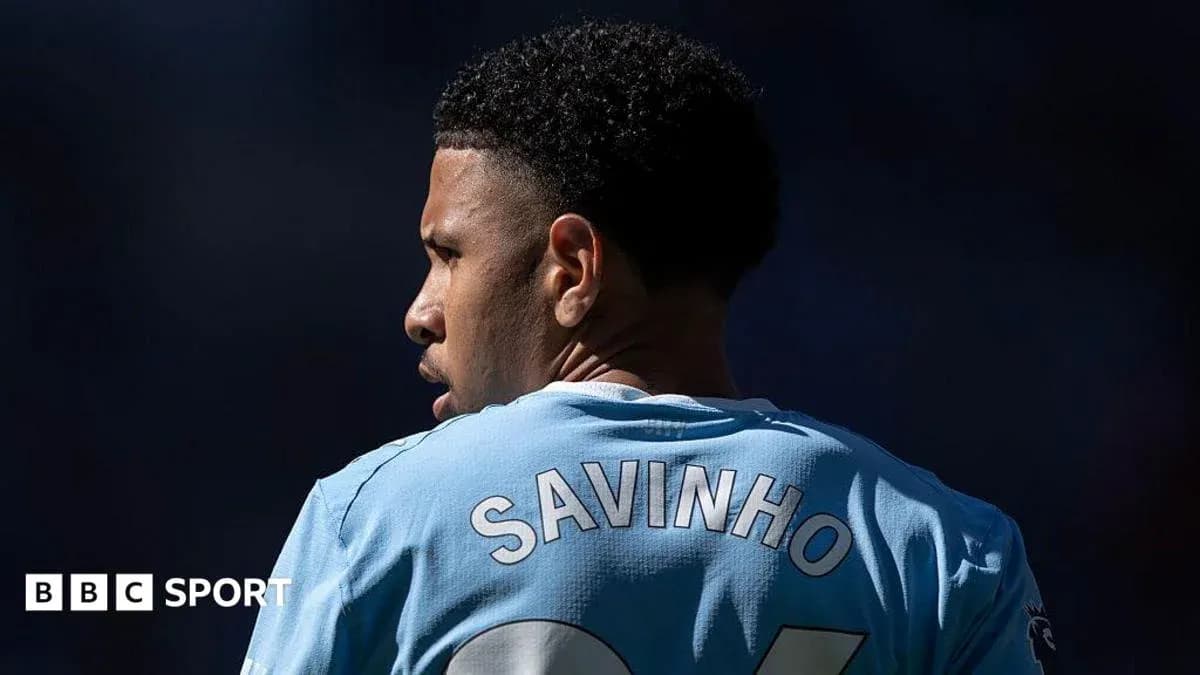

Savinho Transfer to Spurs: A Defining Moment for City Football Group
For City Football Group, the Savinho deal is more than another big number on a balance sheet. It is a landmark.
Tottenham are set to pay £75m, with a further £10m in add-ons, for a 22-year-old winger who has already passed through three CFG clubs and left a trail of debate behind him. That fee represents a record sale for Manchester City, the flagship of a 12-club network that has turned player trading into a core part of its business model.
A journey built on loans, not minutes
Savinho’s story inside CFG has never been straightforward.
He arrived in Europe in 2022 as a record signing for Troyes from Atletico Mineiro, a statement move for the French club. He never kicked a ball for them. At 18, he was immediately sent on loan to PSV for the 2022-23 season, then switched again to Girona for 2023-24.
Spain changed everything.
At Girona, another CFG outpost, Savinho finally had a stage. He played 37 league games, scored nine goals, supplied eight assists and helped drive the Catalan club into the Champions League for the first time in their history. By the end of that season, he had been named in the La Liga team of the year and was no longer just a project. He was an asset.
City moved fast. They bought him from Troyes for £30.8m in 2024, a figure that raised eyebrows across the market. Was that the true going rate, or a number shaped by CFG’s internal ecosystem?
What followed only deepened the split in opinion.
Savinho’s City stint: modest output, massive upside
On the pitch in England, Savinho did not dominate. Across two Premier League seasons he scored only twice, though he did rack up 12 assists. The numbers do not scream superstar, and critics of the deal to sell him for £75m point there first.
Inside the club, the view is different.
His first season under Pep Guardiola brought 48 appearances in all competitions and 16 goal contributions. In the league, his eight assists were the highest in the squad. For a player still finding his feet in a new country and a demanding system, City see that as evidence of growth, not failure.
At Girona, his impact was clearer still. Director of football Quique Carcel admitted they fought to keep him after securing Champions League football.
"Our intention from the moment that we reached the Champions League was to try to get him to stay for another year," Carcel told BBC Sport. City, he said, were torn between letting him lead Girona into Europe or bringing him fully into Guardiola’s squad.
"But as soon as there was an interest from Pep and Txiki [Begiristain] in him being a player that would be able to play in the [City] first team squad, then of course the player didn't have any doubts."
In the end, the path ran through Manchester and out towards north London.
A record profit and a model laid bare
From a financial perspective, CFG could hardly have scripted it better. Sign an 18-year-old from South America. Develop him across the network. Sell him four years later for a fee that could approach £85m. The profit, close to £70m if all bonuses are triggered, is enormous.
"It's a success story for the group," said Brian Marwood, CFG's managing director of global football. "The idea is always 'can we get them to the pinnacle in our group', which is Manchester City. There might be some along the way that might be good assets for the group.
"And Savinho has clearly been a fantastic asset - because not only has he played for Manchester City but now he is leaving for a considerable amount of money.
"We have created a pathway for the boy but credit to him because he is playing in one of the best leagues in the world."
The transfer also shines a harsher light on City’s wider trading strategy. Tottenham are being accused in some quarters of overpaying. CFG, by contrast, see vindication: a network that can buy, polish and sell at the very top of the market.
And this is not a one-off.
A conveyor belt of profit
In January, BBC Sport highlighted how Manchester City, separate from CFG’s broader web, have turned youth sales into a lucrative side of the operation. More than £250m has been raised from selling young players in the past five years alone.
- Morgan Rogers
- Douglas Luiz
- Cole Palmer
- Liam Delap
- Oscar Bobb
– the list of academy products or young signings who have moved on to rival Premier League clubs keeps growing.
Some deals now look like bargains for the buying clubs.
Rogers left City for Middlesbrough in February 2024 for an initial £8m. Chelsea paid £117m for him last month. Palmer, sold to Chelsea for £40m in 2023, would command a similar fee if he were to leave Stamford Bridge now.
Those cases show the risk in City’s model. Sell at the right time and the books look superb. Sell too soon and the sporting regret lingers, even if the initial fee looked strong.
Marwood accepts the fine margins.
"To find a balance between recruiting players for sporting success and ones that could become more of an asset in the future is difficult," he said. Young players are unknown quantities; some adapt and thrive, others fall away.
He reels off examples that worked: Oleksandr Zinchenko, Taty Castellanos, Jack Harrison. Proof, in City’s eyes, that the system can serve both the pitch and the balance sheet.
Scouting the next Savinho
Savinho’s departure does not close a chapter so much as sharpen the question: who comes next?
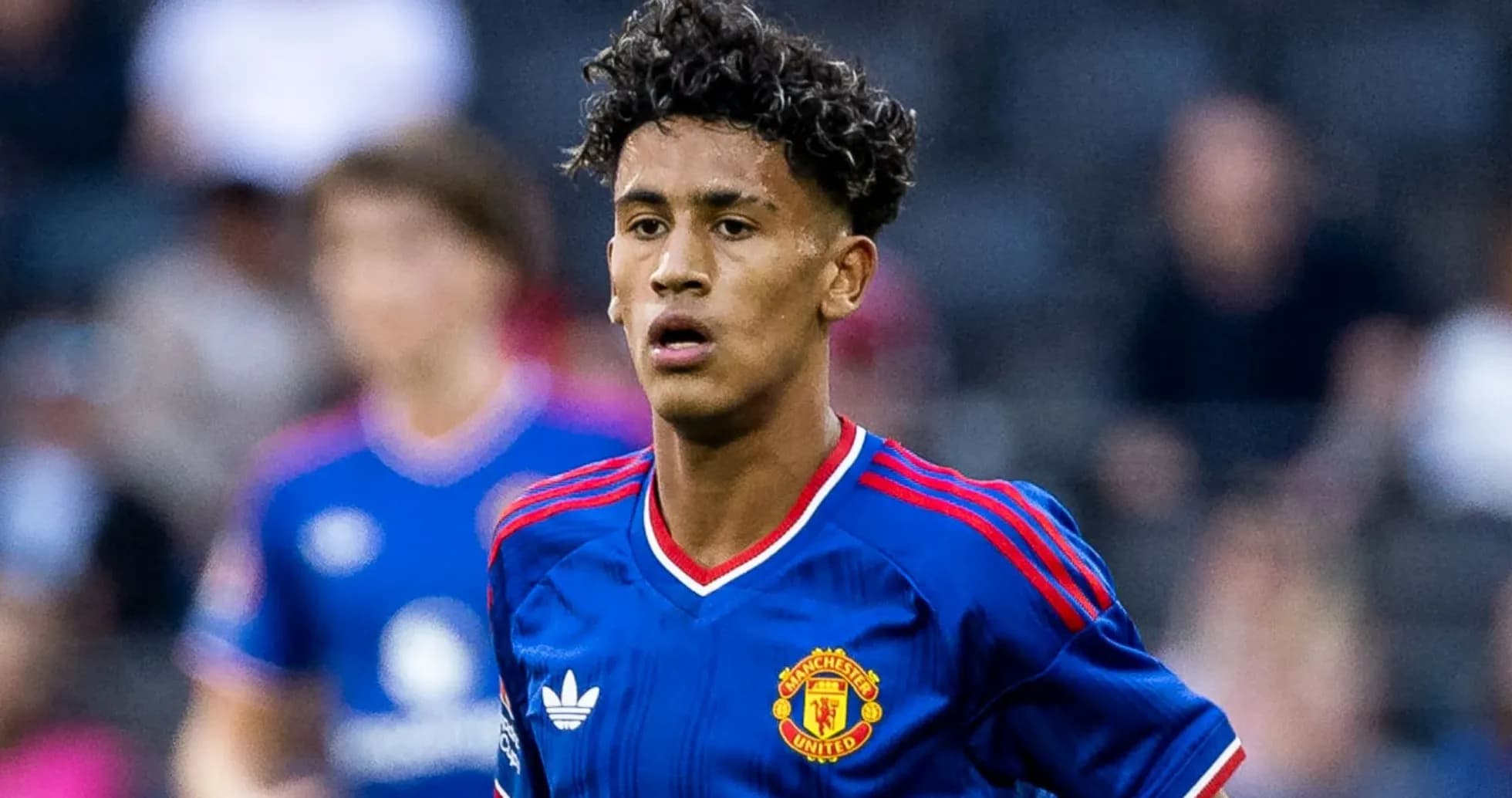
Inside the club, a new group is already being pushed forward. Ryan McAidoo, an 18-year-old who has already made his senior debut for City, is viewed as a major prospect.
Beyond Manchester, the CFG radar is locked on other teenagers. Japan’s Shin Miidera, a 16-year-old attacker at Yokohama F. Marinos, is being tracked closely. So is American midfielder Cavan Sullivan, 16, currently with Philadelphia Union but already lined up to join City when he turns 18.
Vitor Reiss, who spent last season on loan at Girona from City, is another tipped to make the grade.
"In an ideal world you would love for them to stay with you from the beginning right through to the very end - but the reality is it's probably not going to happen," Marwood admitted.
"The challenge is can we produce the next one? OK - Savinho's gone - but where is the next one? That's the fascination of this business, you have to look three and four years ahead.
"It's important we grow this hub of young talent and hopefully find them pathways and produce a conveyor belt of talent and use our network of clubs to aid there development."
The stakes for Spurs – and CFG
For Tottenham, the argument now moves from spreadsheets to grass. If Savinho lights up the Premier League in a different shade of blue and white, the fee will look like foresight, not excess. If he flatters to deceive, the questions about valuation, about internal CFG deals, about the true cost of potential, will only grow louder.
For CFG, the verdict is already half-written. They have taken a teenager from Brazil, moved him around their network, showcased him in La Liga and the Premier League, and sold him for a record sum.
Their model has rarely been clearer, or more exposed.
The next wave of teenagers coming through that system will decide whether Savinho is remembered as a one-off windfall or the template for a new era of football business.