.svg&w=384&q=75 "Naijagoal logo")

Plazma Youth Sport Games: A Transformative Event in Split
On a stone terrace above the Adriatic, 20 children sit in a circle, heads bowed over chessboards. They are the best young players from across the Balkans, but they are not facing each other. They are taking on Nigel Short.
The grandmaster shuffles around the ring, one move at each board, weaving between chairs with the slightly awkward gait of a man trying not to trip over a generation. The kids are sharp, calculating, quietly ruthless. Then comes the twist. When they get stuck, they can turn to their “celebrity coaches”.
So, on this Croatian afternoon, you get a scene that feels almost surreal: Ana Ivanovic leaning in to whisper suggestions on a rook move, Sean Dyche peering over a shoulder as if assessing a high press, and, a few boards along, Peter Thiel – rightwing tech billionaire, PayPal and Palantir founder – calmly advising a teenager on how to handle a looming knight fork.
Welcome to the Plazma Youth Sport Games.
The ‘Davos of sport’ on the Dalmatian coast
Split is hosting the 30th edition of the Plazma Youth Sport Games (YSG), an event that has grown from a local idea into what some of its most high‑profile visitors now call “the Davos of sport”.
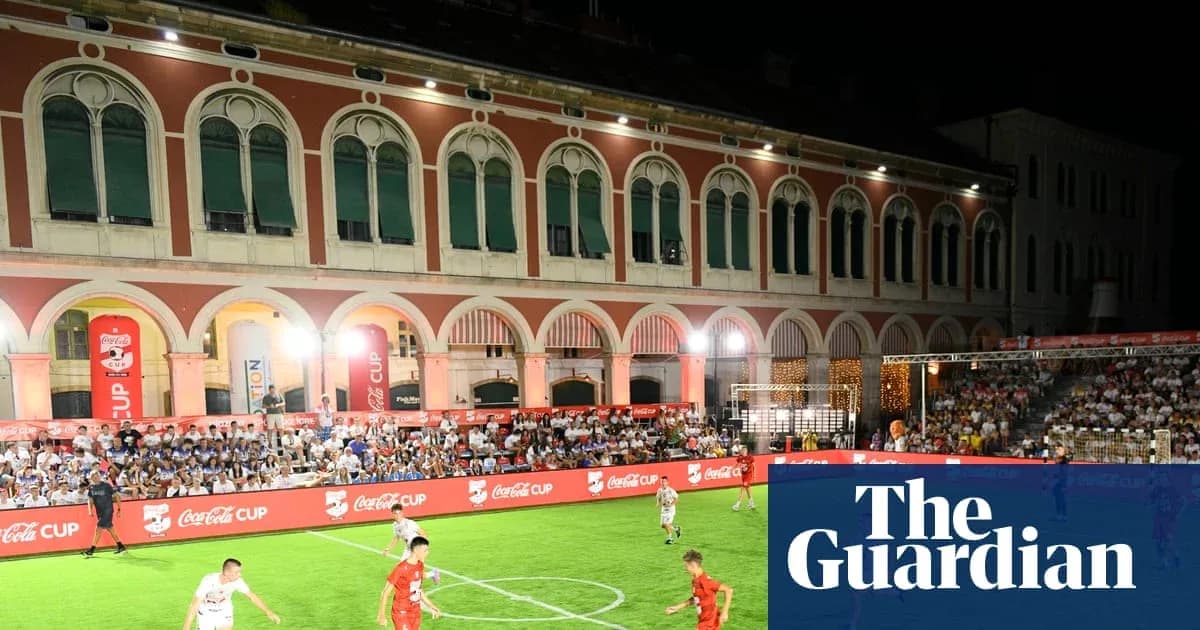
The label flatters, but the numbers back up the ambition. Just under half a million children from Croatia, Bosnia and Herzegovina, Serbia, Slovenia and North Macedonia took part in qualifying this year. Ten sports – from chess and 3v3 basketball to mini-football – stage their finals over one week in Split.
The format is simple. The message is not. The Games are pitched as both a competition and a “social project”, pushing teamwork, collaboration and the unfashionable art of putting the phone away. On the courts, pitches and promenades, the organisers want something old‑fashioned: kids playing, talking, arguing, laughing – in person.
It has proved a powerful draw. YSG ambassadors range from Zlatan Ibrahimovic to Alastair Campbell. People tend to arrive curious and leave converted.
Sean Dyche is one of them. The former Burnley manager has thrown himself into the event, and one game in particular has stayed with him – the girls’ mini-football final.
“It was terrific, they were playing good football; getting properly stuck into each other, properly playing,” he said. “You could feel that they felt free and were being supported in that environment.”
Dyche doubts such a sprawling, low‑cost, lightly regulated project could have sprung up in Britain.
“It seems to me that every time you try and get an initiative off in England, there’s a million rules and regulations that make it difficult,” he said. “I know how hard it can be to get funding too and times are tough for people.”
Born from crisis, not branding
The Plazma Games themselves did not emerge from a thinktank or a glossy corporate deck. They were born out of the chaos that followed the breakup of Yugoslavia and the Bosnian war.
Founder Zdravko Maric did not set out to broker peace talks. His focus was more immediate: the drug problems ravaging Croatia’s young people in the 1990s. Sport, he believed, could drag kids away from that path and into something healthier, louder, more communal.
“It’s a lifetime project and we live with it every day,” says his brother, Slaven Maric, who has been involved from the start. “But when Zladko started it we didn’t have an idea that it would develop into this. It’s not about sport or the results, its about social life, it’s about being together. There were many issues with drug abuse [then], now it’s about bringing the kids to spend sometime together in real life.”
That last phrase – “real life” – has become a rallying cry. The Games’ 2026 messaging will lean heavily into getting children off their screens. Esports brands have already knocked on the door, keen to attach themselves to Europe’s biggest amateur event for kids. The Marics have turned them away.
The phones stay in the pockets. The games stay on the ground.
Split: a small city with a giant sporting shadow
By anchoring the YSG in Split, the Maric family plugged into one of the most improbable sporting cities on earth.
With a population of around 160,000, Split has no business producing this many champions, and yet it keeps doing it. Goran Ivanisevic. Bernard Vukas – long considered Croatia’s greatest footballer before Luka Modric rewrote the hierarchy. Branko Cikatic, a titan of kickboxing. Toni Kukoc, NBA three‑peat champion. Stipe Bozic, the mountaineer who carried the city’s name to the world’s highest peaks.
The city even has its own Olympic “walk of fame”, 73 medal winners celebrated in Hollywood style. On the beach, locals play picigin, a kind of hand‑hackysack in the shallows of the Adriatic that has become a sport, a ritual and a summer soundtrack.
The YSG slots neatly into this landscape. Locals talk about the event as if it were another of Split’s clubs, another badge of honour. One of their own, Slaven Bilic, is now an ambassador.
“I’m not objective because I’ve known Zdravko for more than 30 years but it’s great that at a time when there’s a lot of negativity in the world that this can exist,” Bilic said. “Especially in this part of the world that is supposed to be unstable.”
Unstable. Fragmented. Tense. All the labels routinely attached to the Balkans. For a week in Split, the dominant sound is not political rhetoric but the thud of a ball off a wall and the clatter of chess pieces on plastic boards.
Billionaires, brands and a growing map
Three decades in, the obvious question hangs over the Adriatic: what next?
One answer lies in the flags. North Macedonia joined the main competition for the first time this year. Ukrainian teams came as invited guests. Talks have already been held with six more countries about joining in future editions.
Another answer lies in the money.
Sponsorship is swelling. Coca‑Cola is on board, as are Topps and leading Croatian telecom firm Telemach. Behind the scenes, the donor list has taken on a very different tone from the Games’ early years. There are now 11 billionaires associated with the event, some of whom have invested directly in its growth.
Peter Thiel is among them. The PayPal and Palantir founder, a mentor to US vice‑president JD Vance, has taken a stake in the Games. When asked in Split why he had chosen to invest, Thiel did not engage. He simply moved along the riviera, flanked by his security detail, leaving the question hanging in the sea air.
The presence of that kind of money inevitably raises eyebrows. Yet for now, the Games still present themselves as an example of big sport doing something right – a view shared by Aleksander Ceferin.
The Uefa president, whose organisation also funds the YSG, chose his words carefully in Split. He declined to be drawn into his ongoing battle with Fifa. But his praise for the Games carried a clear hint of contrast.
“I think that top sport, and the money that you get with top competition, should be used for the development of sport and this is the development of sport,” he said.
The comparison with Gianni Infantino’s attempts to sell a stake in the World Cup to private investors did not need to be spelled out.
A star‑studded final whistle
The Games closed on Friday night with their own spin on Soccer Aid. On one side, a YSG select team of local players. On the other, 11 all‑stars whose names would light up any charity match poster: Claude Makélélé, Pavel Nedved, Zlatan Ibrahimovic.
On paper, the contest looked absurdly lopsided. World‑class midfielders, a Ballon d’Or winner, icons of the Champions League era – against teenagers still in school.
The locals did have one trump card: Sean Dyche in the dugout.
He prowled the touchline with the same intensity he once brought to Turf Moor, barking instructions, gesturing, urging his side to compete, to relish the moment rather than shrink from it.
In many ways, it was the perfect closing image for the YSG’s 30th birthday. A Premier League manager coaching kids against legends. A billionaire slipping quietly away down the waterfront. A Uefa president making the case for sport as a public good. And, in the middle of it all, hundreds of children simply playing – building bridges, storing memories, getting properly stuck in.
If this is what the next 30 years of the Games look like, the Adriatic may not be big enough to hold them.