.svg&w=384&q=75 "Naijagoal logo")


Plateau United Triumphs Over Shooting Stars in NPFL Showdown
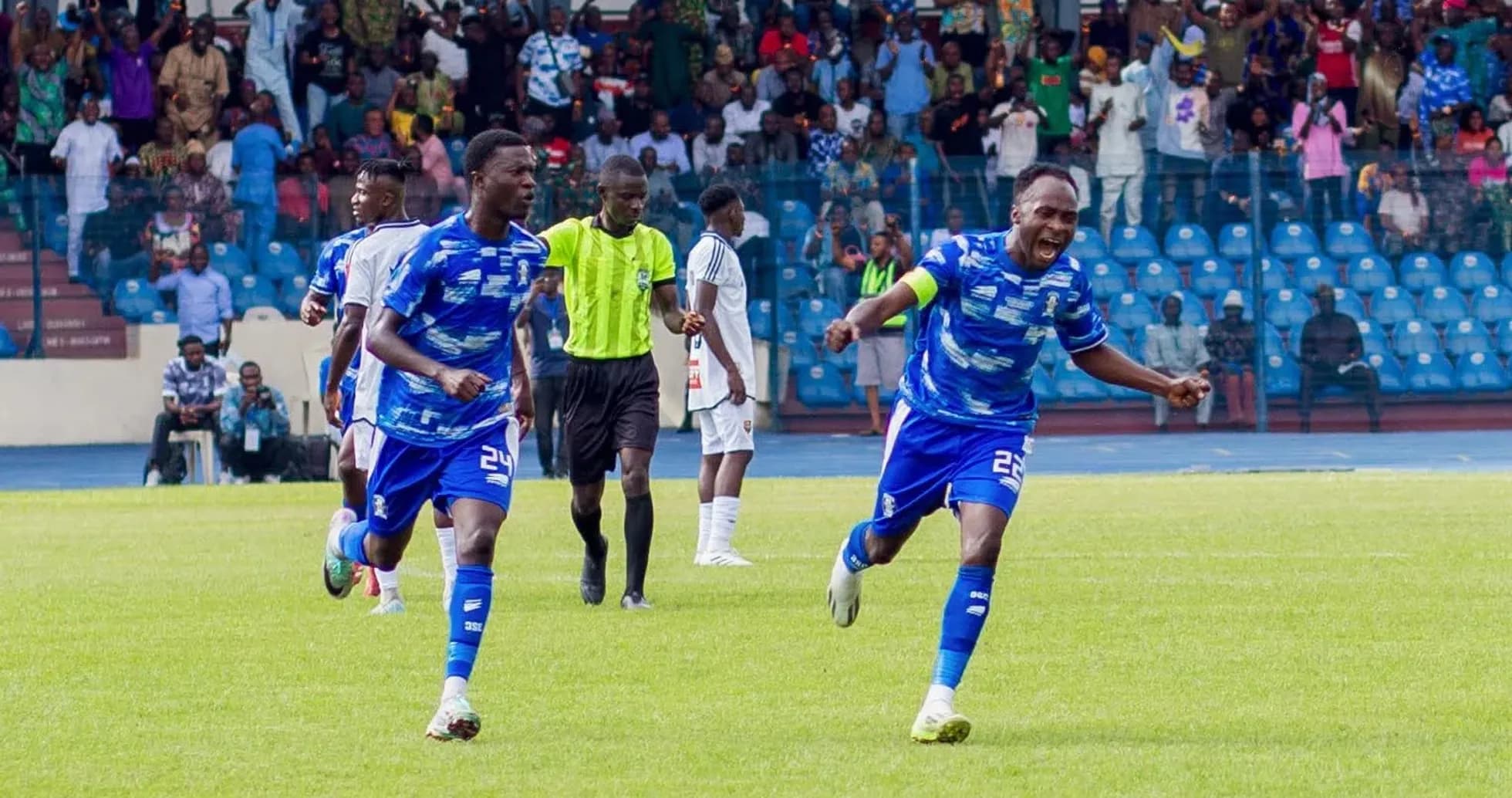
Rwang Pam Stadium exhaled at full time, the red earth of Jos echoing with relief and pride. Plateau United had been stung early, trailed at the break, yet walked off 3–1 winners over Shooting Stars in an NPFL contest that said as much about character as it did about structure.
This was Round 4 of the Regular Season, and the table had already begun to take shape. Plateau United arrived as a side with a clear home identity: heading into this game they had taken 2 wins from 2 at home, scoring 4 and conceding just 1 at Rwang Pam. Overall, they had 7 points from 4 matches, with 5 goals for and 4 against, a goal difference of +1. Shooting Stars, by contrast, were still sketching out their 2027 personality: 3 points from 2 matches, 3 goals scored and 4 conceded overall, goal difference −1, and beaten 3–1 on their travels in their only away outing before this.
First Half
The first half followed the visitors’ script. Shooting Stars, without a listed coach but with a compact, disciplined starting XI, struck before the interval and went into half-time 1–0 up. Plateau United, whose seasonal form line of LWDW suggested volatility wrapped around resilience, were forced to chase. The second half, however, belonged to Sola Adegun’s men. Three unanswered goals turned the match, preserved their perfect home record, and reinforced Rwang Pam as one of the league’s more unforgiving away trips.
Tactical Standpoint
From a tactical standpoint, Plateau United’s squad is built around a flexible spine rather than star power. In goal, O. Okiemute (30) anchors a defence that has been notably stingy at home: heading into this game, they had allowed just 1 goal in 2 home fixtures, an average of 0.5 goals conceded at Rwang Pam. In front of him, the likes of I. Utin (13), M. Andrew (24), and I. Yahaya (25) form a back line that may not have its positions explicitly mapped in the data, but clearly functions as a compact, reactive unit. The season’s biggest home win so far — a 3–1 scoreline, now matched in this fixture — underlines how Plateau United are comfortable defending in numbers, then punishing lapses.
The engine of Adegun’s side lies in the cluster of midfielders and hybrid operators: J. Okechukwu (16), A. Aghahowa (26), D. Ojo (10), and S. Nenrot (8). Collectively, they embody a team whose overall scoring average of 1.3 goals per match is transformed at home into a more assertive 2.0. With 4 goals scored at home from 2 matches before this one, Plateau United were already a side that grew bolder in front of their own supporters. The second-half surge against Shooting Stars — three goals after the break, overturning a 0–1 deficit — is the narrative expression of those numbers.
Up front, S. Jackson (17), J. Ibrahim (29), and D. Isaiah (40) give Plateau United vertical threat and rotational movement. The squad list hints at a front line built more on work rate and interchange than on a single talisman. What makes them dangerous is the platform behind them: Plateau United had failed to score only once all season heading into this game, and never at home. When the match opened up after the interval, that pattern reasserted itself brutally.
On the bench, Adegun had options to change the tempo and the geometry: J. Amah (22) as a potential alternative in goal; R. Aniako (3) and V. Tchadienne (4) to tweak the defensive line; and attacking or box-to-box profiles such as P. Samson (7), M. Wisdom (14), and G. Monday (27). That depth allowed Plateau United to sustain pressure and protect their lead once they had flipped the scoreline.
Discipline and Cards
Discipline has been a quiet but important subplot to their season. Plateau United’s yellow cards skew heavily towards the later phases of matches: 42.86% of their cautions arrive between 61–75 minutes, with another 28.57% in the final 76–90 stretch. It speaks to a team that becomes increasingly combative as the stakes rise. Yet crucially, they had not seen a red card in any time segment heading into this fixture, maintaining numerical parity even while playing on the edge.
Shooting Stars arrived in Jos as a study in contrast. Their season to date had been short but vivid: a home win by 2–1, then a 3–1 away defeat. Their attacking profile — 3 goals from 2 matches, an overall average of 1.5 per game — suggested they could hurt opponents, especially with the interplay of L. Emmanuel (14), S. Ibrahim (27), and the creative influence of T. Otaniyi (21) and A. Taheer (17) between the lines. But their defensive record on their travels was a clear warning sign: 3 goals conceded in their only away match, an away average of 3.0 goals against.
That frailty resurfaced here. E. Godgift (1) had given them a platform with a first-half clean sheet and an early lead to protect, but once Plateau United raised the tempo, the back line of D. Sholumade (5), D. Ojietefian (4), G. Adelowo (23), and J. Amusat (29) could not contain the waves. The visitors’ overall defensive average of 2.0 goals conceded per game heading into this match collided with a home side averaging 2.0 scored at Rwang Pam — a critical intersection that played out exactly as the numbers hinted.
Match Dynamics
In the “Hunter vs Shield” dynamic, Plateau United’s collective attack was the hunter; Shooting Stars’ away defence, already breached 3 times once this season, was the shield with cracks. The “Engine Room” battle pitted Plateau’s midfield quartet against the visitors’ central core of O. Akala (6) and I. Falke (22). For 45 minutes, Shooting Stars held their shape and exploited transitions; after the break, they were overrun.
Discipline again told its own story. Shooting Stars’ yellow cards are spread but peak between 46–60 minutes at 50.00%, with another 25.00% in the 16–30 window and 25.00% late on. More significantly, every red card they had seen this season came in the 76–90 minute band, accounting for 100.00% of their dismissals. That late-game volatility, combined with a missed penalty — they had taken 1 penalty this season and failed to score it, with 100.00% of their spot-kicks missed — paints a picture of a team that struggles to manage high-pressure moments.
Shooting Stars’ bench contained firepower and variation: J. Atule (10) and D. Akinola (37) as potential game-changers in attack, Ridwan (11) offering width, and midfield legs from A. Dalhatu (8) and K. Nweke (20). But the pattern of the season so far has been clear: they can trade blows, they can create, yet they lack the defensive solidity and emotional control to close out difficult away fixtures.
Conclusion
Following this result, the narrative threads converge. Plateau United confirmed their status as home specialists, extending a record that already boasted 2 home wins from 2, 4 goals scored and just 1 conceded before this match. Their seasonal goal difference, previously +1 (5 scored, 4 conceded), will have improved further with this 3–1 victory. The squad’s depth, their late-game intensity in the tackle, and their ability to turn deficits into wins at Rwang Pam mark them out as a side with both tactical structure and psychological steel.
For Shooting Stars, the lesson is harsher. Their attacking promise remains, but their away defending — 3 goals conceded on their travels before this, now compounded by another three — and their record of a missed penalty and late red-card vulnerability underline a team whose margins are thin and often tilted against them. Until that shield is reforged, trips to places like Jos will continue to feel like uphill climbs against both the opposition and their own patterns.