.svg&w=384&q=75 "Naijagoal logo")

Phil Neville’s Role in England’s World Cup Build-Up
England’s World Cup build-up was always going to invite noise. What it has actually produced is something closer to farce: a “shock role” that isn’t shocking, a “miserable verdict” that looks suspiciously like optimism, and a Manchester United “masterplan” that boils down to copying the best team in Europe and hoping no one notices the join.
Amid it all, Phil Neville has somehow become the headline act.
Neville’s ‘shock role’ that everyone missed
“Phil Neville’s shock role for England at World Cup revealed,” roared the headline, dripping with drama. The reality is so mundane it’s almost impressive.
Neville, recently sacked by an MLS club and a familiar face in the FA corridors, was asked by Thomas Tuchel and England staff to talk through the realities of working in the United States: climate, time zones, travel, even traffic. A 90‑minute Zoom call. A couple of coaches with recent US experience, Neville and John Herdman, offering practical advice on acclimatisation and logistics.
That’s it. No secret tactical brief. No emergency recall. No clandestine role in team selection.
The best part? Neville already laid the whole thing out himself, calmly and clearly, in a column for The Times last week. He even opened with the phone call from John McDermott, the FA’s technical director, while Neville was managing Portland Timbers:
Last year, McDermott rang to “pick his brain” on the challenges England might face during a World Cup in the States. Neville explained the process in print. No cloak, no dagger, no late twist.
So this “shock role” is neither new nor shocking. It’s a governing body doing something entirely rational: asking a coach who has spent five years working in the US, and previously served in England’s coaching set-up and managed a women’s team that played two tournaments there, what it’s actually like.
If that’s a revelation, the bar for revelations is getting dangerously low.
The ‘miserable verdict’ that isn’t miserable
England’s prospects have also been fed through The Sun’s now-traditional “supercomputer”, that mysterious algorithm which somehow keeps arriving at roughly the same conclusions as bookmakers.
This time, the machine spits out England as third favourites, behind Spain and France, with an 11.3% chance of lifting the trophy. That number puts them in the mix, exactly where most analysts and odds-compilers have them.
Yet it’s dressed up as a warning: “ENGLAND fans have been warned that the nation’s wait for an international trophy may not end this summer.”
Apparently, the big scoop is that in a 48‑team World Cup, not every nation wins.
The “miserable verdict” looks a lot like cautious optimism. Third favourites. Double‑digit probability. Respectable, realistic, and entirely in line with the market. You’d struggle to find a manager or player who’d call that miserable.
World Cup fever and a cold Monday in Manhattan
While the numbers quietly back England, the World Cup “fever” narrative is doing its own laps.
Martin Lipton wandered through Manhattan on a Monday morning and decided New York has “NO appetite for World Cup fever.” His evidence: three local sports pages without a mention of Harry Kane, Lionel Messi or Ronaldo, but plenty on the NBA playoffs and the New York Yankees and Mets deep into their MLB seasons.
So, live domestic sport in full swing dominates the back pages over a tournament that hasn’t started yet.
It’s not exactly a cultural crisis. It’s just how news cycles work.
The irony? Lipton’s lament about a lack of World Cup buzz in the US sits halfway down The Sun’s own homepage, elbowed aside by something far more important in tabloid currency: Manchester United’s latest grand plan for midfield reinvention.
United’s PSG tribute act
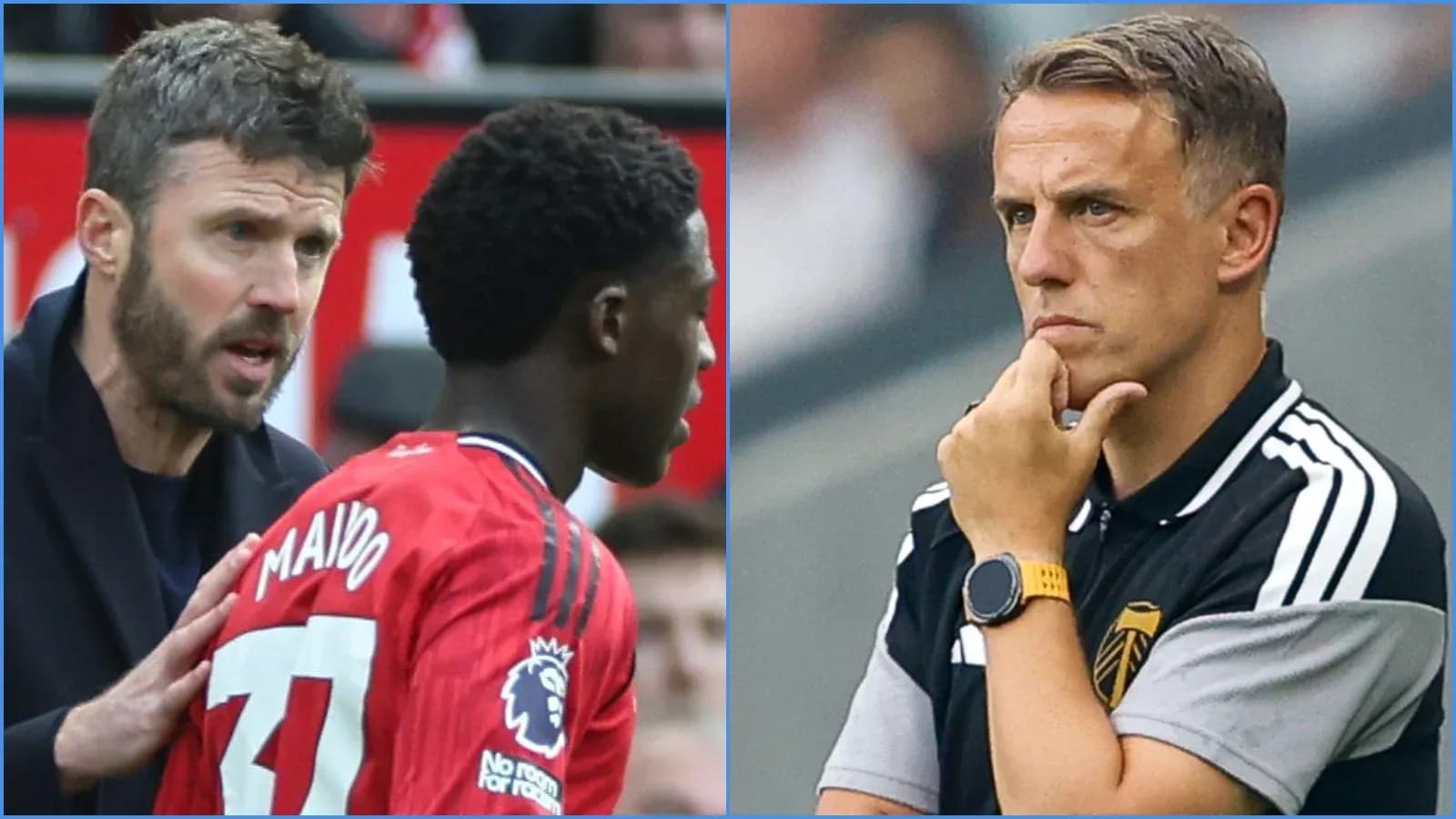
“Man Utd set to create PSG-style midfield with £35m transfer and new role for Kobbie Mainoo,” runs the headline. It sounds seismic. It isn’t.
The “exclusive” boils down to this: United would quite like their midfield to look a bit like the unit that has just helped Paris Saint-Germain become back‑to‑back European champions. The plan is to move Bruno Fernandes deeper, push Kobbie Mainoo further forward with licence to roam, and sign Ederson for around £35m. Three midfielders. One step back, one step forward, one new arrival.
That, apparently, is how you “create a PSG-style midfield.”
It’s a drastic oversimplification of what makes Vitinha, Fabian Ruiz and Joao Neves such a devastating trio. Their control, pressing, movement, and technical security are the product of elite recruitment and careful construction, not a simple rearrangement of magnets on a tactics board.
Michael Carrick, we’re told, sees the Iberian trio as the benchmark for United’s overhaul. Of course he does. Most of Europe does. The best team in the world is good; this is not breaking news.
The real leap is the idea that you can mirror them by nudging Fernandes into a slightly different lane, unleashing Mainoo a little higher, and pinning it all on a £35m signing who couldn’t make Brazil’s World Cup squad ahead of a 32‑year‑old Fabinho or the 34‑year‑old he’s replacing at club level.
If imitation is the sincerest form of flattery, this is flattery on a budget.
Dogging, data and the World Cup circus
While United dream of a Parisian midfield in Manchester red, England’s own preparations have been framed in a way only a certain corner of the British press can manage.
On one hand, you have Neville and Herdman quietly feeding logistical detail into the FA’s planning. On the other, you have a dispatch breathlessly informing readers that England’s training base sits beside a “notorious dogging spot loved by randy couples.”
Swope Park, we’re told, appears on adult websites and social media apps. Facebook users wonder aloud what happens there at night. Frisky adults, a Grecian‑style memorial, a golf course. All dutifully reported as if it were a matter of urgent national interest.
It’s the sort of work that probably requires an incognito browser and a strong sense of commitment to the bit.
And in the middle of it all, you get moments of almost accidental clarity. Djed Spence, for instance, summing up the reality of playing out of position: “Everyone knows how good I am defending one versus one, but going forward is a bit different playing on the left because it’s not my natural side going forward.”
Not quite everyone, perhaps. But more honest than most of the noise around him.
Arteta’s ‘shock’ and a brutal reality
Even Arsenal’s internal housekeeping can’t escape the spin cycle.
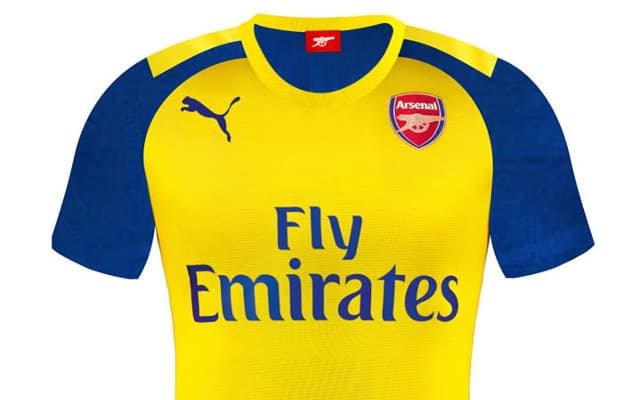
“Mikel Arteta rocked as key staff member leaves Arsenal just weeks after stunning Premier League title win,” screams the line. Strip away the drama, and the story is simple: Arsenal have sacked their head doctor following an Arteta‑led review into this season’s injury problems.
The manager commissioned the review. The review identified issues. A key medical figure paid the price. It’s ruthless, but not exactly shocking, and certainly not something likely to “rock” the man who set the process in motion.
At the sharp end of elite football, that is how it works. Titles won, staff turned over, departments re‑shaped. Sentiment rarely survives the debrief.
So England go into this World Cup with a supercomputer quietly rating them contenders, a former international offering logistical advice via Zoom, and a training base with a colourful after-hours reputation. Manchester United are sketching out a cut‑price homage to PSG’s midfield. Arsenal are trimming behind the scenes after a title triumph.
Strip away the noise, and the pattern is clear: the game is preparing, adjusting, copying, recalibrating. The question is who has done the serious work—and who has just moved a few magnets around and called it a plan.