.svg&w=384&q=75 "Naijagoal logo")

Liverpool's Late Penalty Salvages Draw Against Newcastle
Last August at St James’ Park, Liverpool left with bedlam ringing in their ears and Rio Ngumoha’s 100th-minute winner etched into the away end’s memory. Same fixture, same late drama this time. Very different feeling.
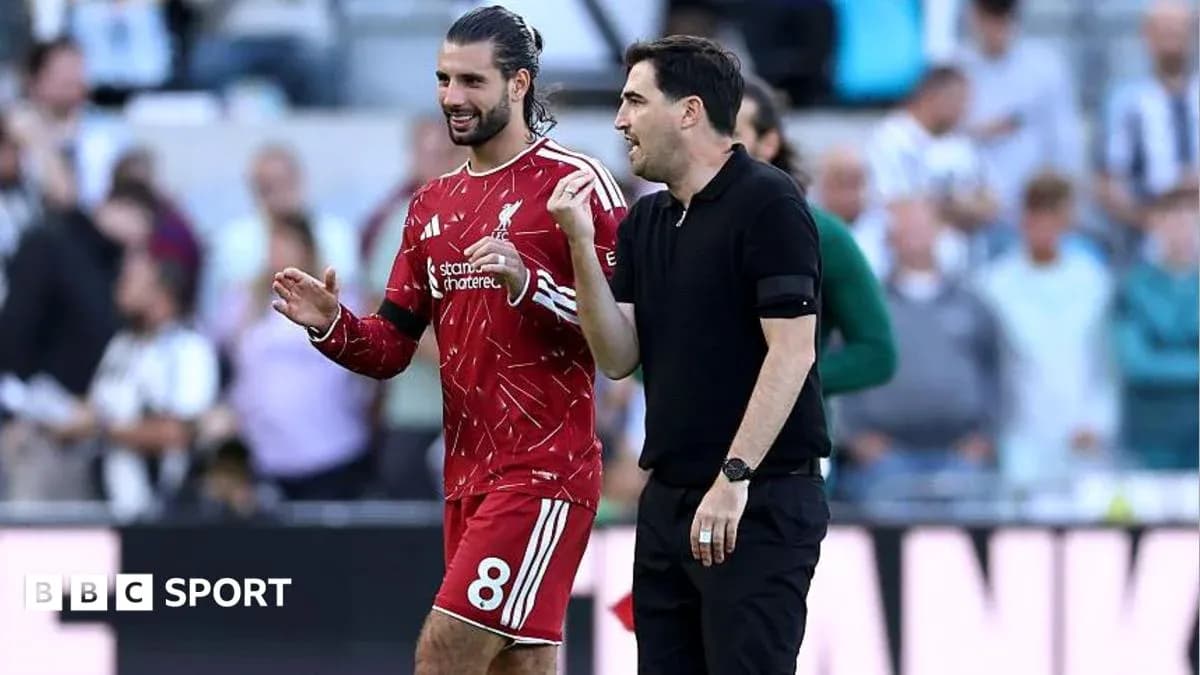
Dominik Szoboszlai’s 99th-minute penalty salvaged a 2-2 draw, but it felt like a side exhaling in relief, not roaring in triumph. A first opening-weekend defeat since 2012-13 was avoided by seconds. The doubts were not.
Andoni Iraola was adamant his team did not deserve to lose. On the balance of the afternoon, he had a point.
“We definitely deserve this point and even more,” he told BBC Radio 5 Live. “The team has never given up and we’ve recovered one point and probably the taste is better because we score in the last minute.”
He could afford a small smile. His side trailed twice in a hostile, howling St James’ Park and still found a way back. On the flight home to Merseyside, though, the noise would have faded and the reality of what he saw would have been harder to ignore: this squad is thin, and it shows.
A team short of answers
Liverpool under Iraola are already intriguing. They are also clearly incomplete.
“You’re expecting Liverpool to get top four this season at least but they didn’t look like a top four team today,” said former Scotland winger Pat Nevin on 5 Live. “There are more players to come in, so you can’t make a real decision on how their season is going to go.
“There’s a definite lack of creativity and somehow they must get the best out of Florian Wirtz and Alexander Isak because you certainly didn’t get the best out of them today.”
All eyes had been on that pair. Wirtz, the marquee creator. Isak, the £100m-plus striker prised from Newcastle in a drawn-out saga last September and booed with real venom every time he touched the ball.
Wirtz started brightly, drifting into pockets and demanding the ball, but his influence faded. He was withdrawn just after the hour, moments after Newcastle had gone 2-1 up. Statement signing, early hook.
Isak looked fired up, snapped into his duels and tried to impose himself, but 28 touches and one glaring second-half miss told its own story. At Newcastle, he buried those chances. Here, he snatched at it.
Both arrived for nine-figure fees last summer. Both know that output and chemistry will have to climb quickly if Liverpool are to look anything like the side their wage bill suggests.
Right now, this is still a Liverpool team raising more questions than it answers.
The Gakpo dilemma and a thin bench
Front and centre is the Cody Gakpo issue. His future will hang over the final week of the transfer window.
If Iraola gets the two extra attackers he wants, Gakpo could be the one to make way. Liverpool have been linked with Paris St-Germain’s Bradley Barcola and Ibrahim Mbaye and have already seen two bids for Brighton’s Yankuba Minteh knocked back.
The irony? Gakpo was Liverpool’s best player at St James’ Park. Sharp between the lines, aggressive in his runs, and he took his goal superbly. On this evidence, he is the last forward they should be pushing towards the door.
There was at least one fresh positive. Spanish forward Victor Munoz, on debut from the bench, changed the tempo. He drove at tired legs, forced mistakes, and it was his late surge that drew the stoppage-time penalty Szoboszlai buried.
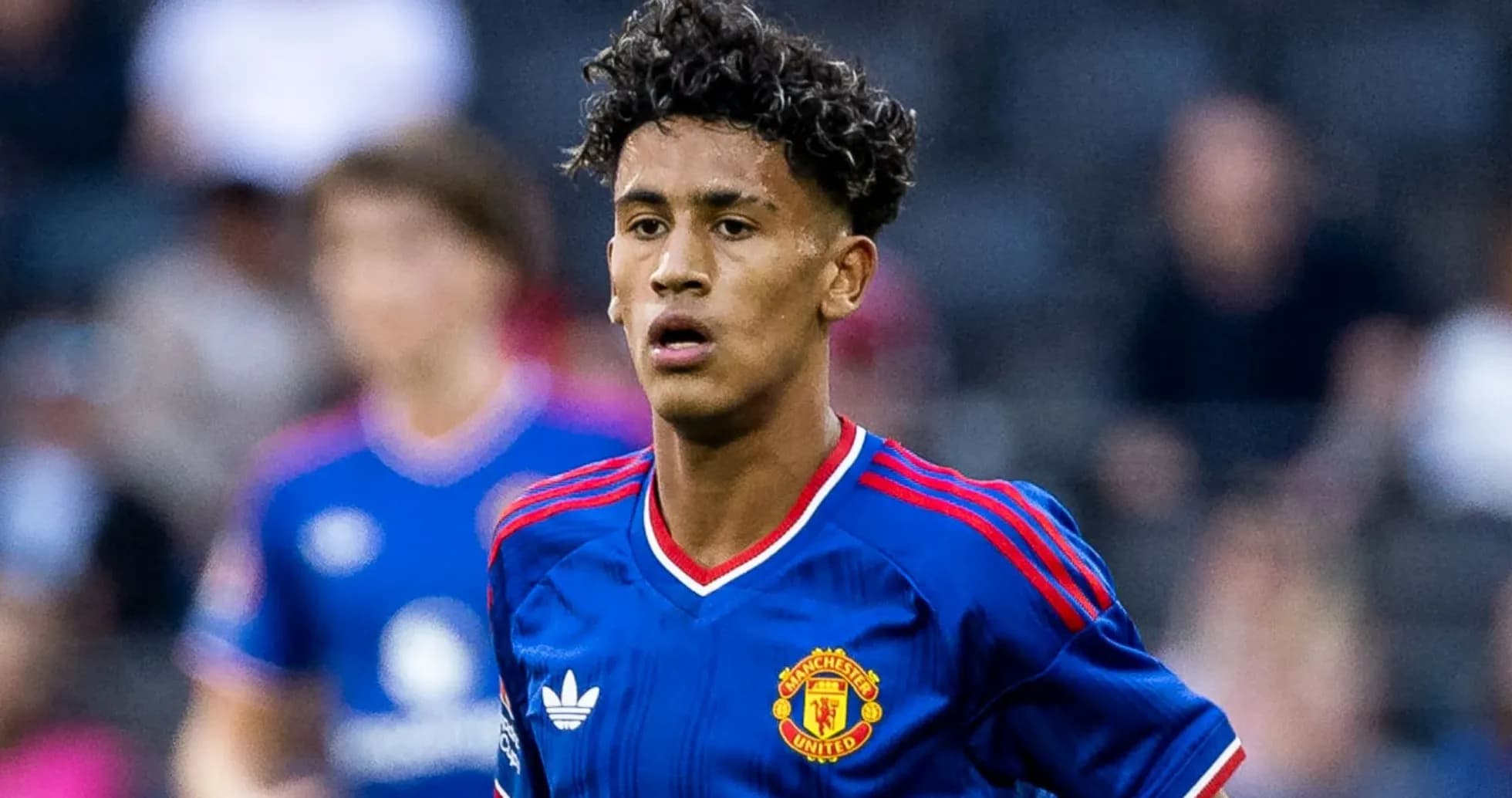
Munoz came on for Ngumoha, and that substitution told its own tale. Ngumoha, the teenager who broke Newcastle hearts last year, turned 18 next week and spent most of his youth career tormenting full-backs from the left. Iraola used him on the right. It didn’t work.
He struggled to affect the game, rarely beat his man and was withdrawn just after the hour. For a coach who wants his wingers to be comfortable on both flanks, this experiment might not last once reinforcements arrive.
It needs to. Because Iraola’s options are painfully light.
Once Munoz and Alexis Mac Allister entered on 63 minutes, the remaining bench read: Giorgi Mamardashvili, Ronald Araujo, Wataru Endo, Kostas Tsimikas, Trey Nyoni, James McConnell, Lewis Koumas. Energy, yes. Experience and proven end product, less so.
Exposed on the break
The defensive picture was no kinder. Milos Kerkez and Jeremie Frimpong both endured rough afternoons at full-back, repeatedly exposed on the transition. Newcastle did not need many invitations; both of their goals came from counter-attacks that sliced straight through Liverpool’s structure.
The absence of a specialist defensive midfielder loomed large. When Joe Willock put Newcastle 2-1 up, Iraola’s response was telling: Mac Allister dropped in just ahead of the back four, a technician asked to patch a structural hole.
Numbers underline the problem. Since the start of last season, Liverpool have now conceded more goals from fast breaks in all competitions than any other Premier League side – nine. It is no longer a quirk. It is a pattern.
For a coach who obsesses over intensity and compactness, that will sting.
A platform, but not yet a plan
Strip away the chaos of stoppage time and Iraola’s first league game in charge still carried encouragement.
“I’ve liked a lot of the things I’ve seen from the team,” he said. “There’s definitely things to improve like the goals but I’ve seen a lot of things I’ve liked from the team. I’ve liked the energy, especially the players coming from the bench. I think we finished the game quite strong physically.”
Szoboszlai echoed that edge when he spoke to Sky Sports: “We will never give up. I can guarantee you that. We have to fight every time – all day long during the 90 minutes. Everybody who came off the bench also made an impact as well. We need the whole squad and we need to be ready.”
Desire, then, is not in question. Not on Tyneside, not in this dressing room.
But as the window ticks towards its close and the fixtures begin to stack up, Liverpool’s reality is clear. The fight is there. The framework is emerging. The squad, in both quality and quantity, is not.
How quickly the club addresses that gap will decide whether this late rescue in August becomes a launchpad – or an early warning.