.svg&w=384&q=75 "Naijagoal logo")

Kobbie Mainoo's World Cup Journey: A Lesson in Patience
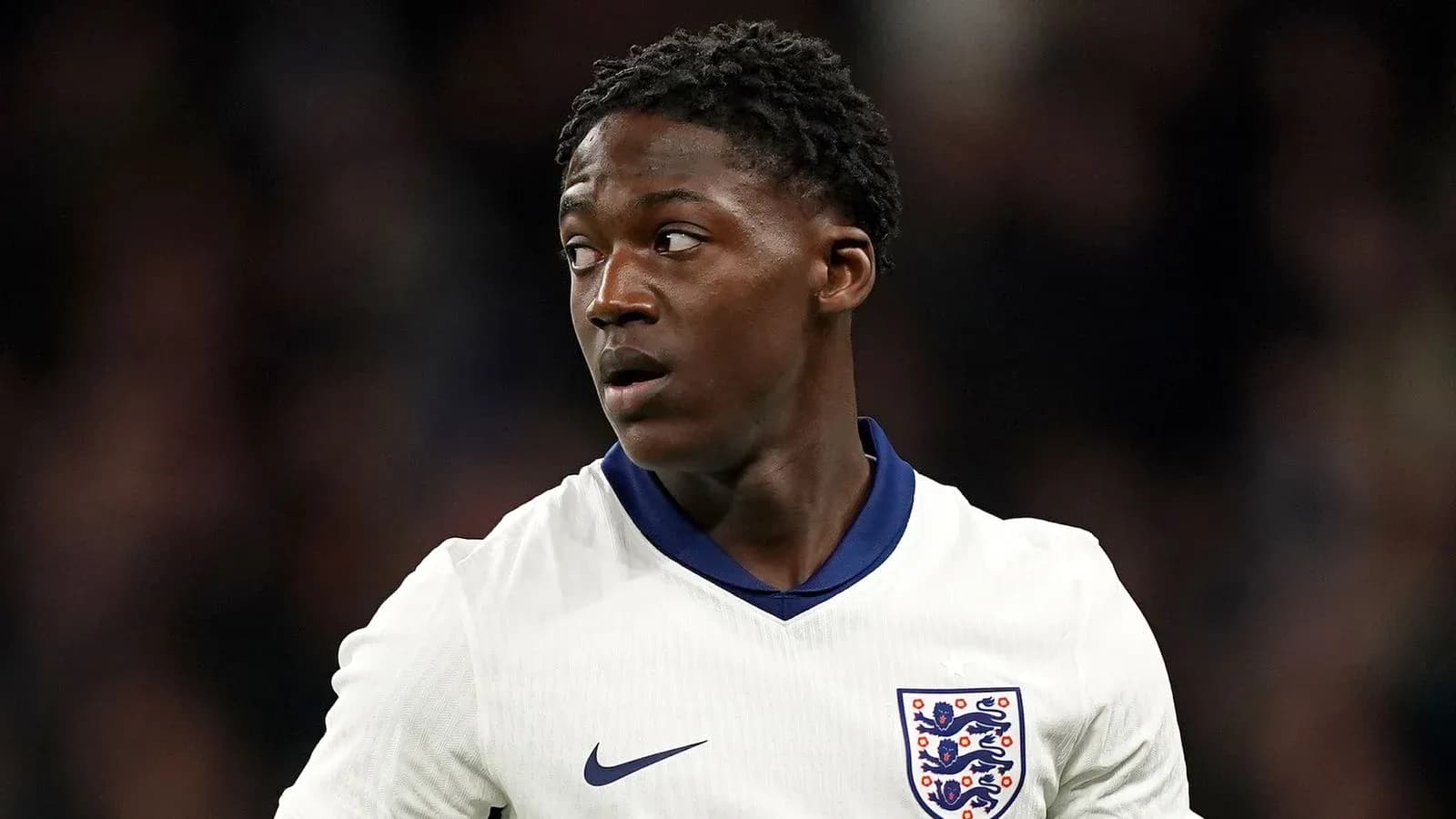
Kobbie Mainoo cuts a lonely figure at this World Cup.
Not angry. Not sulking. Just… on the fringes. One of only three outfield players yet to play a single minute, grouped with Ivan Toney and Trevoh Chalobah, but living a very different reality to both.
Chalobah knew the deal the moment he arrived as a late replacement for the injured Tino Livramento: emergency cover, back-up defender, John Stones ahead of him in the queue. Toney, for his part, received a clear message from Thomas Tuchel – he is the “finisher”, the man for a specific moment, unlikely to start while Harry Kane is fit and firing.
Kane has been exactly that: fully fit, six goals, ever-present. England have not needed a penalty shoot-out, so Toney’s specialist skillset has stayed under wraps. Roles understood. Hierarchies respected.
Mainoo’s situation feels different. And it shows.
For each of England’s six games, the Manchester United midfielder has been the first out of the dressing room, the first onto the team bus. Every time, he has walked alone. No theatrics, no tantrums, but a teenager who looks a little lost in a tournament that once seemed built for his rise.
Only a year ago, he started the Euro 2024 final at 18. That night felt like the start of something, the opening chapter of a long England career. It still might be. Yet in the USA and Mexico this summer, he has not stepped over the white line once.
That is the jarring part. Because the door, at least on paper, swung open for him.
Jordan Henderson’s tournament ended the moment he broke his wrist in the post-Mexico celebrations. A senior midfielder gone from the rotation. Then you look at the choices Tuchel has made since.
Declan Rice and Elliot Anderson have locked down the two central roles. They have dominated games, dictated tempo, and justified the manager’s faith. Anderson, whose move to Manchester City went through mid-tournament, has surged with the confidence of a player whose career is suddenly accelerating. His display against Norway in the quarter-final was his best yet in an England shirt.
Rice, vice-captain and emotional anchor, remains one of the first names on the team sheet whenever he can walk. He has dragged himself through illness and injury to stay on the pitch.
Until Norway.
Floored by a stomach bug picked up in Mexico, Rice spent three days in bed before the quarter-final and could only manage 45 minutes in the Miami heat. If ever there was a moment for Mainoo, this felt like it.
Instead, Tuchel turned elsewhere.
He pushed Eberechi Eze into midfield for the second half, explaining that he wanted more attacking thrust, more risk, more line-breaking passes. Eze, the Arsenal man, offered that progressive edge, the ability to slide balls between defenders and carry the ball through pressure.
Mainoo, watching from the bench, could fairly wonder why his own energy and sharp passing were not considered the answer as team-mates wilted in the humidity. His profile – dynamic, neat in tight spaces, brave on the ball – looked tailor-made for a draining game in Miami.
Then came the next twist.
Reece James entered the fray in midfield midway through the second half, despite nursing a hamstring issue. Tuchel has long trusted James as a defensive midfield option, even though his defined role for England, as with Chelsea, is right-back. Again, Mainoo stayed seated.
When Ezri Konsa, filling in at right-back, cramped up and had to come off, James shifted back into defence. Another vacancy in midfield. Another hopeful glance from the teenager.
Again, no call. Morgan Rogers came on into midfield, Eze moved out to the left, and Mainoo’s number remained untouched.
From the outside, that sequence will have stung. A midfielder loses his place to an attacker repurposed centrally, then to a full-back moved inside, then to another attacking option off the bench. Three different solutions, none of them named Kobbie Mainoo.
Tuchel’s logic is understandable. He trusts James as a defensive shield. He sees Eze as a creative spark between the lines. Rogers brings direct running and unpredictability. With a semi-final against Argentina looming and a World Cup on the line, he is leaning on players he believes can deliver immediately, in the roles he has already tested.
For Mainoo, that is the brutal truth of tournament football. Talent is not always enough. Timing, trust, and tactical nuance decide who plays.
He remains one of England’s brightest young prospects, a midfielder whose ceiling still looks high. His time with the national team is unlikely to be defined by one silent summer.
But as Tuchel chases the ultimate prize, Mainoo’s World Cup has become something else entirely: a lesson in patience, and a reminder that even prodigies sometimes have to wait their turn.