.svg&w=384&q=75 "Naijagoal logo")

José Mourinho's Message to Vinicius: Stay Calm Amidst Hostility
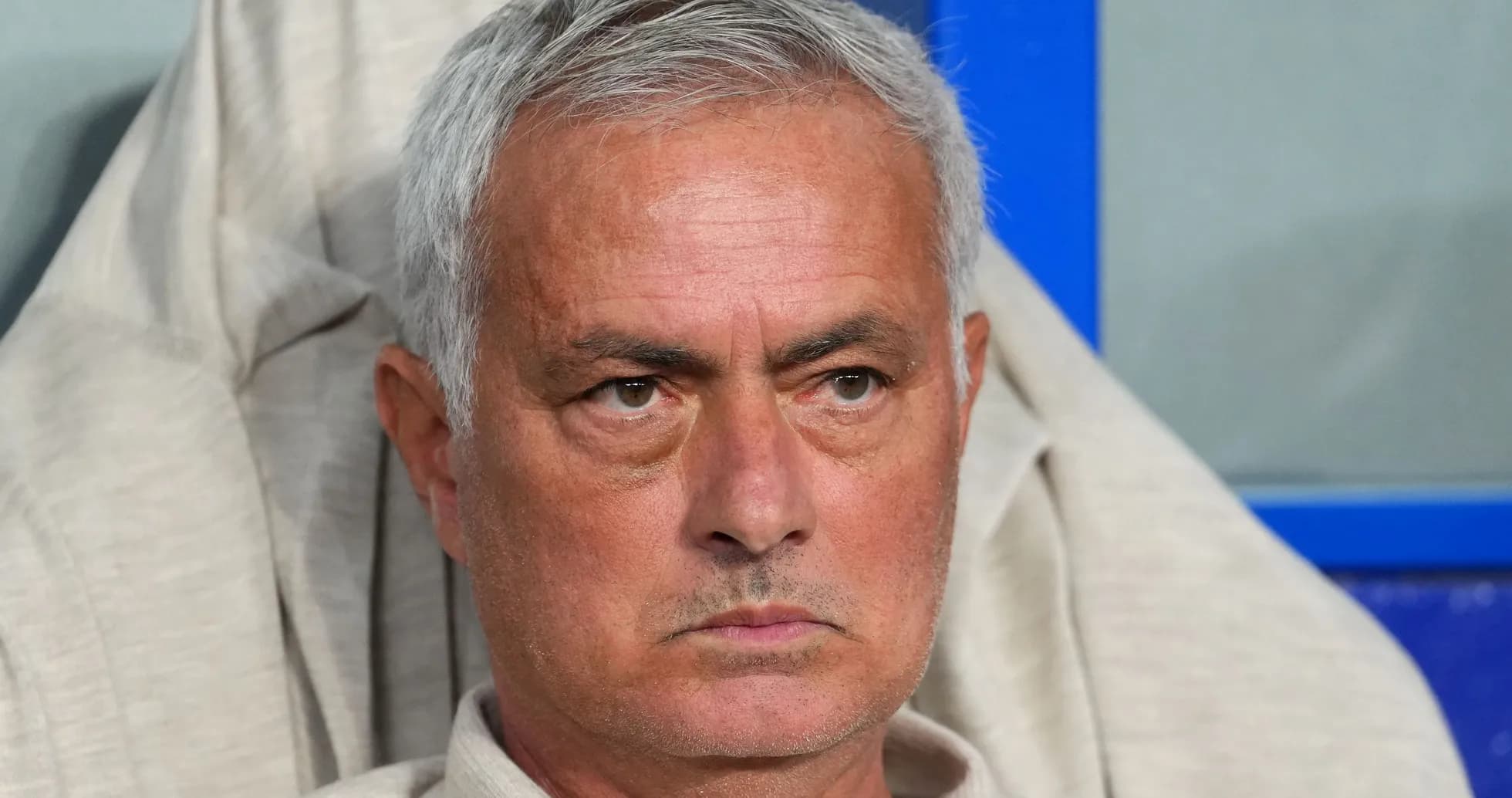
José Mourinho has never been one to preach restraint. Yet on Saturday night in Barcelona, with Espanyol’s fans on edge and Vinicius Junior booed almost every time he touched the ball, that was exactly his message.
“He has to show a lot of emotional restraint,” Mourinho said after Real Madrid’s late 2-1 win. “I spoke to him and told him: ‘If you score a goal, then pay attention to how you celebrate it.’”
The warning was not theoretical. The atmosphere made it necessary. Every involvement from Vinicius drew whistles, jeers, and that now-familiar hostility that has followed him around Spain and Europe. The tension was obvious, and Mourinho knew any flashpoint would find his Brazilian forward at the centre of it.
This is no ordinary coach-player relationship. Their history is complicated, and bruised.
Back in February, during the racism scandal that erupted in the Champions League tie between Real Madrid and Benfica, Mourinho was still in the Portuguese dugout. Vinicius was racially abused; instead of a full-throated defence, Mourinho partly laid responsibility at the Brazilian’s door, pointing to his celebrations and behaviour.
“Something is not right, because it happens in every stadium. In a stadium where Vinicius plays, something always happens,” he said then on Amazon Prime Video, referencing Vinicius’ provocative celebration in front of the Benfica fans after his decisive 1-0 winner.
Those comments stuck. They framed Mourinho as a critic, not an ally.
Now, the dynamic has flipped.
“Now Vini is my player. Vini is no saint, but what they do to him is too much,” Mourinho insisted after scraping three points on the opening weekend of the league season. “It starts in the very first minute. I think there is a certain pattern behind it, something that repeats itself from one opponent to the next.”
The word “pattern” hung in the air. This is not, in his eyes, a series of isolated incidents. It feels orchestrated, or at least entrenched. Hostility has become the default setting whenever Vinicius appears in an away stadium.
Mourinho has replaced Alvaro Arbeloa in the Real Madrid hot seat this summer, returning to the Bernabeu touchline a decade after his first spell from 2010 to 2013. This time, he framed the Vinicius issue not just as a football problem, but as a social one.
“We are in a social era of anti-bullying. With Vini, we are still in the bullying phase, whether from the opposition or from the crowd,” he said. “We have to educate him as well as possible and prepare him for it as well as possible.”
The message is double-edged. On one side, a clear defence of his player. On the other, a demand for control, for maturity, for a cooler head in the heat of the abuse.
On the pitch, though, this was not one of Vinicius’ nights. The superstar, so often Real’s most dangerous weapon, struggled to stamp any authority on the game. He drifted in and out, flashes of movement without the final incision, his influence muted as the noise around him grew.
Real still found a way.
Jude Bellingham, already carrying the look of a leader in white, put Madrid in front early, continuing his habit of arriving at the right moment. Espanyol answered after half an hour, Cala levelling to lift the home crowd and deepen the sense of unease on the away bench.
The game drifted, tense but scrappy. Real pushed without fluency. Espanyol threatened on the break. Vinicius remained on the periphery, the story around him louder than his actual performance.
Then, just as the points looked set to be shared, the new era found its first late hero.
In the 90th minute, substitute and summer signing Carlos Espi struck the winner, turning a frustrating evening into a narrow but vital 2-1 victory for Los Blancos. A new name, a new match-winner, but the old Madrid habit of deciding games at the death remained.
For Mourinho, the result matters, but the bigger picture looms larger. After two disappointing seasons, Real Madrid have turned back to a familiar figure to restore their edge and their trophies. The club expects him to drag them back to their former glory, to reimpose that ruthless identity that once defined his first spell.
He will do it with Vinicius at the heart of his plans.
The Brazilian has been the subject of persistent rumours, from whispers of discontent to talk of an enormous offer from Arsenal. Instead of angling for the exit, he doubled down. At the start of August, the Selecao star signed a new long-term contract tying him to Madrid until 2032, a statement as much as a signature.
So Mourinho now finds himself in a role he once seemed reluctant to embrace: chief defender of Vinicius Junior.
He wants his forward calmer, more controlled, more selective with his provocations. But he also wants the game, and those who follow it, to look harder at why one of its brightest talents walks into a storm in almost every away ground he visits.
The season has barely started. The noise around Vinicius has not. How Mourinho manages that storm – and how his No. 7 learns to live, and thrive, inside it – could define Real Madrid’s entire campaign.