.svg&w=384&q=75 "Naijagoal logo")

José Mourinho's Tactical Return: A Victory with Carlos Espí's Late Goal
José Mourinho stayed seated when the touchline exploded.
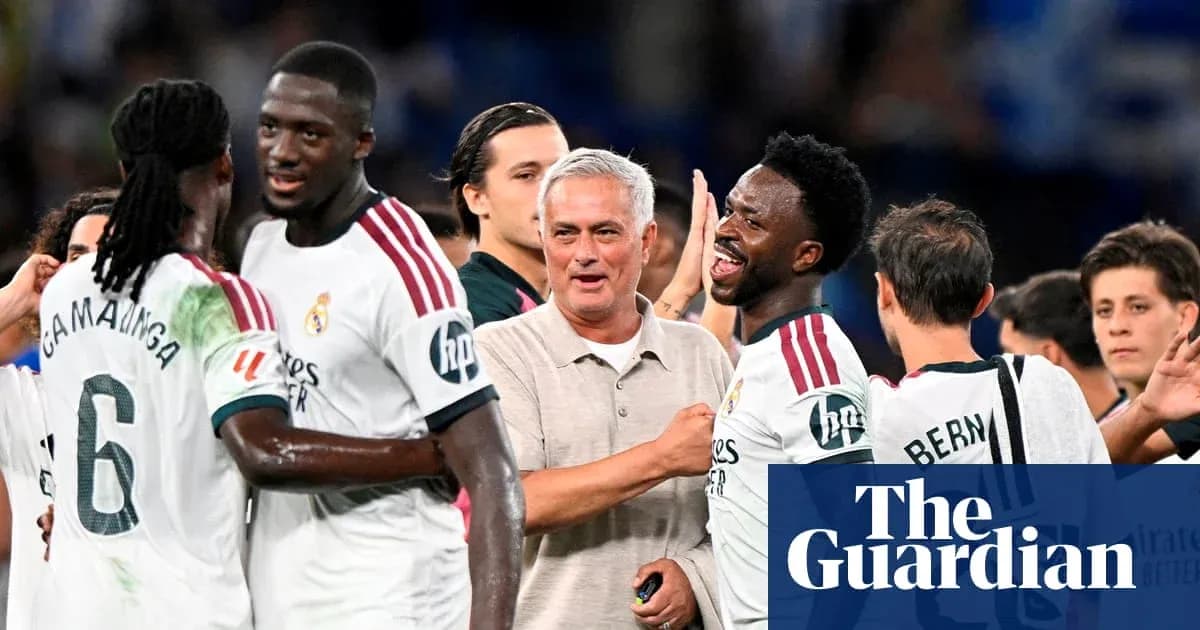
As Real Madrid’s bench emptied and substitutes sprinted towards the corner flag, roaring in the direction of Carlos Espí after his 90th‑minute winner, the new coach on his second debut did not join the stampede. He rose slowly, fists clenched, and walked down the touchline behind them, watching the chaos, calling his captain Fede Valverde over for a quiet word. Relief, not release. The celebration of a man who knows this is only the first incision in a long operation.
Four thousand three hundred and eighty days after his last official game in charge of Madrid, Mourinho finally had another victory. And it arrived not from Kylian Mbappé, Vinícius Júnior or Jude Bellingham, the glittering puzzle he has been hired to solve, nor from Yan Diomande, the club’s record signing, but from a 21‑year‑old striker who barely registered on the radar six months ago.
Carlos Espí, the old‑fashioned No 9 plucked from Levante, delivered the goal Mourinho needed most.
An old‑school No 9, a very modern rescue
Espí’s story already feels tailored for Mourinho. Last season his goals dragged Levante away from relegation; this summer Madrid brought him in to offer something they did not have – a penalty‑box presence, a striker who lives in the six‑yard area. He is still living at Valdebebas, like his coach, the pair sharing breakfast each morning.
This is exactly why he was signed. For nights like this.
When a messy, broken move in the 90th minute saw the ball squirm away from Mbappé inside the area, Espí was there, alive to the rebound, forcing it over the line. Not pretty, but emphatic. A goal that not only secured the win, but raised a question: is this just a Plan B profile, or something Mourinho might soon consider indispensable?
For now, it was enough. The theory worked.
The return of the ringmaster
The evening had started with a different kind of scramble. As Mourinho took his place on the bench for his first Madrid game since a 4-2 win over Osasuna in May 2013, the photographers abandoned their usual positions behind the goals and swarmed around him instead. The attraction was obvious. The showman was back.
It ended with a very different image: Mourinho embracing Espanyol coach Manolo González, slapping hands with the referee and disappearing down the tunnel, his first test survived. Between those bookends came a sharp reminder of reality. This is not 2010. Solutions are not instant. Espanyol, as he had warned, are a good team. At times, they made that look more than a soundbite.
Madrid had more chances. Espanyol, though, restricted them for long stretches and came within seconds of taking a point that would have felt deserved.
On a night when some of Madrid’s old flaws resurfaced, doubts lingered. Of course they did; it was only the opening game. But the late winner at least pushed those questions back a little. There will be bigger games, deeper examinations of this team – and of Mourinho’s temperament.
Nostalgia, power and a president who never really let go
When Madrid faced Benfica in the spring, Mourinho had described his first spell at the Bernabéu as “three hard, intense, sometimes violent years”. Time softens the edges. The bruises fade, the trophies remain. Mourinho insists he is “not the kind of man who misses anything”, a man who does not live with “regrets”. Others missed him enough for both.
Florentino Pérez most of all.
In a club where coaches often feel like a necessary evil, the Portuguese has been the exception. Pérez liked him. Genuinely. And deep down, the president has long clung to the idea that Madrid’s avalanche of success after Mourinho’s departure – six Champions League titles in 11 years – still bore his fingerprints. He had set the tone, raised the standards, cleared the path.
On the eve of this game, Mourinho told a story that underlined that bond. After every trophy Madrid won, he said, Pérez would call him. Mourinho’s answer was always the same: “No, no, no, it was nothing to do with me.” Which, of course, was a neat way of hinting that it had everything to do with him. Pérez has said similar in public. It took 13 years for the president to finally act on that impulse and bring him back.
Why now? Because the returnees have tended to succeed here. Zinedine Zidane and Carlo Ancelotti came back and won. The rest largely failed. When Mourinho, telling that story, mentioned that the trophies belonged to Zidane and Ancelotti, he paused and checked, almost innocently, that they were the only ones to have lifted silverware. They were. The implication was clear: it was time for his brand of surgery again.
Madrid had slipped behind Barcelona. Two years without a major title. A slide not just in results, but in culture.
Demands, non‑negotiables and a dressing room reset
Mourinho framed the task in simple terms. It is not just about running harder, but effort is the base. “We have to try not to negotiate things that are non-negotiable,” he said. “Commitment can’t be missing.”
He has the authority to enforce that. Or at least, that is the bet the club has made.
Habits have already been challenged, demands raised. Training sessions have changed – or at least the attitude towards them has. Diomande declared he was ready to “die” for Mourinho. The coach dismissed it as just a phrase, but he did not hide his satisfaction.
There are other reasons for optimism. Vinícius’s future has finally been settled, no more shadows over his role or status. The World Cup is done, no distraction looming on the calendar. And Mourinho has been watching how national teams have handled his three attacking centrepieces.
Brazil, France and England have all found ways to maximise Vinícius, Mbappé and Bellingham individually. Doing it with all three at once is another matter entirely. “I don’t think they’re incompatible,” Mourinho insisted. Last season, it often looked like they were. Even Bellingham admitted they sometimes drifted into the same spaces.
Here, all three started. Bellingham as a No 10, close to goal. Vinícius wide on the touchline, where he can hurt full-backs. “For me this is his [Jude’s] position: the connection with the forwards, he can score goals. He has to play close to the goal. Playing at 6 or 8 we’re losing his closeness to the goal,” Mourinho said.
Within nine minutes, the plan had produced the first goal of the new era.
A flying start, then the drop
Vinícius, predictably, was being chopped down early. Alex Calatrava had already left a mark in his back, prompting Mourinho to fling his arms up on the touchline. When Vinícius drew another foul on the left, Arda Güler stepped up and delivered a superb cross. Bellingham climbed above everyone and buried his header past Marko Dmitrovic.
Mourinho barely reacted. A brief rise, hands in his pockets, then a slow walk along the touchline to the far end of the bench, where the overflow of his backroom staff sat in the stand. There he shook hands with Sami Khedira, the club-appointed assistant, and analyst Roberto Merella.
For a moment, it felt like the script would run cleanly. Madrid pressed high, Espanyol struggled to breathe. The gulf in resources looked decisive. This, they could tell themselves, was a glimpse of what might come.
Then the intensity leaked away. And Espanyol stepped in.
When Dean Huijsen needed treatment for a cut, Madrid’s players drifted over to Mourinho for instructions. The game, though, began to tilt. Espanyol advanced, grew in confidence, and soon found an equaliser.
Thibaut Courtois first denied Riedel, only for Roberto Fernández to lash the rebound over when he had to keep it down. The warning went unheeded. A slick move followed, Tuy Dolan combining with Javi Hernández to release Calatrava, who finished neatly. Mourinho sat almost motionless, watching his team’s control evaporate.
Chances missed, nerves tested
Madrid still created enough to win it earlier. Twice Mbappé burst clear, once from each side, and twice Dmitrovic stood firm. Espanyol, though, should have gone in ahead at half-time.
Again they worked the ball wide. From the right, Omar El Hilali whipped in a superb cross. Dolan, sliding in at the six‑yard box, could not quite reach it, and Fernández somehow headed the loose ball straight at his own feet when the net seemed to be waiting.
After the break, the pattern persisted: chances, tension, no finish.
From a Güler corner, Bellingham rose again and powered a header against the bar, Dmitrovic just getting a touch. The rebound dropped to Mbappé at the back post, almost on the line. He stabbed wide. He will not quite know how.
Valverde rattled the post from distance. Mbappé dragged another effort off target. The clock ticked, the anxiety grew. On the touchline, Mourinho started to work through the bench: Marc Cucurella, Diomande, Eduardo Camavinga, Trent Alexander-Arnold, Espí. Fresh legs, fresh ideas, same problem.
Until the 90th minute, when the most basic solution in football – a striker in the right place – gave him his escape route.
Espí’s late stab over the line gave Mourinho the result his performance probably merited, but not the comfort the scoreline might suggest.
“I think we deserved to win, but Espanyol didn’t deserve to lose,” Mourinho said afterwards, finishing the night with a rare, almost disarming note of humility.
The iron surgeon has walked back into the operating theatre. The first cut has been made. How deep will he go?