.svg&w=384&q=75 "Naijagoal logo")


Iraq's Journey to the World Cup: Overcoming Logistical Challenges
The road to Monterrey began on broken tarmac.
Iraq’s players and staff, scattered across a country dragged into war and cut off from the skies, first had to conquer the map before they could think about a football pitch. Airspace closed, routes torn up, they moved the only way they could.
“They had to travel from different cities to Baghdad by car or bus,” says René Meulensteen, assistant to Iraq’s coach, Graham Arnold. “Some of those journeys took up to eight hours.” Only then did the real slog start. From Baghdad, it was roughly 15 hours on bumpy roads to Amman, Jordan, one of the few remaining gateways to the outside world.
The Asian-based players peeled off from their own locations and converged on Amman too, the squad slowly knitting itself together like a team assembling in chapters rather than in camp. Fifa had arranged a private charter. Even that came at a cost: a nine-hour delay on the tarmac. When the plane finally lifted, it was an eight‑hour haul to Lisbon, a two‑hour stopover, then another 12 hours to Mexico.
For what Meulensteen, the former Manchester United coach under Sir Alex Ferguson, calls “the most important game in their lives”, it sounded like a logistical horror story. Yet when Iraq stepped out in Monterrey for a decisive playoff against Bolivia, they did so with something more than adrenaline and jet lag. They carried a journey.
They also carried noise.
All remaining tickets had been handed to local Mexicans, who turned up in big numbers. They were joined by a large Iraqi diaspora from the United States. The soundtrack was not neutral. “They were there in a big number, together with a large group of Iraqis based in the US,” Meulensteen says. The stadium swayed towards the underdogs.
Iraq beat Bolivia 2-1 and claimed the final spot at the World Cup. Forty years after their last appearance on this stage, they were back.
The setting mattered. Mexico hosted Iraq’s previous World Cup participation in 1986. Meulensteen and Arnold leaned into that history. “We told the players: ‘Let’s realise what kind of journey we’ve had to get here and perhaps the match is meant to be here, as Iraq’s previous World Cup participation was staged in Mexico.’”
Back home, the reaction was instant and wild. In Baghdad, it was early morning when the final whistle went. The city did not care. “It was absolute madness in Baghdad,” Meulensteen says, recalling videos sent from the capital. A country that has endured so much suddenly had something simple, joyous and unifying to cling to. “The whole nation has been craving something to celebrate and this gives people a huge boost of energy and hope. You can really feel the sense of pride; there’s a genuine feelgood factor.”
It fits a pattern. Iraqi football has a habit of shining through the smoke. Fourth place at the 2004 Olympics, including a win over Cristiano Ronaldo’s Portugal. The 2007 Asian Cup triumph, a title that briefly stitched together a nation gripped by civil war. The 1986 World Cup and that Olympic run both unfolded against a backdrop of conflict. So does this.
“Iraq is still a country that is really feeling the aftereffects of the second Gulf war,” Meulensteen says. “You can see that in the cities. They are recovering, but logistically and organisationally you can’t compare it to Dubai or places in Saudi Arabia.”
Inside the camp, the mood tells a different story. The 62‑year‑old Dutchman relishes the culture and the characters. “You should hear them on the bus to training and matches, singing and listening to music. It’s absolutely brilliant.” The soundtrack of a squad that has already defied geography, and now wants to defy reputations.
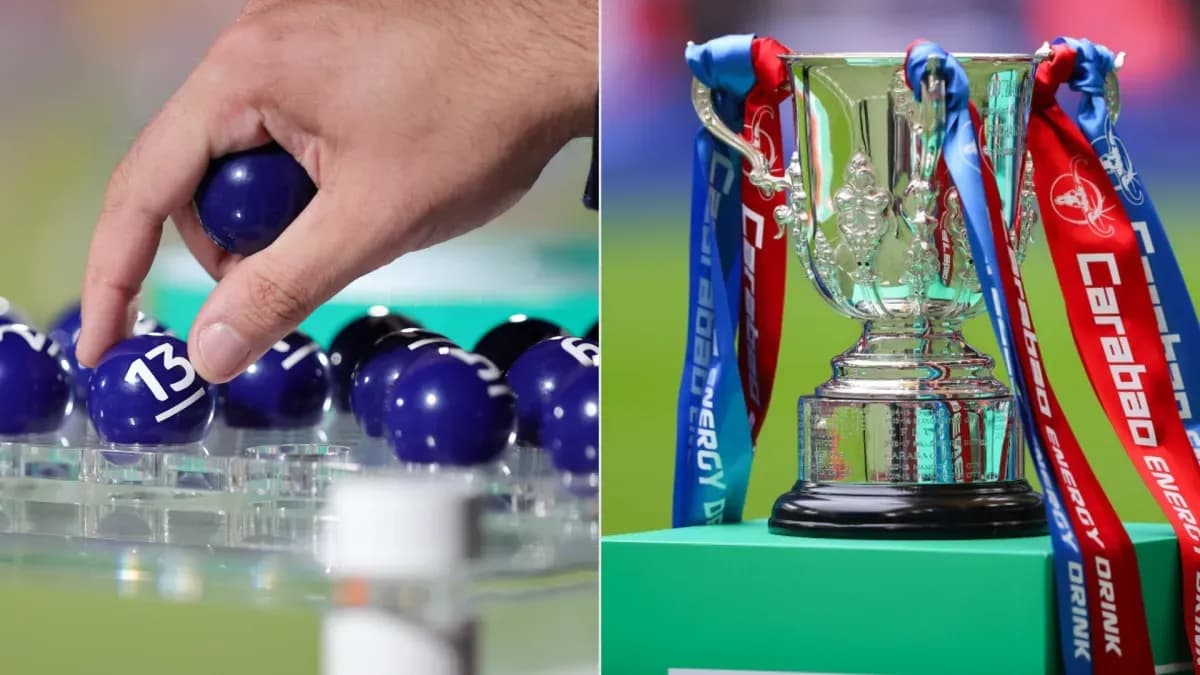
The draw has not been kind. Iraq land in what might be the toughest group of the tournament: France, Senegal and Norway. On paper, a mismatch. Meulensteen reaches for an English analogy. “It’s like Manchester United against Grimsby,” he says. Only Grimsby won that tie in the Carabao Cup last August. The point stands. The gap in status does not guarantee the result.
He has been here before. With Arnold and Australia at the last World Cup, he walked into another group written off as too strong: France, Denmark and Tunisia. “We had France, Denmark and Tunisia in our group and weren’t given much chance of going through either,” he says. “But that’s where our biggest strength lies: the element of surprise.”
Australia beat Denmark and Tunisia and then pushed Argentina hard in the last 16. That run has become part of Meulensteen’s coaching armoury. Proof that structure, belief and detail can bend a bracket.
Iraq’s squad is a blend. Some were born in the country, others grew up abroad with Iraqi heritage. The dressing room contains different backgrounds, different languages. Not all of them speak Arabic. Meulensteen does, at an intermediate level, a legacy of his early years in Qatar. To take that job in 1993, he had to marry his girlfriend because living together out of wedlock was not permitted. The decision shaped his life and his career.
Eight years later, he walked into Manchester United. The route ran through academy director Lee Kershaw and a recommendation from Dave Mackay, who had met Meulensteen while managing Qatar’s under‑17s. Meulensteen started in the academy, working with young players, then moved into more tailored work with the first team. Individual sessions, video analysis, details.
The work intensified after a short spell as Brøndby head coach. Back at United, he began to work closely with Ronaldo. They drilled finishing, over and over. They carved the penalty area into zones, mapping where Ronaldo should stand, what sort of crosses might arrive, and which finish best suited each situation.
He also pushed Ronaldo to strip away the unnecessary. Less show, more sting. “I told him it’s all about being as unpredictable as possible, varying your game … Over the years, he mastered that perfectly.” The message was simple: keep defenders guessing, not entertained.
What struck Meulensteen most was Ronaldo’s relentlessness. “What really stood out with Cristiano was his drive for perfection. And that’s still the case.” At Carrington, United’s training ground, there was a fenced cage with rebound boards. Training would end. Ronaldo often would not. He would slip into the cage for another 10 or 15 minutes alone, working through routines. Meulensteen fed him more exercises, using those boards to sharpen his touch in different, creative ways. “He absolutely loved that.”
All of that work – the on‑pitch drills, the video breakdowns, the conversations – ended up on a DVD. Meulensteen compiled it as a kind of personal manual for Ronaldo. Essentially a PowerPoint with clips, it also carried a message about goals. Set them. Chase them. Hit them. “I also explained the importance of setting goals, how people with clear targets are far more successful than those without them.”
At the start of the 2007‑08 season, Meulensteen asked Ronaldo for a number. He had scored 23 goals the previous year. Ronaldo said 30. Meulensteen pushed. “What about 40?” Ronaldo agreed. He finished with 42, as United won both the Premier League and the Champions League.
By the summer of 2008, Meulensteen had been promoted to first‑team coach, responsible for designing and leading training. Ferguson handed him the blueprint in his own way: three sheets on a flipchart. On them, the United manager sketched how he believed his team should play. That became the navigation system for every session.
The first sheets covered defensive principles and work in possession. The last one, Ferguson said, mattered most. It defined United. “When we attack, I want to do so with pace, power, penetration and unpredictability. And I want you to apply those four things in every training session in some way.” Look back at United at their best under Ferguson and those four words jump out of the footage.
After leaving Old Trafford in 2013, Meulensteen’s path took him through Fulham, then to the United States, Israel and India. Each stop added another layer to his understanding of players, pressure and doubt. That experience now feeds directly into his work with Iraq.
When players talk about fear, he doesn’t brush it aside. He asks them to give it a shape. What exactly is it? Often, it is not the match itself, but the imagined consequences of not winning it. He reminds them that they cannot control every thought that enters their head, or every noise around them. They can control where they point their focus. On what they want: playing well, scoring, reaching the World Cup. The brain, like a forward, needs a target.
His language with players is careful. He prefers to “add” to their game rather than tear anything down. Ferguson taught him how much weight words can carry. “He always said the two most important coaching words are: well done,” Meulensteen recalls. Near the end of training, Ferguson would often wander over, tap him on the shoulder, and say exactly that.
The bond between the two men grew beyond football drills. Ferguson is, in Meulensteen’s eyes, a storyteller with a vast curiosity. He devours books, follows politics and history, obsesses over the American civil war. He knows films, actors, the lot. On buses and trains to away games, they would sit with an iPad and play Who Wants to Be a Millionaire? The number of times they reached the final question still amazes Meulensteen. Ferguson’s range of knowledge did not surprise him.
They still meet for tea when they can. An hour and a half, two hours, gone in conversation. “It’s fantastic.” United, he says, gave him a “beautiful period” of his life.
Now he stands on the brink of another. This summer, with Iraq, he walks into a World Cup with France, Senegal and Norway in the way. The odds are stacked, the gap in resources is glaring, the journey just to get there has already tested them.
For Meulensteen, that sounds less like a warning and more like a familiar script waiting to be rewritten.