.svg&w=384&q=75 "Naijagoal logo")
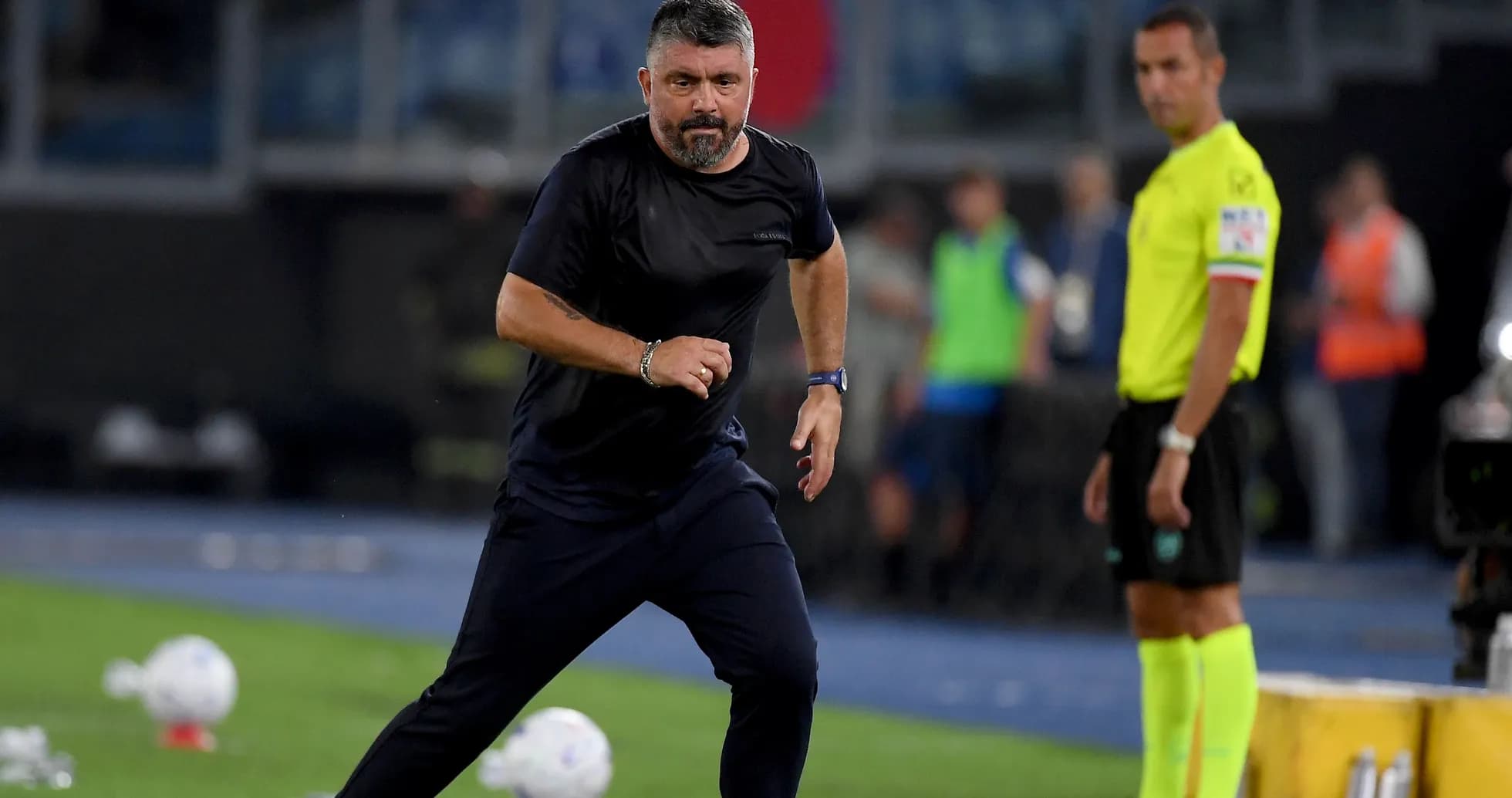

Gattuso Reflects on World Cup Failure with Italy: A Permanent Scar
Gennaro Gattuso walked out of Bologna with three points and a clean sheet, but his thoughts were miles away from Lazio’s narrow 1-0 win. They went back to April. Back to Bosnia-Herzegovina. Back to the night that, in his own words, marked him for life.
The former Italy coach did not dress it up. Missing out on the 2026 World Cup, and with it condemning the Azzurri to a third straight absence from the men’s tournament, has left what he called a permanent scar on his career.
“I had 10 wonderful months,” Gattuso said after Lazio’s Serie A opener. “The lads I coached gave me their all. And it's a wound that will remain for as long as I live, because it was a deep wound.”
Ten months, then the crash. A playoff defeat to Bosnia-Herzegovina, the kind that sticks to a coach’s name no matter what comes next. Within days, Gattuso resigned. The decision felt brutal but inevitable in a country where the World Cup is still treated as a birthright, not a target.
Mancini Returns to a Familiar Storm
The Italian Football Federation did not look far for his replacement. In July, they turned back to Roberto Mancini, the man who had already lived both sides of the Azzurri coin: the ecstasy of Euro 2020, the shock of missing the 2022 World Cup.
Now he is back for a second spell, walking into a dressing room still processing another failure on the biggest stage.
Gattuso, though, refused to let bitterness creep in. He backed Mancini publicly and without hesitation.
“I'd say he is a great coach with a wealth of experience,” he said. “He's a great manager; he's someone who has already won with the national team, and I obviously wish him all the best from the bottom of my heart.”
The message was clear: the scar is his, but the future belongs to someone else.
The Search That Nearly Went Elsewhere
Mancini was not the automatic choice when Gattuso stepped down. The federation explored other paths, and some of the biggest names in coaching were sounded out.
Carlo Ancelotti and Pep Guardiola were approached, high-profile, ambitious targets that would have sent shockwaves through the international game. Both turned the opportunity down.
That opened the door for Andrea Pirlo, who quickly emerged as the leading candidate. His appointment seemed within reach, but negotiations hit a wall. A sponsorship deal with a betting company complicated the talks, and the move collapsed under that weight.
Behind the scenes, another powerful voice pushed in a different direction. Lega Serie A president Ezio Maria Simonelli revealed that the league hierarchy strongly favoured bringing back Antonio Conte for a second stint. Conte, with his intensity and track record, would have represented a hard reset.
The federation chose Mancini instead. Experience, familiarity, and a recent European title on his CV carried the day.
Gattuso Turns the Page, Italy Cannot
Gattuso has not stood still. In June, he signed on with Lazio and has already begun to redirect his energy into club football. The win at Bologna was a small but important first step in that new chapter.
Italy, though, cannot simply move on. Three straight missed World Cups is not a blip; it is a crisis that cuts to the core of a footballing culture built on defensive steel, big nights, and June and July summers spent under global scrutiny.
Simonelli has called for unity, urging clubs, fans, and institutions to close ranks around Mancini as the Azzurri try to climb out of this hole. The message is less about romance and more about survival: Italian football cannot afford another wasted cycle.
There is no time for a gentle reset. The calendar offers no mercy.
Nations League as the First Test
The next checkpoint arrives quickly. Mancini’s Italy will face Belgium on September 25 in the UEFA Nations League, a competition that suddenly feels like more than just a glorified friendly series.
For Mancini, it is an early chance to reassert control, to restore some belief, to show that Italy can still go toe-to-toe with Europe’s elite. For the players, it is a chance to loosen the weight of repeated failure.
For Gattuso, the scar will remain. He knows that. He has said it out loud.
For Italy, the question is harsher: how many more scars can a football nation take before it stops recognising itself?