.svg&w=384&q=75 "Naijagoal logo")

France and Spain's World Cup Duel: A Clash That Could Shape Football’s Tactical Path
France Versus Spain: A Battle Beyond Attack and Defense
As France has advanced smoothly through the World Cup, their attackers have enjoyed the freedom to express themselves on the pitch. Yet Didier Deschamps has harbored a lingering worry. This week, that concern transformed into a real challenge: how will France's two-man midfield cope against Spain's trio? Spain’s dominance in controlling the midfield could outnumber and overwhelm France in this key area.
Deschamps and his team must decide whether to adjust tactics to counter Spain’s midfield strength or rely on their forwards to keep up their impressive tally of 16 goals in six matches.
Spain’s Tactical Mastery
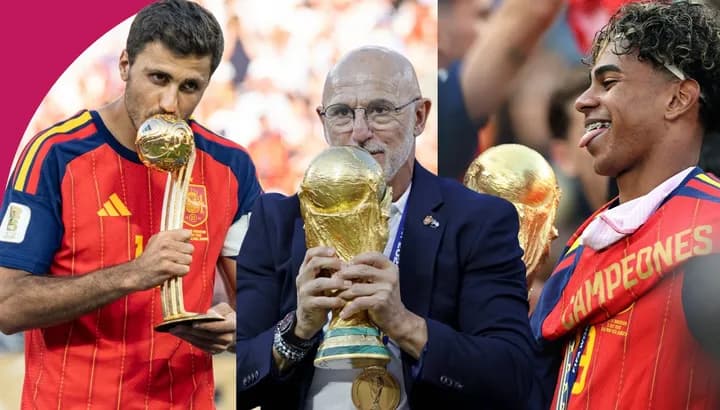
Spain continues with their trademark style—deep tactical coherence unmatched by any other side at this tournament. Their system is so integrated that it limits individual stars like Lamine Yamal, who operates within very specific roles, often marked intensely. Many defenders have struggled to keep up, sometimes forced off early.
Spain tends to drop their possession shape deeper, retreating about 20 meters to avoid leaving gaps behind. This strategy underpins their outstanding defensive record, conceding just once. Their defense thrives on a relentless counter-press, regaining possession on average in just 11.57 seconds, the fastest among quarter-finalists. This aggressive pressure happens high up the field, leaving a large space behind the backline, which France’s Kylian Mbappe and Ousmane Dembele eye eagerly.
Tactical Layers and Philosophical Divide
This match features the best defense versus the best attack, but it is far more complex. Spain will hold more possession near France’s goal, while Deschamps allows his attackers freedom from deeper positions. This contrast illustrates the multiple tactical layers at play.
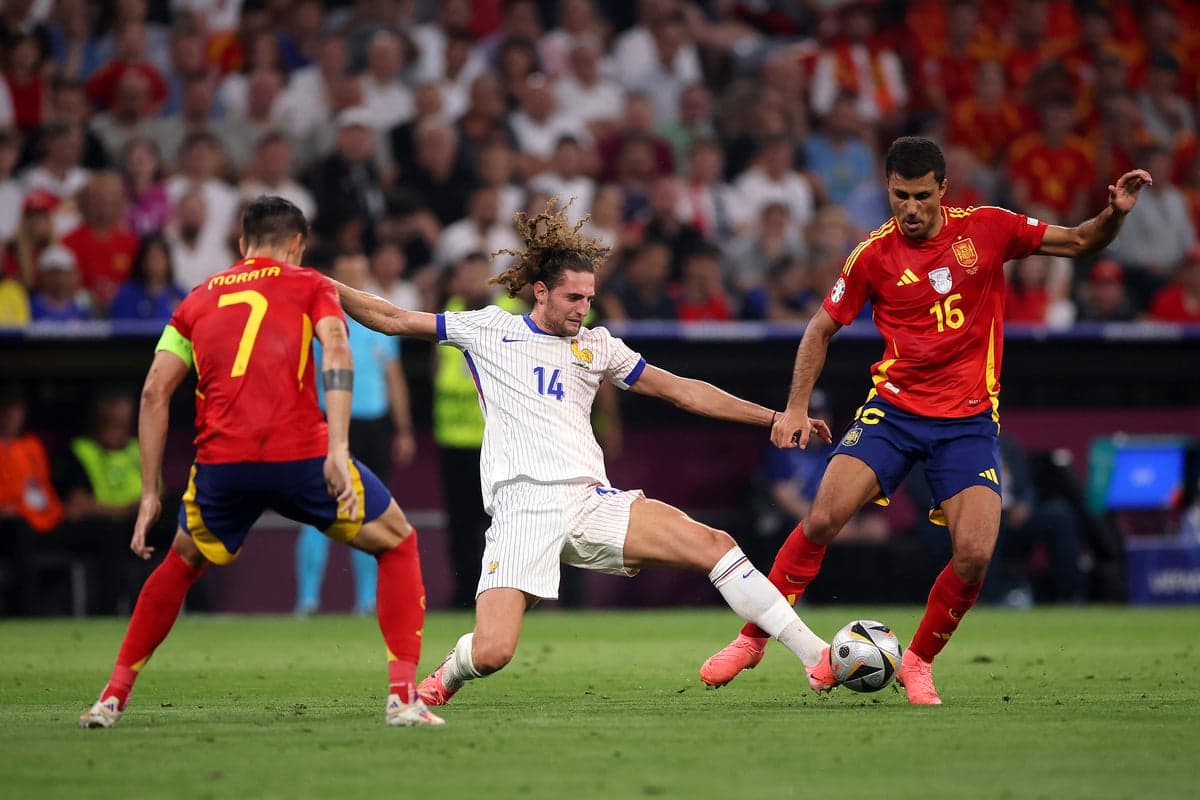
The rivalry goes beyond tactics; it’s rooted in history and contrasting football cultures. Memories surface of Adrien Rabiot’s comments urging Yamal to "do more" before Euro 2024’s semi-final. Both nations have clashed frequently in recent years, each pioneering talent production differently.
In their last major encounter, roles seemed reversed. Spain appeared youthful and free-flowing, while France struggled defensively and offensively, seeming past their prime under Deschamps. Since then, the landscape shifted dramatically.
Changing Fortunes and Player Influence
Spain’s star attackers have battled fitness problems, limiting their ability to stretch games. This forced a compact setup, drawing criticism for being too cautious. Meanwhile, France has welcomed fresh talent, becoming more entertaining.
Players like Michael Olise have risen into world-class ranks, while Desire Doue shines among young stars. Even those from previous tournaments are different now—Bradley Barcola evolved from impact substitute to dynamic forward, Dembele earned a Ballon d’Or, and Mbappe appears liberated.
Deschamps has embraced this evolution, fielding a team unlike anything he’s managed before—more attacking, less conservative.
Positional Play Versus Free Expression
This duel embodies a philosophical contrast: Spain’s "positional game," shaped heavily by Pep Guardiola’s legacy, meets France’s version of "relationism," where attackers enjoy much greater interpretive freedom.
Spain’s approach is structured, with most players adhering closely to defined positions relative to the ball, allowing only limited freedom to players like Yamal and Dani Olmo. France’s style resembles free jazz compared to Spain’s orchestra.
Debates will likely arise over which approach should dominate football’s future. Few can execute Spain’s positional style like Spain themselves, while France’s method demands extraordinary individual talent to be effective.
Midfield Battles and Strategic Challenges
France lacks a classic defensive midfielder like Spain’s Rodri. Instead, they rely on industrious pairings such as Adrien Rabiot and Aurelien Tchouameni. Spain holds even more midfield options on their bench.
The pressure is on France to do more in midfield despite their attacking success. Spain will likely control possession, advancing gradually, while France aims to strike swiftly on turnovers.
Observers noted that Spain’s defense showed cracks when Belgium attacked, suggesting vulnerabilities France might exploit. Deschamps must find ways to increase pressure, especially to funnel play toward his attackers despite being outnumbered.
Resilience and What Lies Ahead
Spain didn’t falter after Belgium ended Unai Simon’s clean-sheet streak, continuing their composed style. Against France, they’ll need even more composure to limit the influence of France’s star forwards.
This matchup is more than just offense against defense. It represents a clash of ideas that may carry long-term significance for football’s tactical evolution.