.svg&w=384&q=75 "Naijagoal logo")

Elliot Anderson and Ewan Ireland: A Tale of Two Futures
Two boys in black-and-white stripes, boots too big, dreams even bigger.
In a 2010 Newcastle United academy photo, they stand side by side, both about nine years old, both tipped for the top. One would grow into a £116million midfielder preparing for a Premier League title charge with Manchester City. The other would end up watching him on a prison television, serving life for murder.
The split between Elliot Anderson and his former teammate Ewan Ireland could hardly be more brutal.
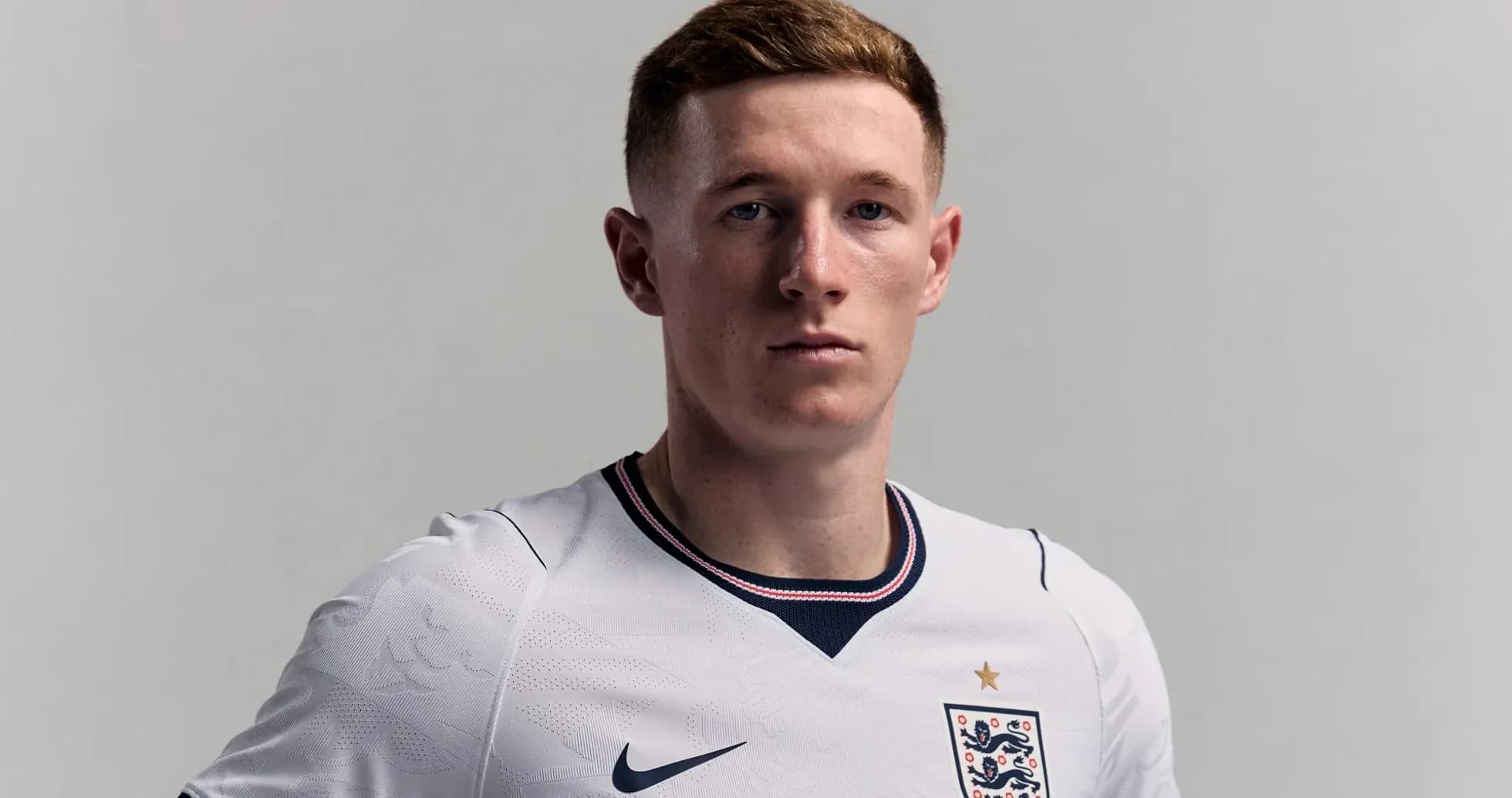
Anderson is now an England international, a World Cup standout who helped drag the Three Lions within touching distance of their first final in 60 years. His move to the Etihad this summer confirmed his rise: a record-breaking fee, a place in a squad alongside Erling Haaland and Phil Foden, and the expectation that he will shape games at the very highest level for club and country.
Ireland’s story has gone the other way, into darkness.
Once, coaches in the North East thought he might be the better of the two. Those who watched that Newcastle academy group talk about him in the same breath as a young Paul Gascoigne. A scout who followed that age group still struggles to process what happened.
“It’s bewildering when you look at the way things worked out for two lads who were incredibly talented,” he said. “You have to wonder how things went so wrong for Ewan.
“He was a cracking player, one of the best from that cohort, but he went in the wrong direction while Elliot got stuck in, worked hard and let his natural talent flourish.
“Elliot was a great kid, a leader even from an early age, and it was no surprise to anyone that he succeeded in the game.
“He deserves every bit of the adulation he’s now getting and he was worth his place in any side at the World Cup.
“But Ewan could have been there alongside him.
“He had the talent but lost his way so badly, and ultimately what he did was unforgivable. He ruined his own life as well.”
A youth coach who worked closely with Ireland remembers the same dazzling ability, and the same sense of waste.
“He was compared to Gazza, he was incredible. Everyone in the football community knew of Ewan Ireland because he was outstanding.
“It’s such a waste. He was the best player at the Newcastle United Academy.
“I can remember watching him and thinking, ‘This is the best kid I have ever seen’.
“He was unbelievable when he had a football at his feet, but he had a lot of problems off the pitch.”
While Anderson drove himself towards the top, Ireland drifted. The discipline that elite football demands never took root. Around 2015 he was released by Newcastle’s academy for disruptive behaviour. Not long after, he was excluded from school. A local club later kicked him out after he brought a knife to training.
The rap sheet grew: convictions that included chasing his own mother with a knife and throwing ammonia into a girl’s face. Talent was no longer the headline. Violence was.
On August 14, 2019, the trajectory of his life hardened into something irreversible.
That evening, 52-year-old solicitor Peter Duncan was walking through Newcastle city centre, heading to catch a bus home from work. Ireland, then 17, had just stolen a 12-inch flathead screwdriver from Poundland, intending to use it in an arranged fight.
Their paths crossed at the doorway of a shopping centre. A simple brush of shoulders. A moment that should have meant nothing.
Instead, Ireland reacted with lethal fury, stabbing Duncan in the chest. The attack left a hard-working professional and devoted family man dead, and a community stunned by the senselessness of it.
Ireland, from Westerhope, Newcastle, later admitted murder. The judge who sentenced him to life with a minimum term of 15 years laid out the devastation in stark terms: “Peter Duncan was a hard-working solicitor with a loving family. You ended his life and you brought lifelong misery and grief to others.”
Ireland will not be able to apply for parole until 2034. By then, Anderson, now 23, could be deep into his prime, likely to be wearing England colours at another World Cup, this time in Saudi Arabia.
While Ireland’s crime shamed his family, Anderson has become a source of immense pride to his. His close-knit, sport-obsessed relatives have followed every step of his rise: from Newcastle to Nottingham Forest and now to Manchester City, where he trains and plays alongside some of the game’s biggest names.
The comparisons that once followed Ireland did not stop at him. Anderson, too, drew lofty parallels as he came through the ranks. In 2022, still at Newcastle but sent on loan to then-League Two Bristol Rovers, his performances were so electric that supporters likened him to Diego Maradona. The nickname stuck: the “Geordie Maradona.”
That loan spell hardened him. It also confirmed what coaches had long suspected — that he was operating on a different level. He returned to the top flight with a swagger, but also with the work rate and resilience that separate prospects from professionals.
This season he begins a new chapter, starting at home to Bournemouth on Sunday, no longer just a promising youngster but a headline act in his own right. His driving force now carries an extra weight.
In April, his mother Helen died at 54 after a long illness. Throughout England’s World Cup run, Anderson spoke openly about how her battle shaped his mindset on the pitch.
“It’s been tough,” he said during the tournament. “It helps me to get on the pitch and free my mind.
“My football over the past six months was bringing my mum happiness and getting her through what she was going through.
“Everything I do, I have to do it for her now.”
Football runs deep in the Anderson bloodline. His older brother Wil is a boxer who has appeared on Love Island. Another brother, Louis, is also a footballer. His maternal grandfather, Geoff Allen, played for Newcastle United in the 1960s. His father Iain, 53, who runs a drilling company, was a capable non-league striker in his younger days.
Those who saw Elliot first, before the TV cameras and transfer fees, remember a boy who already seemed destined for the big stage. Teacher Jonathan Roys, 56, who taught him English and extracurricular PE and coached him at his first club, Wallsend Boys, recalls the certainty he felt.
“We had a bet on him playing for England,” Roys said. “He was just on a different game. You see some good players there at eight and nine. He was exceptional.”
That judgment has held up. At every level, Anderson has risen, adapted, and excelled. He now carries the hopes of Manchester City fans and England supporters who see in him not just potential, but a player ready to shape matches and moments on the biggest platforms.
Back in that old academy photo, though, none of that is visible. Just two kids in Newcastle kits, shoulder to shoulder, sharing the same dream.
One now walks out at packed stadiums, chasing trophies and playing for a mother’s memory. The other sits behind bars, his name forever tied to a senseless killing and the grief of a family that did nothing wrong.
The game will move on with Elliot Anderson at its forefront. Ewan Ireland’s story will remain a stark reminder of how far, and how tragically, two lives can diverge from the same starting line.