.svg&w=384&q=75 "Naijagoal logo")

Chelsea's Costliest Non-Events: A Catalogue of Misfires
Carney Chukwuemeka’s Chelsea career never really began. Signed from Aston Villa in 2022 for £20m after lighting up the Under-19 European Championship with England, he arrived as one of the standard-bearers of the new era. Then came the reality. Injuries stalled him, managers overlooked him, and the hype evaporated. Two-and-a-half years, 32 appearances, barely a ripple. By the time he left for Borussia Dortmund last summer, initially on loan before a permanent move, his time at Stamford Bridge felt less like a chapter and more like a footnote.
Christopher Nkunku was supposed to be different. Chelsea moved early in 2023, paying £52m to prise him from RB Leipzig, where he had tormented Bundesliga defences and looked every inch a modern, multi-functional forward. This was the man to lead the line, to give structure to the chaos. Then pre-season bit back. A serious knee injury, suffered almost as soon as he joined up with the squad, wiped out half of 2023-24 and set the tone. He returned, but never truly re-emerged. While Cole Palmer caught fire and took centre stage, Nkunku drifted on the periphery, a bit-part presence in 2024-25. Twenty-seven Premier League appearances in total, no real imprint, and eventually a move to AC Milan last summer that felt more like an admission than a decision.
If Nkunku’s story was about misfortune, Alejandro Garnacho’s was about misfit. Chelsea pounced when Manchester United, under Ruben Amorim, froze him out, paying £40m to exploit what looked like a rare market opening. On paper, it made sense: a fearless winger, electric at Old Trafford, still young, still raw, still dangerous. On grass, it never materialised. The verve vanished. The swagger went missing. Under both Enzo Maresca and Liam Rosenior, he struggled to nail down a starting place, his performances on the left flank fading into the background. Chelsea are now widely understood to be ready to move him on, hoping for somewhere in the £43-£45m bracket. Hope, in this case, might be doing a lot of heavy lifting.
Pierre-Emerick Aubameyang never had a chance. Thomas Tuchel wanted him, Chelsea went to Barcelona to get him in the summer of 2022, and then, almost comically, Tuchel was sacked the day after Aubameyang’s debut. The entire logic of the signing disappeared overnight. Graham Potter never truly trusted him, and the striker slid from curiosity to irrelevance with brutal speed. By the time he left on a free to Marseille, his Chelsea record read 21 appearances, three goals, and an overriding sense of “what was the point?”
Kalidou Koulibaly arrived as a solution and left as a symbol. BlueCo’s first transfer window in 2022 brought in the Napoli stalwart, a defender with a fearsome reputation and the aura of a leader. He was meant to anchor the back line, to bring calm to a club in transition. Instead, he was swept up in the turbulence. Managers came and went, systems shifted, and Koulibaly never quite found his footing. A few high-profile mistakes hardened the judgment. One season was enough. Chelsea sold him to Al-Hilal, one of the early marquee names in the Saudi Pro League rush, and moved on.
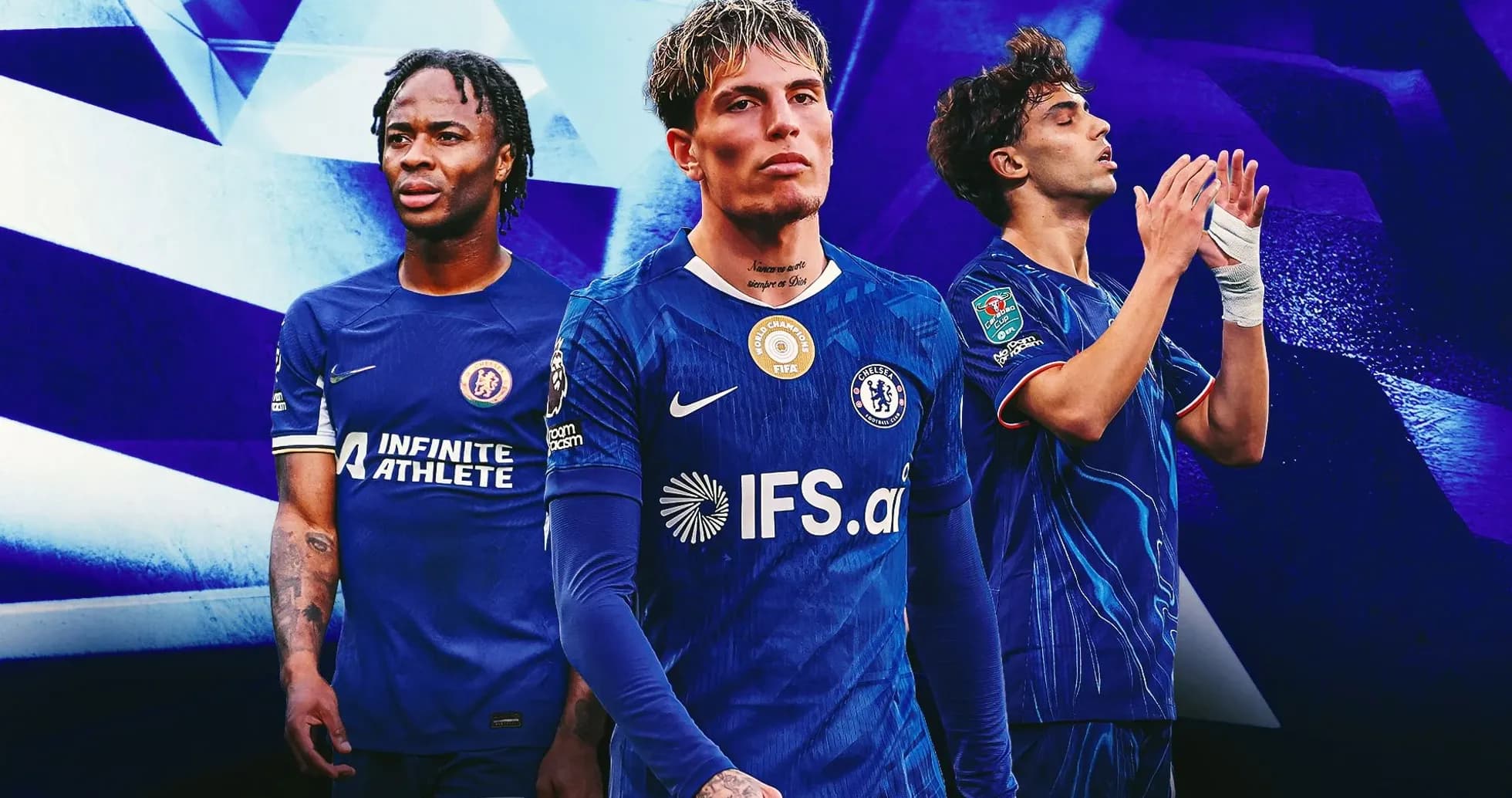
Raheem Sterling’s move was supposed to be the blockbuster. A proven Premier League scorer, multiple titles at Manchester City, £47.5m to make him the attacking face of the new project. It sounded right. It never felt right. Two flat seasons, flashes without follow-through, and then the brutal clarity of Maresca’s verdict: Sterling banished to the infamous “bomb squad” before an unconvincing loan at Arsenal in 2024-25. When he returned in the summer of 2025, nothing had changed. He did not play again, and by January 2026 his contract was terminated. Eighteen months without an appearance, a marquee name reduced to a cautionary tale.
If Chelsea’s recruitment under BlueCo sometimes looked confused, Joao Felix embodied that confusion. They wanted him so badly they signed him twice. The first time, in January 2023, he arrived on loan from Atletico Madrid amid the wild winter splurge. His debut against Fulham brought a red card and, in hindsight, a warning. The talent flickered, but never burned. Atletico had already grown tired of waiting; Chelsea were about to learn why. Even so, after his productive spell at Barcelona, the club went back for more in 2024. It lasted half a season. Under Maresca, Felix again failed to leave a mark and was sent to AC Milan on loan. By the summer of 2025, he had moved permanently to Al-Nassr, another big name drifting away from the European spotlight.
Some signings barely even register. Facundo Buonanotte was one of them. Plucked from Brighton on loan late in the 2025 summer window, the Argentine attacking midfielder looked like a depth move, a squad piece for Maresca. He never got close to being more than that. Eight appearances in total, only one in the Premier League, and frequent absences from the matchday squad told their own story. His loan was cut short in January, and an equally forgettable half-season at Leeds followed. Blink, and his Chelsea stint is gone.
Deivid Washington, by contrast, is still technically there, even if his Chelsea story feels long finished. Signed from Santos in 2023 for £17m and handed one of those extended contracts that defined the early BlueCo strategy, he was filed under “one for the future.” The future never arrived. Three first-team appearances in 2023-24, then a long spell in the development squad, then a loan back to Santos in 2025 that did little to change the picture. He was recalled, but not reintegrated. Now 21, he remains on the books, but not in the plans. A permanent exit looks inevitable.
And then there is Mykhailo Mudryk, the bleakest story of the lot. His £89m move from Shakhtar Donetsk in January 2023 sent a jolt through the fanbase. Chelsea had beaten serious competition to land one of Europe’s most coveted young wingers, a livewire with pace, audacity, and upside. What followed was a slow unravelling. The exuberance that dazzled in Ukraine rarely appeared in blue. He drifted in and out of line-ups under a carousel of managers, struggling for rhythm, confidence, and identity. Then came the hammer blow.
In November 2024, Mudryk was provisionally suspended for a doping offence. He has not played since. In April 2026, it emerged that the Football Association had handed him the maximum four-year ban. Mudryk has appealed and reportedly believes he might yet return in 2026-27. On paper, the door remains ajar. In reality, it is hard to imagine him stepping back through it at Stamford Bridge.
For a club that set out to redefine itself under new ownership, these signings tell a different story: one of big fees, bigger expectations, and careers that never quite caught fire in blue. The question now is whether Chelsea have finally learned from this bruising catalogue of missteps—or whether the next “statement signing” will end up on the same list.