.svg&w=384&q=75 "Naijagoal logo")

Barcelona's Striker Dilemma: Who Will Fill the Number Nine Role?
Barcelona have spent the summer loading every part of their squad with quality – except the one position that usually decides titles.
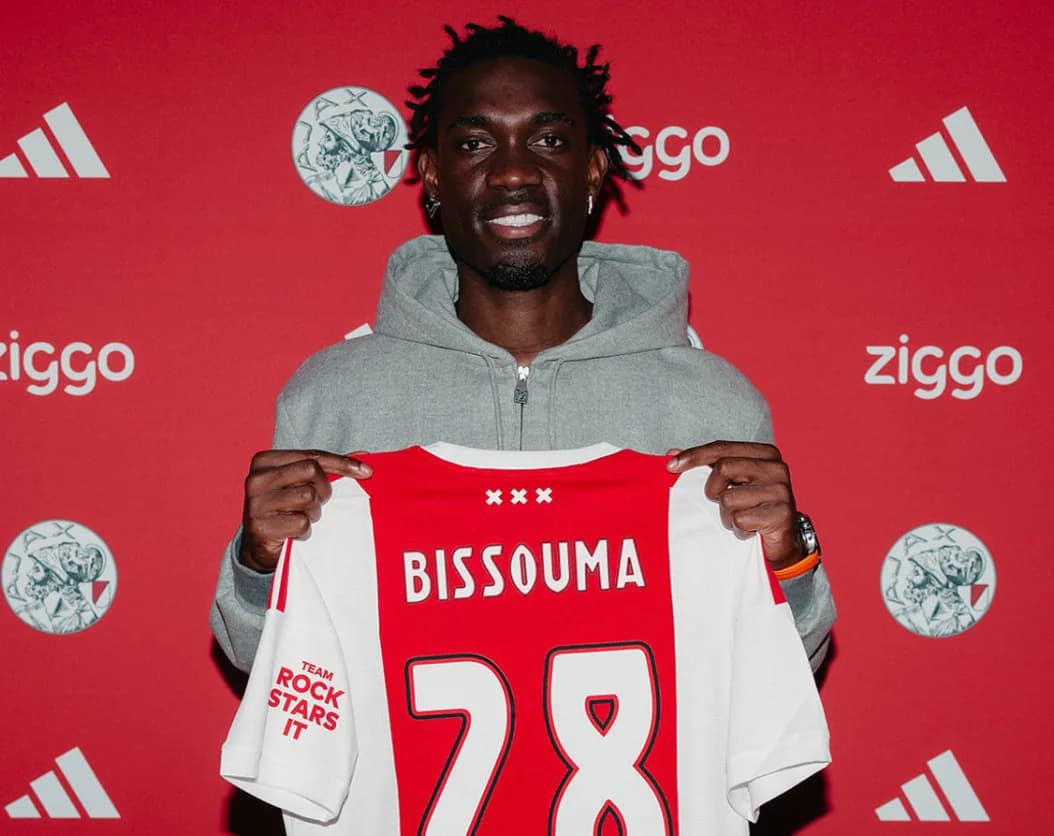
Rodri’s arrival from Manchester City brought a Ballon d'Or winner and World Cup-winning captain into a midfield already stacked with control and creativity. Out wide, Hansi Flick now has pace to burn: Anthony Gordon and Karim Adeyemi offer direct running and width, while 18-year-old Belgian winger Jesse Bisiwu has been brought in as a project for the future.
Yet as La Liga kicks off away to Elche on Sunday, 23 August, one glaring question hangs over the champions.
A heavyweight squad with a hole at the top
Robert Lewandowski has gone. At 37, the veteran striker left for Chicago Fire in Major League Soccer when his contract expired at the end of last season, taking with him years of elite penalty-box instinct.
Ferran Torres followed him out of the door, joining Paris St-Germain for about 50m euros (£42.7m). His departure bites hard: 21 goals in 49 appearances last season, often stepping in as the central option when Lewandowski rested or rotated.
Between them, Barcelona have lost their two most established central forwards. In return, they have gained… none.
The first-team squad, as it stands, does not contain a recognised senior striker. For a club that has built eras around the number nine – from Samuel Eto'o to Luis Suárez to Lewandowski – it is a jarring imbalance.
Alvarez the priority – but Atletico refuse to budge
Inside the club, the preferred solution is clear. Barcelona want Julian Alvarez from Atletico Madrid.
The 26-year-old Argentina international signalled during the World Cup that he would be open to a move. His work-rate, movement and finishing make him an obvious fit for Flick’s aggressive, front-foot football.
Atletico’s response has been just as clear.
Under heavy interest, including from Real Madrid, chief executive Miguel Angel Gil Marin drew a line in the sand. Alvarez, he said, would not be sold – not even for 200m euros (£170.8m).
Barcelona know the clock is ticking. The transfer window closes on 1 September. If they cannot prise Alvarez away, they may be forced to do something almost unthinkable for a club of their stature: go through an entire season without a traditional centre-forward.
Flick’s internal solutions: false nines and fluid chaos
Hansi Flick is not blind to the problem.
"We know we have to do something," he admitted this month, before quickly turning to the options he already has. His tone carried realism, but also a coach’s instinct to improvise.
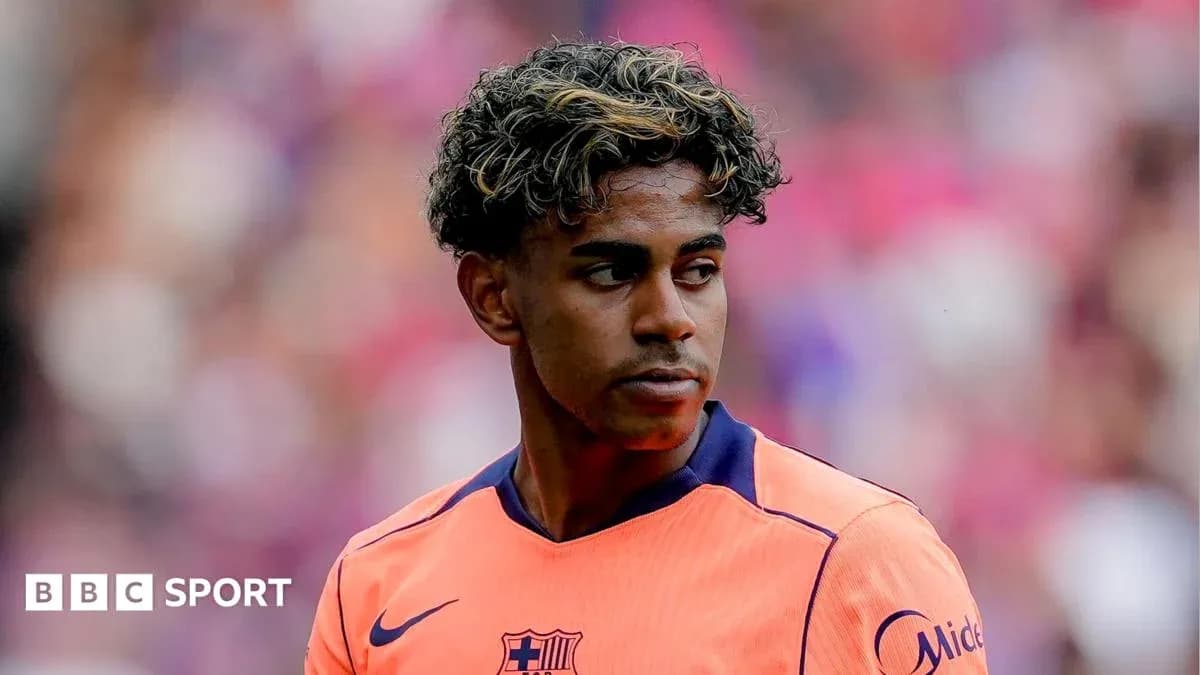
The most obvious internal answer is the teenager who already carries so much of Barcelona’s attacking burden: Lamine Yamal.
Fresh from a season in which he scored 24 goals and lifted the World Cup with Spain, the 17-year-old has become the side’s attacking focal point. He can play as a false nine, dropping into pockets, dragging centre-backs into uncomfortable areas.
Yet that is not where Flick truly wants him.
Lamine Yamal’s greatest threat still comes from the right flank, where he isolates full-backs, cuts inside and conjures chances from situations that look dead. Flick’s preference is to keep him there, where he can dictate games rather than fight with centre-backs.
Dani Olmo offers another false nine option. Intelligent between the lines, comfortable receiving under pressure, he can knit attacks together from central zones. Raphinha has also been used centrally by Flick, stepping in from his usual wide role to occupy defenders and link play.
Fermin Lopez is yet another name in the mix. The young midfielder has said he is comfortable operating as a false nine, adding one more flexible piece to Flick’s attacking puzzle.
None of them, though, are classic penalty-box strikers.
Gordon, Adeyemi and the lure of a rotating front line
Gordon and Adeyemi bring something different: raw speed, direct running, the ability to stretch defences vertically and horizontally. They can break lines, attack space and pin back full-backs.
What they do not bring is the profile of a conventional number nine.
That opens up a tactical fork in the road. Barcelona could lean into their abundance of hybrid forwards and technicians, abandoning the idea of a fixed striker altogether. A fluid front line, with constant rotation, interchanging positions and no one player locked between the opposition centre-backs, is a genuine option.
On paper, that kind of movement could make them a nightmare to defend. Centre-backs would have no obvious reference point, full-backs would be dragged inside, and midfielders would be forced into split-second decisions over who to track.
It would look bold. It might even be beautiful.
But it would also be a gamble in a season where the margins at the top of La Liga and in Europe are brutally fine.
A title defence built on a missing piece
Inside the club, there is no serious doubt about the ideal outcome. Barcelona want a specialised striker, someone whose instincts are honed for the six-yard box, whose first thought is always the goal.
Until that happens, Flick will juggle false nines, wide forwards and a generational teenager he would rather unleash from the wing than burden through the middle.
The champions head to Elche with a reinforced midfield, electric wingers and a coach willing to innovate. What they do not have, at least for now, is the one role that used to define them.
With the window closing fast, the question hangs over their season: can Barcelona really dominate Spain and Europe without a true number nine, or will the missing striker become the flaw that everyone saw coming?