.svg&w=384&q=75 "Naijagoal logo")

Arsenal's Ambition for a League Title: A New Era Begins
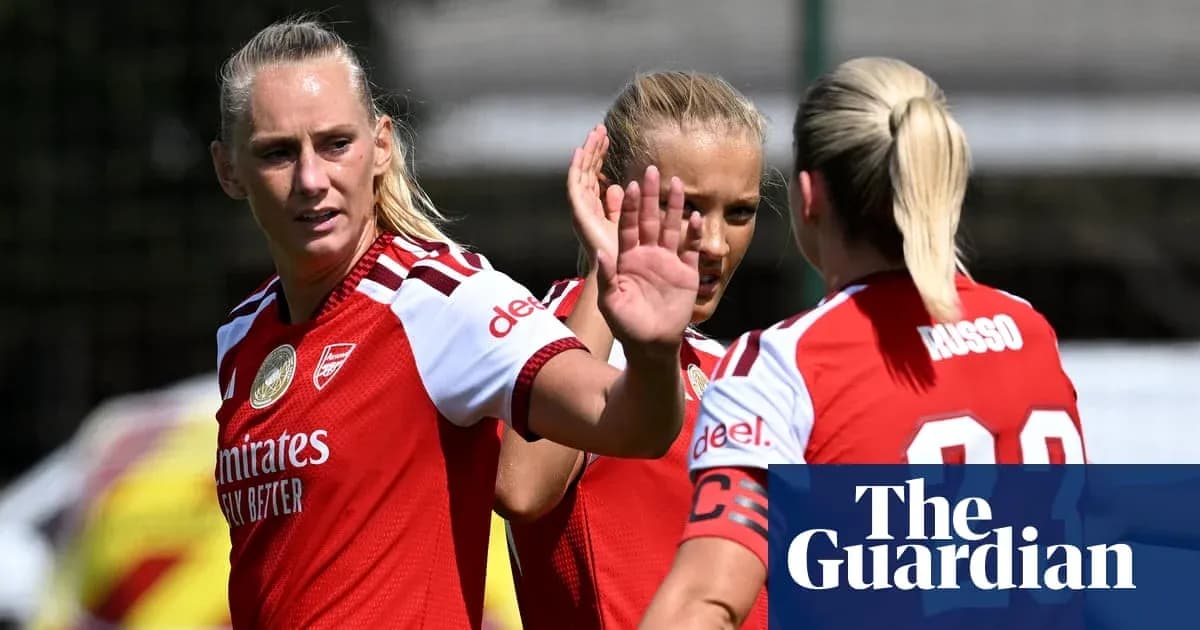
Arsenal start this season stripped of excuses. No summer tournament to drain legs. No Champions League qualifiers to scramble preparations. No late managerial change. Just a rebuilt squad, a settled coach and a seven‑year wait for a league title that hangs over everything.
They finished second again last year, and the Fifa Champions Cup did little to ease the sense of underachievement after the Champions League triumph of 2025. That European high had disguised a squad edging towards the end of a cycle. This summer, Arsenal ripped into it.
Eleven players have gone. Not just squad fillers, but pillars: Beth Mead to Manchester City, Katie McCabe to Chelsea. Two club legends, allowed to walk to direct rivals. Seven have come in, and the profile of the team has shifted sharply.
Ona Batlle, Georgia Stanway, Géraldine Reuteler and Selina Cerci headline the intake – proven internationals, all in or approaching their prime, all used to the demands of top-tier football. Arsenal have added experience and quality while lowering the age of the group. It feels like a reset, but an unapologetically ambitious one.
This is Renée Slegers’ team now.
A clean slate for Slegers
Slegers enters her second full season in charge with expectation dialled up. She steadied the ship after Jonas Eidevall’s departure and turned an established squad into one capable of a deep European run. Now she has something different: a dressing room reshaped to her specifications.
Last season’s slow start in the WSL cost them dearly – four draws and a defeat in their opening nine games left them chasing City. That cannot happen again. With Champions League league-phase football already secured via their second-place finish and no major tournament stealing players away, Arsenal have had the luxury of a full pre-season under Slegers for the first time.
The message from upstairs is blunt. Technical director Jodie Taylor has not tried to hide behind process or transition. “I’ll flat out say it: we want to win the league and want to take that next step,” she said. Arsenal’s margin for patience has shrunk accordingly.
City will be stronger, now back in the Champions League. Others in the division have recruited smartly. The title race should tighten. But Arsenal know what is at stake: end a seven-year wait for the WSL crown, or accept that this project is falling short of its own rhetoric.
The looming question sits unavoidably in the background: do Mead and McCabe come back to haunt them in sky blue and Chelsea blue? Arsenal have gambled that evolution was worth the risk.
Money, momentum and a growing giant
Off the pitch, the club’s numbers tell a story of acceleration. Arsenal’s latest accounts showed revenue rising by £6.5m to £21.5m for the year ending May 2025. The Emirates Stadium has become a central part of that growth.
Across eight games there in that period, the average attendance hit 29,833, generating just under £6m in matchday revenue. The next set of filings should look even healthier. Last season, Arsenal averaged more than 34,000 fans for all 11 WSL home matches, a figure that underlines their pull and their potential.
Broadcast income has surged too, up to more than £2m – more than double the £956,000 posted in 2024, aided heavily by that Champions League success. Commercial revenue has followed, jumping from £649,000 to £1.77m.
Yet the reliance on the wider Arsenal group remains stark. Group income increased from £9.3m to £11.85m and still makes up more than half of the women’s side’s overall revenue. Arsenal are leading the WSL in many metrics, but they are not standing alone financially.
The stadium picture is equally complex. All WSL home games and any European knockout ties, if they qualify, will be at the Emirates. Domestic cups and Champions League league-phase fixtures stay at Meadow Park. Arsenal supplied more than 40% of the league’s total attendances last season, but they are squeezed between a men’s calendar that clogs the Emirates and a Meadow Park that no longer fits their scale.
They have outgrown their old home. They cannot yet fully claim the new one.
Stanway’s edge and the new spine
On the pitch, the marquee name is clear. Georgia Stanway arrives as a two-time European champion with England, a midfielder whose game is built on bite as much as technique. Arsenal have signed plenty of talent in recent years; what they have lacked at times is edge.
Stanway brings it in spades. At 27, she is in her prime, already knitted into the fabric of the England contingent at the club, and open about what she offers: “ruthless and robust,” as she put it. Arsenal have needed someone to drag games into their territory when the football alone is not enough. She looks tailor-made for that role.
Batlle adds thrust and guile from full-back, Reuteler offers control and intelligence in midfield, Cerci gives Slegers another option in the forward line. All four signings point in the same direction: a more aggressive, more athletic, more resilient Arsenal.
The numbers from last season suggest they were closer to champions than the table made it feel. Arsenal topped Opta’s expected points model in the WSL in 2025-26 and lost only once all year. The title slipped away not because they were beaten, but because they stalled. Six draws, compared with City’s one, proved fatal.
Expected goals data indicated Arsenal comfortably deserved to win three of those drawn matches. Only one, against Chelsea, tilted the other way. They split their head-to-heads with City, one win each. The margins were painfully fine. That is exactly where Stanway’s steel, and Slegers’ sharper start, must make a difference.
Returns on hold, then release
There is another layer to this season: the return of two of the club’s brightest young talents. Last year was supposed to be the breakthrough campaign for Michelle Agyemang, 20, after a superb Euro 2025, and for 19-year-old Katie Reid, who had flown out of the blocks domestically.
Both saw their progress shattered by anterior cruciate ligament injuries. Almost a year later, they are edging back towards competitive action.
Arsenal will not rush them. Their minutes will be managed, their rhythm will take time to return. But the hunger will be fierce. Agyemang and Reid were on the cusp of something significant when their bodies gave way. This season offers the chance to pick up that thread.
Inside the dressing room, the sense of construction is strong. Defender Lotte Wubben-Moy described it as “cooking the most beautiful recipe and then you add the final small ingredients that make the marginal difference, that elevate, and you create something that’s beautiful and that you can relish and enjoy. That’s what we’re in the process of.”
The ingredients are there now: a remodelled squad, a manager with a full pre-season, a fanbase filling the Emirates, a club whose numbers and ambition are climbing in tandem.
The question is no longer whether Arsenal are building something. It is whether this is the year they finally finish it with a league title.