.svg&w=384&q=75 "Naijagoal logo")

Alisson Named Liverpool Vice-Captain but Rules Keep Armband Off
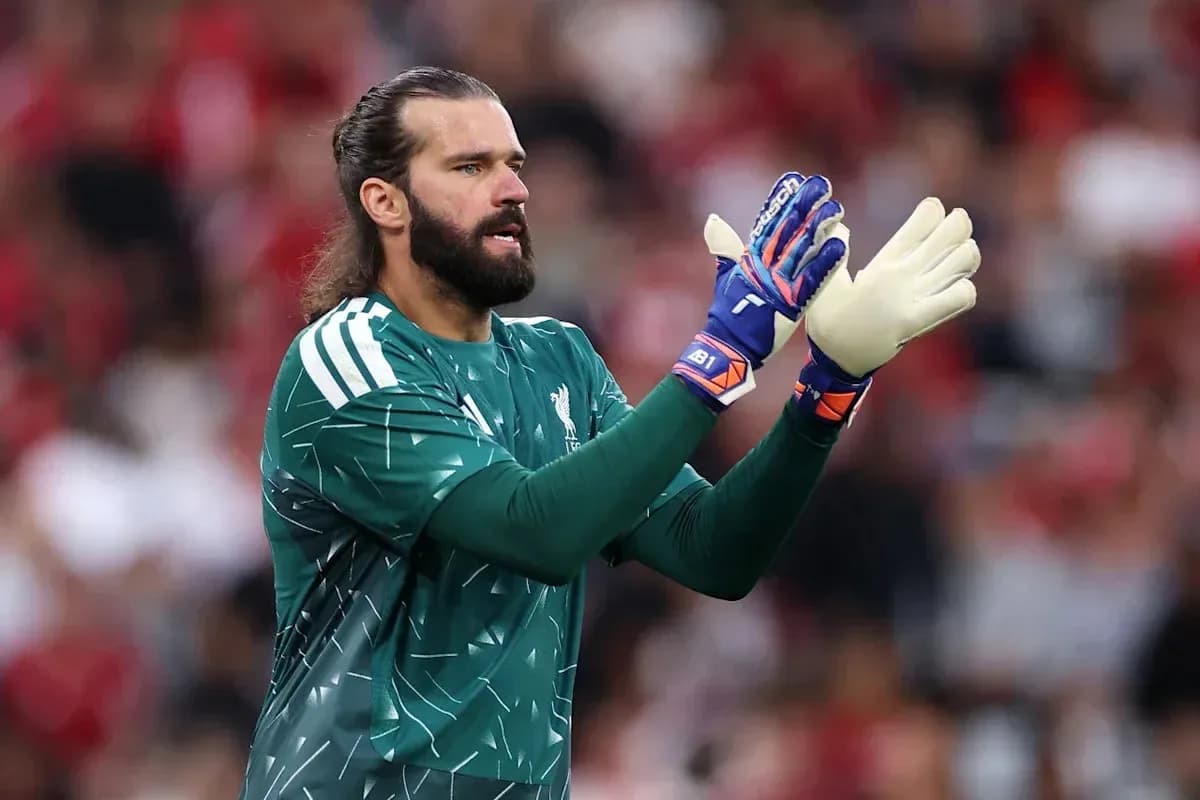
Alisson Becker has been promoted into Liverpool’s official leadership group as vice-captain – yet he still will not be the man wearing the armband when Virgil van Dijk is off the pitch.
That responsibility is set to fall to Dominik Szoboszlai, with Joe Gomez also elevated as Andoni Iraola reshapes the hierarchy after the departures of Andy Robertson and Mohamed Salah.
Why Alisson won’t wear the armband
On merit and seniority, Alisson would be an obvious choice to lead Liverpool. He has been at the club since 2018, has won everything, and is now vice-captain going into the final year of his contract.
But a rule change has forced Iraola’s hand.
Premier League regulations now stipulate that only captains can speak to the referee about contentious decisions. For Iraola, that makes it a clear disadvantage to hand the armband to a goalkeeper.
He has already lived through the complications. At Bournemouth, Neto was captain, and every week they had to nominate a different outfielder to act as a de facto on-field captain whenever incidents occurred far from the goalkeeper’s area. Iraola called that “not viable” and has no intention of repeating the exercise at Anfield.
The logic is simple: if something happens in the opposition box, it makes little sense for Alisson to sprint the length of the pitch just to get an explanation.
So Iraola sat down with his Brazilian No 1 and spelt it out. Alisson remains vice-captain, a core voice in the dressing room, but the armband on matchday will go to an outfielder when Van Dijk is missing – and that is expected to be Szoboszlai, Liverpool’s player of the season last campaign.
The message to Alisson was clear: his influence is valued, his status recognised, but the rules have turned the captaincy into a job better suited to someone closer to the referee and the flashpoints.
New leaders after Robertson and Salah exits
The summer exits of Robertson and Salah stripped Liverpool of two huge personalities and a vast bank of experience. For most managers, that would sound alarm bells about leadership in the dressing room.
Iraola is not panicking.
He acknowledged the scale of what Liverpool have lost – “high-level players who have performed so well for so many years” – but framed it as part of a natural cycle at big clubs. Senior figures move on; others step up.
Szoboszlai, still early in his Liverpool career but already a driving force, and Gomez, the club’s longest-serving player, now sit alongside Van Dijk and Alisson as the core of a refreshed leadership group.
Around them, Iraola sees younger players eager not just for minutes but for responsibility. He has been encouraged by what he has witnessed over pre-season: attitude, energy, and a willingness to fill the void left by some of the club’s modern greats.
Liverpool’s armband may be tied up by regulation and practicality, but inside the dressing room, Iraola is betting that a new generation of voices is ready to be heard.